Press release —
Worcester stroke survivor supports charity campaign to say “Survival is not enough!”
A stroke survivor from Worcester is sharing their story ahead of World Stroke Day, as part of a national campaign to spotlight the fragility of the brain and the life-changing impact a stroke can have on people of all ages.
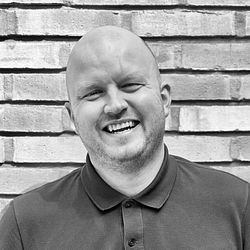
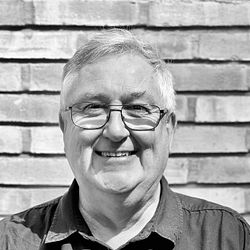
Tim Jacobs was just 38 and travelling to visit family, when he had a stroke that was caused by a bleed on his brain. Tim is now raising awareness of stroke as part of the Stroke Association’s ‘Survival Is Not Enough’ campaign.
Tim was living a full and demanding life, balancing his role as a husband and father with a growing passion for cooking.
In April 2025, for Tim’s birthday, the family travelled back to the Netherlands to visit his parents. It should have been a simple, happy trip. Instead, it became the moment everything changed.
One morning, alone in his parents’ house, Tim noticed something wasn’t right. Tim said: “My hand just stopped working. I knew instantly - something’s wrong. I made my way downstairs and said to my dad, “This isn’t right. Ring an ambulance. Now.”
Within ten minutes, he couldn’t walk. He couldn’t talk. Tim was having a stroke.
At the hospital, a CT scan revealed the cause: a large haemorrhagic stroke - a bleed on the brain.
Tim spent nine days in intensive care, and nine more on the neurology ward. For Tim and his family, fear took over. Tim said: “I had no idea what my future looked like. I lay in a hospital bed, unable to walk, unable to speak, unable to write. My dominant hand no longer worked. Words were trapped in my mind. It was horrible.”
Tim developed aphasia, and later apraxia - a condition that still affects him today. Tim said: “My thoughts are clear, but my speech is out of sync. It’s slow. It’s hard.”
To communicate, he had to relearn everything - writing with his left hand on a whiteboard, one word at a time.
But even in those darkest moments, something inside him refused to give up. Step by step, he began again. Tim said: “I went from bed, to wheelchair. From wheelchair, to cane. From cane, to brace. And then, just three weeks later, I stood - and walked. It wasn’t easy. It still isn’t. But every step mattered.”
Tim stayed in the Netherlands to continue his rehabilitation, determined to push as far as he could. After three months, Nadine and the children had to return home.
Tim said: “That was one of the hardest moments. Not knowing when I’d see them again, but I knew why I was doing it. I had to get better.”
Seven months after his stroke, Tim finally returned home.
Now, a year on, Tim is still recovering. His speech has improved - but remains a daily challenge. His right arm and leg are stronger, but fine motor skills are still limited.
He has small, personal goals. Tim said: “One day, I want to be able to tie my hair up again. I’m not there yet, but I’m getting closer. And that’s how I measure progress - not in leaps, but in millimetres. Every millimetre you gain - you won’t lose it again. Celebrate that.”
He challenges one of the biggest misconceptions about stroke recovery. Tim said: “People say you recover in six months. That’s not true. It takes longer. But one day, you’ll look back - and you’ll be amazed how far you’ve come.”
Today, Tim walks a mile every morning and every evening. He cooks for his family again - adapting, using one hand. Tim said: “My right arm isn’t great, but God gave us a spare! My perspective has changed - at the end of the day, I’m still alive. I believe there was a plan for me. And I’m grateful it happened when it did, not when I was driving, or completely alone.
“I often think about the people I met in hospital - some facing far greater challenges than me - and I truly hope they’re doing okay. My family and friends carried me through my darkest moments. My parents were by my side in the Netherlands, my younger brother put his life on hold to be there for me, and my friends brought light when things felt at their heaviest. And my incredible wife, Nadine - she wasn’t just caring for our two children, she was holding me up as well.
“I wish I could repay everything she gave me during that time. She’s not a fan of cooking, and I am - so that’s a start. But truly, my drive to recover came from wanting to be the best husband, father and friend I could be. That’s who I am - I don’t give up on the people I love. When I was at my lowest, they carried me, and I’m so grateful to now be in a place where I can be there for them again.
Tim’s journey is far from over. But his mindset is clear. Tim said: “Never give up. Keep pushing. Even in hospital, I was encouraging others around me. I was telling people: you can do it, get up, get out of the wheelchair.
“Yes, having a stroke sucks, but you can’t stay down too long. It’s not good for your mind. A stroke doesn’t mean your life is over - it just means you have to fight for it in a different way.”
In the UK, someone has a stroke every five minutes, with 1.4 million people currently living with a brain injury caused by stroke. More than 85,000 people survive a stroke every year, but recovery is only the beginning. Many face a long and gruelling journey adjusting to the trauma and rebuilding their lives, often left without the essential long-term rehabilitation and support they need.
Despite the life-changing impact of stroke, awareness of its severity and the long-term challenges survivors face remains worryingly low amongst the general public.
Despite one in four strokes happening to people of working age, a third of Brits aged 18-34 (34%) and almost a quarter of 35-44 year olds (24%) believe they’re too young to have one.
The knowledge gap extends to the impact of stroke, with almost a third (32%) unaware that it is a brain injury and nearly one in five (19%) not realising it can cause long-term difficulties with walking, talking, seeing or swallowing. Almost a quarter (22%) underestimate the road to recovery believing it takes just a few months or less.
The Stroke Association’s campaign ‘Survival is Not Enough’ aims to drive awareness of the impact of stroke and support a two-part documentary series commissioned by Channel 4, in partnership with the charity: ‘Trauma: My Broken Brain’. The series follows three young adults, Dan, Saskia and Dec, through the fight of their lives after a life-threatening stroke. ‘Trauma: My Broken Brain’ will be available to stream from Monday 26th October at 10pm on Channel 4.
Juliet Bouverie OBE, CEO of the Stroke Association, said: “A stroke is a devastating brain injury, leaving behind life-changing trauma. In an instant, a stroke can steal away the things that many of us take for granted, such as walking, talking, eating and living independently; the things that make you, you. This new research shows that people still don’t understand a stroke happens in the brain and wrongly believe a stroke only affects older people.
"A stroke isn't only a medical emergency from which you either die or survive, but instead the start of a long and gruelling journey to rebuilding a life. For so many stroke survivors, the fight doesn’t end when their lives are saved, yet every day survivors and their families are left traumatised and without the long-term rehabilitation and support they need. After everything a stroke takes, no-one should have to fight for essential support to recover and live a full life again.”
As part of the campaign, the Stroke Association unveiled a giant brain carved entirely from ice on London’s Southbank, creating a striking spectacle in the heart of the capital. Standing at 2.5 metres tall, the sculpture, which took 150 hours across five days to create, was designed to represent both the complexity and fragility of the human brain.
The ice brain sculpture will be in place at Southbank’s Observation Point on Monday 26th and Tuesday 27th October, with members of the public encouraged to stop, view the installation up close and find out more about the impact of stroke through the stroke survivors’ stories.
1.4 million people are living with a brain injury caused by stroke. Help the Stroke Association change what comes next: www.stroke.org.uk/brain
Topics
Regions
- Over 85,000 people survive a stroke every year in the UK, but surviving a stroke is just the start of a long and gruelling recovery journey.
- Mums, dads, grandparents, young people, even children – anyone can have a stroke, and its impact is traumatic.
- Brain injury, caused by a stroke, can leave survivors unable to move, see, speak or even swallow.
- The Stroke Association is the leading charity in the UK providing life-long support for all stroke survivors and their families. We provide tailored support to tens of thousands of stroke survivors each year, fund vital scientific research, and campaign to secure the best care for everyone affected by stroke.
- Anyone affected by stroke can visit stroke.org.uk or call our dedicated Stroke Support Helpline on 0303 3033 100 for information, guidance or a chat when times are tough.
About the Stroke Association