Press release —
Reducing fuel and emissions with iHelm
GOTHENBURG, SWEDEN — On the way towards zero emission, the Norwegian tourism and technology company Brim Explorer has cut fuel and CO2 emissions by 30% on its Trollfjord cruise in Lofoten by using data from Cetasol's iHelm.
- Our ambition is to be able to sail fully electric because silent sailing is better for the wildlife, better for our guest, better for nature and better for the climate. However, we need to go via hybrid electric to get there, and reducing fuel consumption along the way to reduce emissions is key to be able to operate on nature’s terms, says Espen Larsen-Hakkebo, co-founder and CTO of Brim Explorer.
Route standardization and optimisation
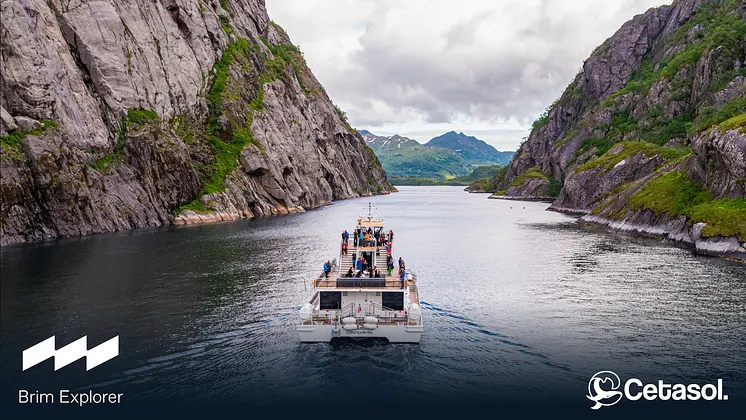
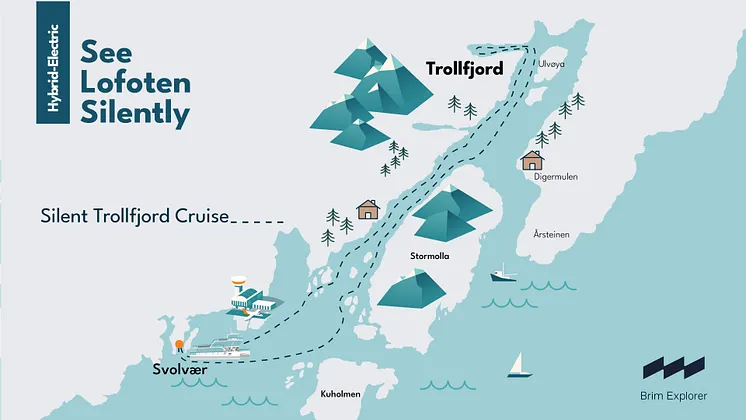
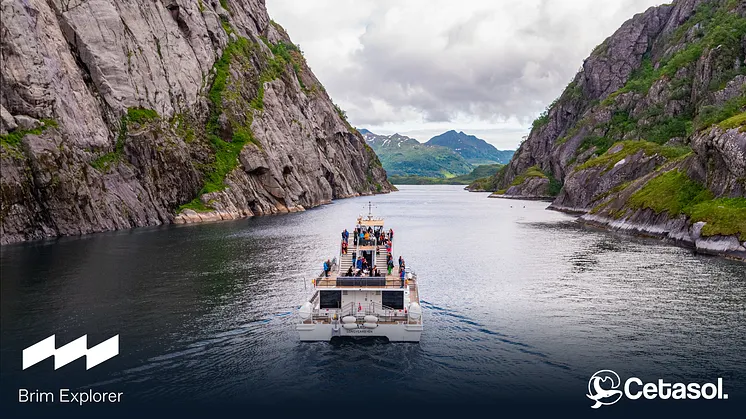
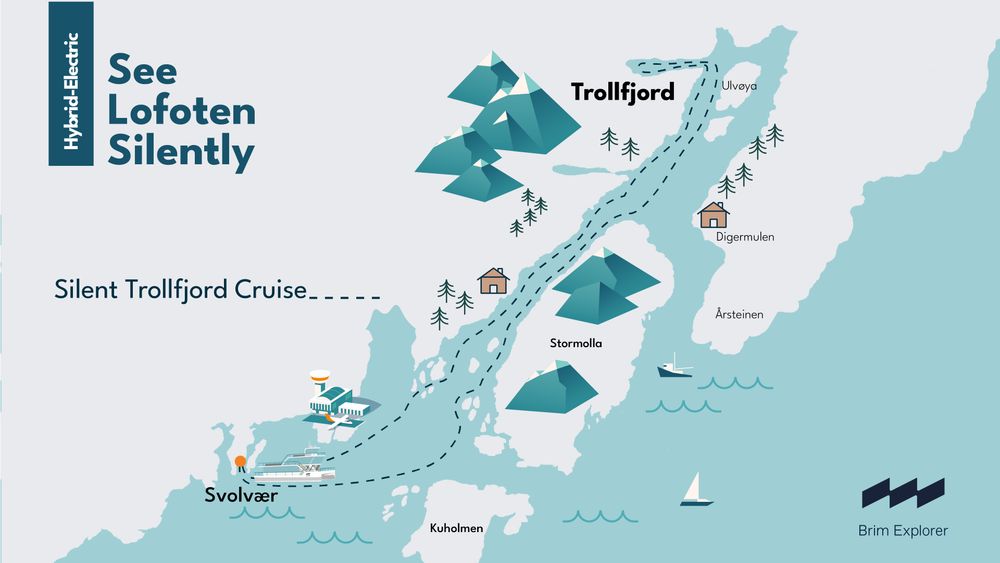
The Silent Trollfjord Cruise leaves Svolvær, Brim Explorer’s home port in Lofoten, three times a day from February to the end of September. It is not a straight transit. The vessel crosses open water, threads the Raftsundet strait, then slows to enter Trollfjord through a mouth barely a hundred metres wide, with rock walls rising more than a thousand metres on either side. The fjord is a cul-de-sac, so the vessel turns at its head and comes back the way it came. Trollfjord can be reached only by boat, or on foot over ten kilometres of mountain.
That shape is what made the route worth working on. Power demand rises and falls sharply across the trip, and it does so in the same places every time. The route is then repeated, almost identically, several hundred times in a season, which means a change that saves fuel once saves it on every departure. In addition to standardising the route, Brim Explorer has also reduced speed to achieve lower fuel consumption and emissions.
Silent sailing on nature’s terms
Brim Explorer was established in 2018 and operates five electric and hybrid-electric ships in Tromsø, Lofoten, Bodø, Stavanger, Oslo and Svalbard. It plans to retrofit the hybrid vessels to run fully electric by 2030. Fuel matters to the company on three counts. It is a direct operating cost, and on a hybrid vessel the energy a trip consumes decides how much of that trip can run on battery alone. In addition, reducing fuel consumption also reduces emission.
Inside Trollfjord the guides put down their microphones and speak to guests unamplified, in what is also prime white-tailed eagle territory, so running quietly is part of the product rather than a by-product of it.
Zero emission regulation
Regulation is tightening around the wider market. The EU Emissions Trading System reached full coverage of shipping emissions in January 2026, and operators now surrender allowances for 100% of verified CO₂ on voyages touching EU ports, up from 40% in 2024. IMO member states approved a Net-Zero Framework in April 2025, introducing a global fuel standard and a price on emissions; adoption was deferred by a year and talks resume in October 2026. Since January 1, Norwegian authorities have implemented zero emission regulation in its UNESCO world heritage fjords.
Real time support on the bridge
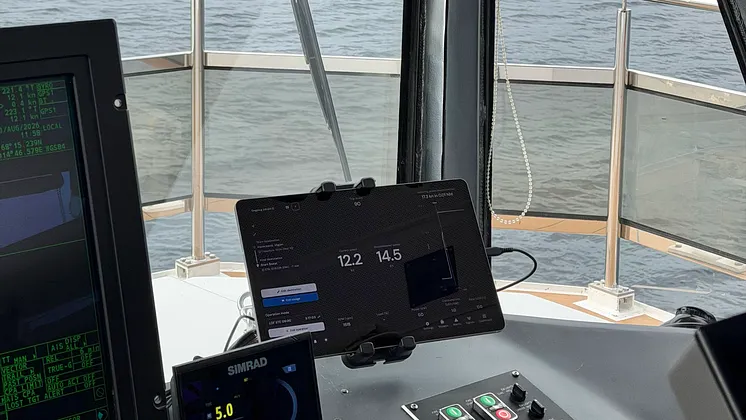
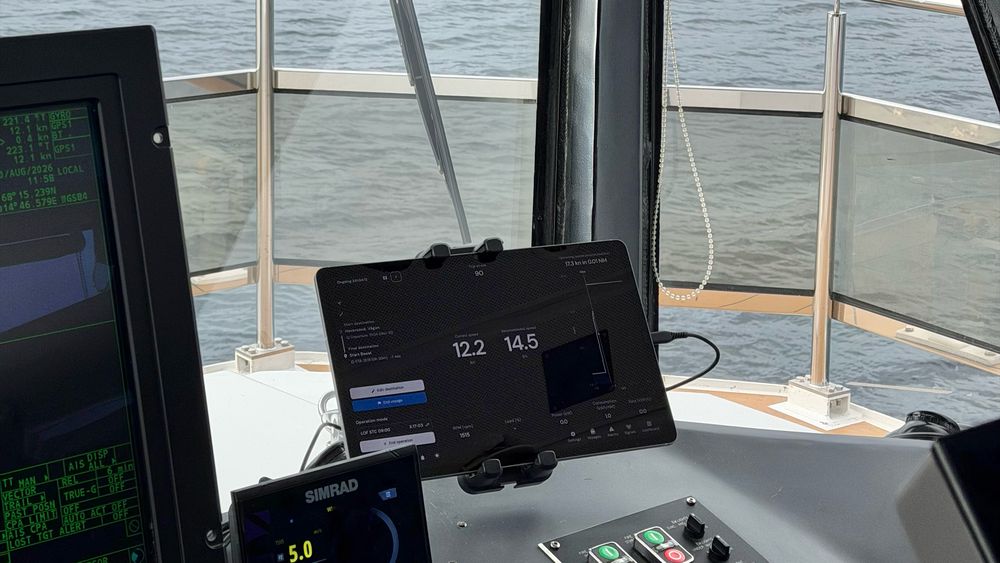
iHelm runs on a compact onboard computer, the Cetasol Main Unit, which collects data from the vessel’s engines and navigation systems along with route information and onboard behaviour. The platform builds a digital twin of the vessel and gives the captain recommendations on speed and power use that still meet the timetable. The same data goes to a cloud dashboard, where shore staff can see how each vessel and each trip is performing over time.
“A vessel that repeats the same trip several times a day is where our data makes the most difference, because every change can be measured against the trip before it,” said Ethan Faghani, CEO and founder of Cetasol. “Here the savings came from how the route was run, not from new equipment. We normally see 10 to 25% on boats this size, so 30 is high, and it holds because the crew applied it on every departure rather than once.”
“On this particular trip, by optimizing the route and using Cetasol’s data as input, we have saved 30% of our fuel costs,” said Espen Larsen-Hakkebo, CTO and co-founder of Brim Explorer and CEO of Brim Tech. “It is a product we run from February to the end of September, so it is a long period, and we go three times a day on the same trip.”
About Cetasol
Cetasol develops AI-driven decision support for vessel operations. Its flagship platform, iHelm, helps fleets cut fuel use, track performance, meet reporting requirements and reduce downtime, combining onboard data with cloud-based fleet analytics so that crews and shore staff work from the same picture. Cetasol is based in Gothenburg, Sweden.
About Brim Explorer
Brim Explorer is a Norwegian tourism and technology company running silent fjord cruises in Tromsø, Lofoten, Bodø, Stavanger, Oslo and Svalbard. Established in 2018, it has designed and built five electric and hybrid-electric ships, each with panoramic windows and three decks open to guests. The company intends to build only fully electric ships in future, and to retrofit its hybrid fleet to fully electric by 2030.
Related links
Topics
Categories
Cetasol is a Gothenburg-based software company developing intelligent solutions for the maritime industry worldwide. Through its flagship platform iHelm, Cetasol provides AI-driven decision support that empowers crews and fleet managers to optimize fuel use, improve operational insights, increase engine uptime, and ensure compliance.
By combining data science, AI, and deep maritime expertise, Cetasol enables more efficient, data-driven, and sustainable operations — helping vessel owners reduce costs and emissions while supporting the industry’s transition toward cleaner technologies.