






Eurofound adopts ambitious work programme for 2020
Eurofound’s Management Board has adopted an ambitious work programme for the organisation for 2020, the last of the current multiannual programme for 2017-2020
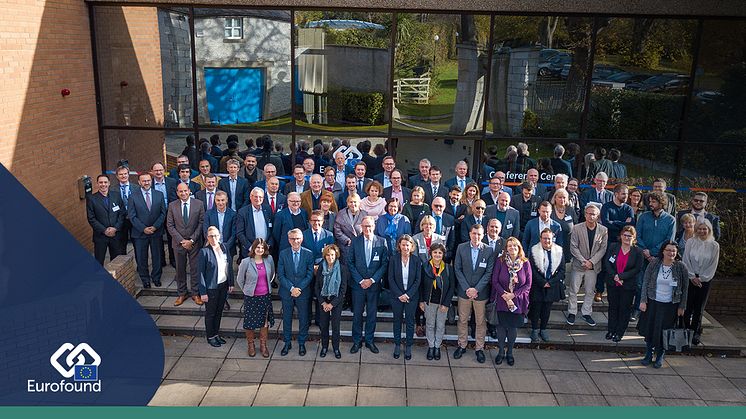
Eurofound’s Management Board has adopted an ambitious work programme for the organisation for 2020, the last of the current multiannual programme for 2017-2020
The number of people in Poland struggling to make ends meet has halved to 39% since the country’s membership of the EU and the share of people at risk of poverty has decreased to 18.9% in 2018 – below the EU average of 21.7%.

While high-quality childcare and early education is of growing importance, both for children’s development and for facilitating women’s access to the labour market, Eurofound’s research shows that cost is an issue for four out of ten users of early childhood education and care (ECEC) services in the EU.

Economic disparities have been decreasing between EU member states over the past decade, but at the same time inequality has been growing within member states. Despite national level convergence, the gap in wealth and income between the rich and the poor is growing in most of Europe.

The high levels of reliance on informal care across EU Member States - with 15% or more of care being provided on an informal basis in countries such as Belgium, France, Latvia and Romania – comes with significant social and economic costs for both carers and society, including loss of employment, social protection expenditure, social isolation and the healthcare needs of informal carers.

Czechia records the lowest rates of those at risk of poverty and social exclusion across the EU at just 12.2% – considerably below the EU average of 21.7%. The number of people reporting difficulties in making ends meet has also decreased from 52% in 2011 to 40% in 2016 and perceived quality of public services has improved to be in line with EU averages.

Austria has one of the highest female part-time rates in the EU. This is linked largely to a heavy reliance on informal care where 80% of those in need of long-term care are being cared for informally by a family member. The high level of part-time work (47.9% of women compared to just 8.1% of men) has significant consequences for Austria’s gender pay gap.

People in the lowest income groups remain the most likely to report difficulties in accessing primary care services across the European Union, according to Eurofound research. More than 8 out of 10 people in the EU reported using health services in 2016, but many still struggle to access services, including those with incomes just above the threshold that would entitle them to state support.

Just one in three workers in the EU whose daily activities are severely or somewhat limited by a chronic disease report that their workplace has been adapted to accommodate their health problem. This means the majority of workers in Europe with a limiting health condition are not being supported in terms of workplace adaptation.

Contrary to a generalised concern about a ‘crisis of trust’ in the aftermath of the financial crisis, trust in national and EU institutions has bounced back to pre-crisis levels, while civic engagement has increased, and perceived social exclusion has decreased.

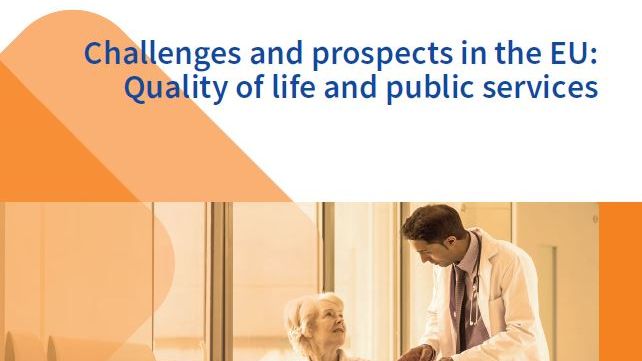
Levels of trust and social cohesion have recovered overall in the EU since the financial crisis, perceived social exclusion has declined and there has been an increase in active citizenship and civic engagement, according to Eurofound’s flagship report ‘Challenges and prospects in the EU: Quality of life and public services’.
Platform work is still small in scale in Europe, but it is increasing – and this not only in terms of the number of platforms, workers and tasks, but also the diversity of business models, matching mechanisms and types of tasks that are mediated through an online platform or an app.