Skip to content

Topics: European Union issues

  • ‘Working anytime, anywhere: The effects on the world of work’ - new report highlights opportunities and challenges of expanding telework

    The expanding use of digital technologies such as smartphones, tablets, laptops and desktop computers for work for home and elsewhere is rapidly transforming the traditional model of work. It can improve work-life balance, reduce commuting time, and boost productivity, but it can also potentially result in longer working hours, higher work intensity and work-home interference.

  • Minimum wages on the rise as Europe moves to curb social dumping

    The growth in the level of minimum wages accelerated in the period between January 2016 and January 2017, with the largest increases in newer EU Member States. This continues a trend of slow convergence between minimum wage levels in Europe - however there is still a long way to go, with minimum wage workers in Luxembourg making eight and a half times as much as minimum wage workers in Bulgaria. T

  • Publication alert - Delivering hospital services: A greater role for the private sector?

    Our new publication Delivering hospital services: A greater role for the private sector? examines the role and contribution of the private provision of hospital services in the European Union. The report maps the extent of private provision across Europe, examines the drivers for increased private provision, describes how it takes place and presents the views of different stakeholders.

  • Mid-career reviews key to longer and healthier working lives

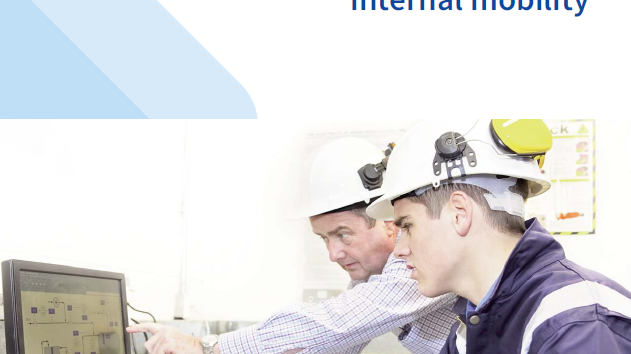
    Mid-career reviews (MCR), where employers organise an assessment of workers in the workplace at a mid-point in their working life, are an important tool to ensure that workers' skills continue to match the job demands, or whether a change in tasks or career is required. Eurofound's new report Changing places: Mid-career review and internal mobility, launched in Brussels today, shows that timely mi

  • Europe’s slow-burning issue – making work sustainable

    Making work sustainable is not simply a challenge for politicians and policymakers in the European Union: it is a fundamental issue that underpins the future of the world of work in Europe. It goes beyond the mantra of raising employment rates and deals with productivity and innovation – and the everyday lives of workers throughout the EU.

  • Publication alert: Approaches to the labour market integration of refugees and asylum seekers

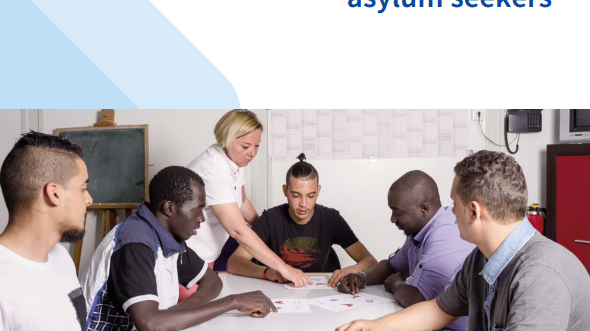
    Eurofound’s new report takes forward existing research on the labour market integration of refugees (those with the officially recognised status of international protection) and asylum seekers (those who have applied for international protection and are awaiting a decision). The report provides updated information on legislation and practical arrangements in the first half of 2016, examines labour

  • Jobs, Jobs, Jobs! Three Beautiful Words For Mr Trump

    And even in the confused and contentious context of the new US President-elect as well as the EU’s post- Brexit deliberations, it is hard to argue otherwise.
    But, while having a job in the first place is clearly of paramount importance to people - and society at large – there is also a more sophisticated issue at play with wider ramifications for the world of work and life today: the quality of

  • The gender employment gap – an issue that affects us all

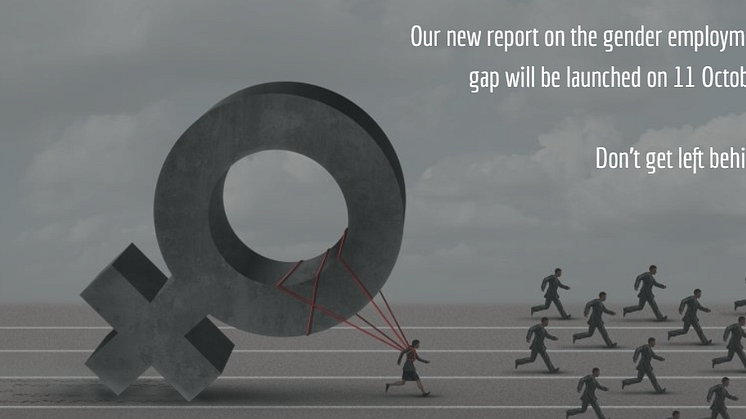
    In the following blog piece Eurofound Director Juan Menéndez-Valdés looks at the issue of the gender employment gap in Europe, and how the difference in labour market participation between women and men has far-reaching implications.

  • Il nuovo rapporto di Eurofound - The Gender Employment Gap: Challenges and solutions

    Il nuovo rapporto di Eurofound – "Gender Employment Gap: challenges and solutions” è stato presentato al Parlamento Europeo martedì 11 Ottobre 2016.
    Nonostante il tasso di occupazione femminile sia aumentato durante la crisi economica, la divergenza nell’occupazione tra uomini e donne in Europa e nella maggior parte dei paeasi membri è ancora significativa. A questo proposito, il rapporto si co

  • Publication alert - The gender employment gap: Challenges and solutions

    Eurofound's new publication The gender employment gap: Challenges and solutions will be presented to the European Parliament's Committee on Women's Rights and Gender Equality tomorrow at 5.00 pm (CET), and will subsequently be available to download directly from our website. Watch the presentation live at http://bit.ly/FEMMComm.
    For further information please contact either our promotions team,

  • Trust and dialogue are the secrets to business success in times of crisis

    In the following blog piece Eurofound Senior Programme Manager Stavroula Demetriades looks at the relationship between social dialogue and business success, particularly during times of crisis. 
    Europe has gone through significant economic change over the past decade. Businesses have had to manage the challenges posed by the financial crisis, globalisation and a rapidly changing labour market. 

  • Charting the state of housing across the EU

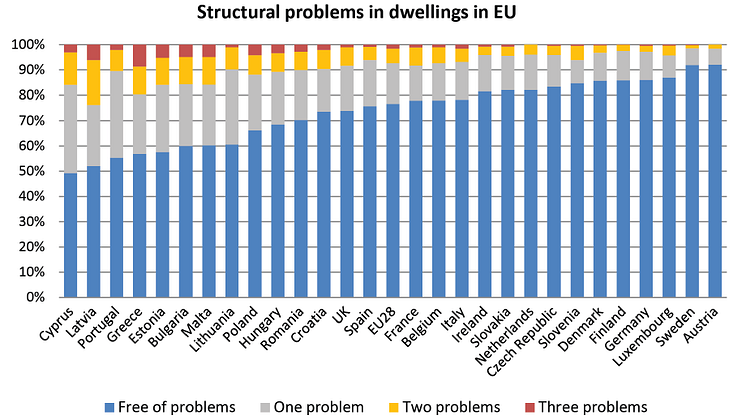
    The prevalence of structural problems in dwellings in the EU varies considerably between Member States.
    On average, 12% of EU residents report damp or leaks in their walls and roofs; 9% live in accommodation with rot in the windows, doors or floors; and 14% of resident indicate that they cannot afford to keep their home adequately warm.
    Such problems are most common in Cyprus, where 51% of d

  • A year in review – working life in 2015

    A new report from Eurofound – Developments in working life in Europe: EurWORK annual review 2015 – collates information based on research from Eurofound’s network of European correspondents. The correspondents report national-level information on industrial relations and working conditions for the Agency’s European Observatory of Working Life (EurWORK).
    The material, published in the form of a

Show more