New research provides clarity on convergence in Europe
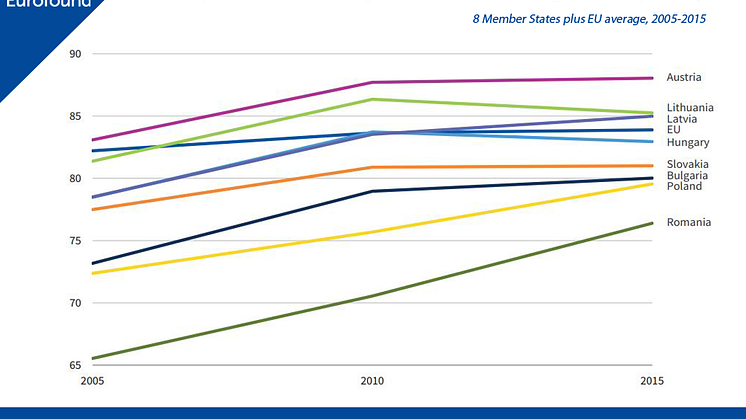
Europe is back on track towards upward convergence, but some outliers remain.

Europe is back on track towards upward convergence, but some outliers remain.
Overall trust in institutions such as national governments, the legal system, the EU, and the media has rebounded in Europe following the recent economic recovery. However, in a number of the Member States most adversely impacted by the crisis, trust in national institutions has still not returned to pre-crisis levels.
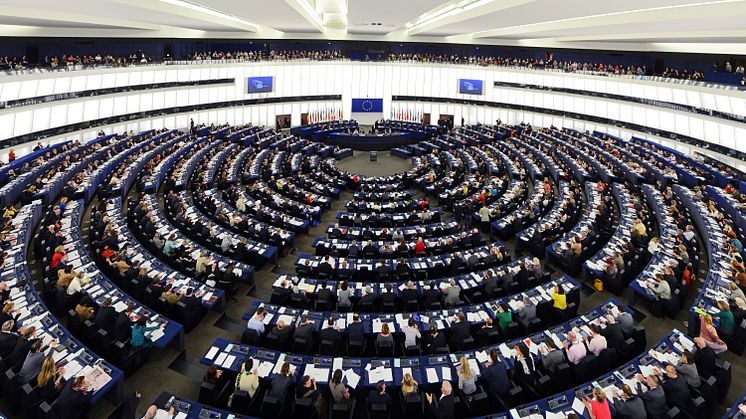
Quality of life is improving in Ireland, particularly in relation to social cohesion, with the country recording some of the highest levels optimism in the EU and lowest reported levels of tension between racial and ethnic groups. However, a number of challenges remain, notably in public transport, childcare services, and social housing – all of which are rated below EU averages.
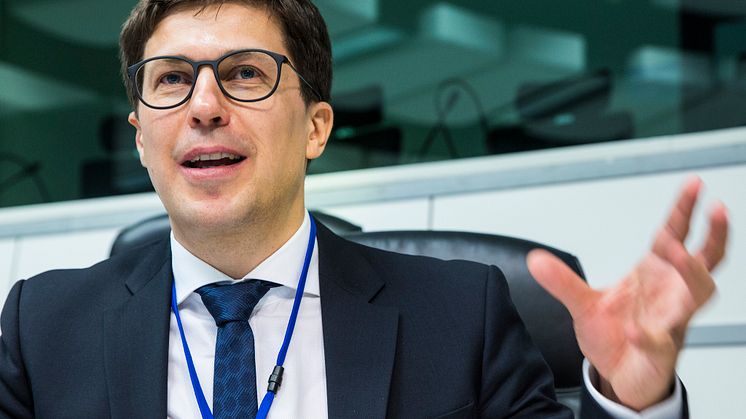
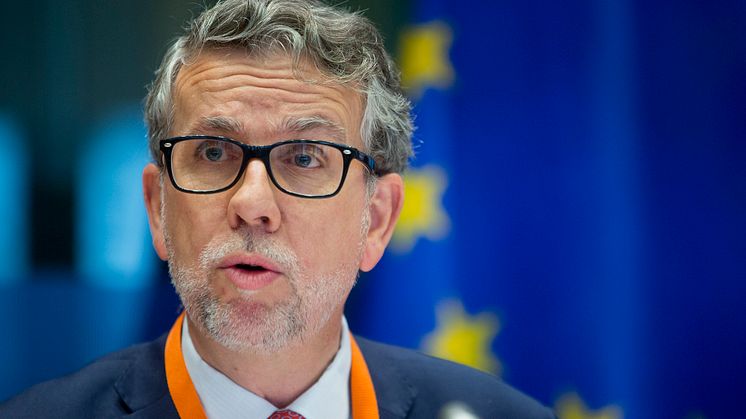
Eurofound Director Juan Menéndez-Valdés will present to the Oireachtas Joint Committee on EU Affairs at 14:00 GMT on Wednesday 12 December. The presentation will look at Ireland-specific data from the European Quality of Life Survey and European Working Conditions Survey.

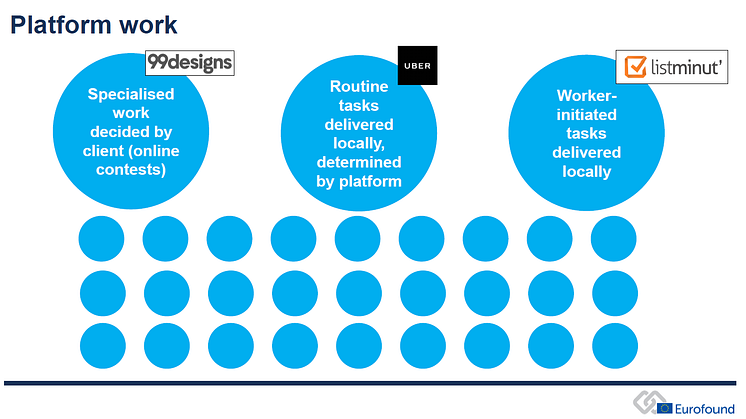
Platform work is neither good nor bad – it just is. We need to adapt to this reality by finding ways to capitalise on the positive while at the same time counteracting the negative. This needs to be done in a differentiated way, taking account of the great variety in platform work. One-size solutions simply will not fit all.

Restructuring is a common feature of labour markets and work organisation. While much research in this area primarily concentrates on the implications for those that lose their jobs, the latest report on restructuring from Eurofound focuses on the impacts for those that remain in an organisation.
2017 was a good year for the majority of EU Member States in terms of recovery of employment. However, while the EU28 as a whole is now exceeding its pre-crisis employment rate, in 2017 it was still 2.8 percentage points short of its 2020 target of an overall employment rate of 75%. In addition, several Member States' employment rates continue to lag behind those witnessed a decade ago.

Few events challenge the equilibrium between work and life like the arrival of a child. As gender roles continue to change in Europe, supporting the uptake of paternity and parental leave among fathers is fundamental, not just to close the ‘caring gap’ between men and women, but also to provide the best possible outlook for coming generations.

Feelings of insecurity in several dimensions of life are widespread in the EU, even among those who are materially well-off. Only 1% of the EU population enjoys the highest level of security in the combined areas of personal security and security in housing, healthcare, employment and old-age income.
Eurofound's forthcoming policy brief focuses on women who have overcome the barriers and advanced into management. It aims to assess whether women, once they have reached a managerial role, continue to encounter obstacles that their male counterparts do not face.

As the European Union recoups the losses of the crisis and seeks a sounder footing for future growth, the concept of convergence has taken centre stage in the policy discourse. But what do we mean by ‘convergence’ in the European context?
@JuanMenendezEF presents #eurofound latest research findings on #platform #work and employment conditions at the informal #EPSCO #eu2018at today 19 July 2018
Europe is showing visible signs of progress; in most countries, labour markets are healthier than they have been in a decade, with more people active and in work than ever before, while social exclusion is declining. However, it is also a continent in transition, where an imbalance in opportunities for prosperity and quality of life directly determines to what extent you have felt this recovery.
The number of people active in the labour market is at an all-time high, ratings for key public services are increasing and there is a marked recovery in trust in national institutions in many Member States, these developments are detailed in Eurofound’s latest Living and working in Europe yearbook for 2017.
Research Manager Isabella Biletta looks at fraudulent practices in the contracting of work across the EU. The article is based on several years of Eurofound research on the subject.
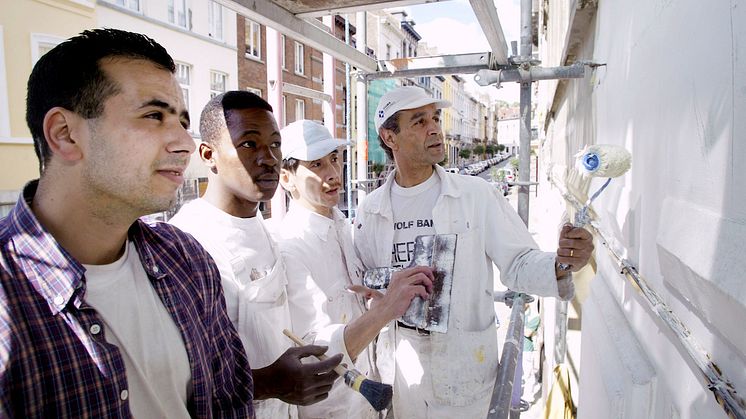
Invitation to 'Future jobs - current challenges: Cedefop 2018 Skills forecast' launch event, in Brussels on 8 June 2018

The integration of migrants from outside the EU into society is one of the key challenges that the Union must address to maintain social cohesion and equality. In this blog piece Enrique Fernández-Macías and Tania Paniagua de la Iglesia look at how well migrants and their descendants have integrated into the labour markets of EU Member States.

Increases to minimum wages have gathered pace since 2010, with the highest increases recorded in countries which had the lowest minimum wages. However a large gap remains, with minimum wage workers in Bulgaria, the country with the lowest statutory minimum wage, earning just one-eighth the salary of minimum wages workers in Luxembourg, which has the highest rate.
In this blog, originally posted in Social Europe, Massimiliano Mascherini looks at the enduring issue of long-term unemployment among young people. Despite considerable improvement in the labour market participation of youth in recent years, the legacy of the crisis is still visible in the substantial increase in the cohort of long-term unemployed young people.

The new report Game changing technologies: Exploring the impact on production processes and work summarises the findings of five case studies on the likely impact of game changing technologies on production and employment in the manufacturing sector in Europe up to 2025.