Skip to content

Topics: Public sector

  • Eurofound hosts delegation from Committee on Employment and Social Affairs

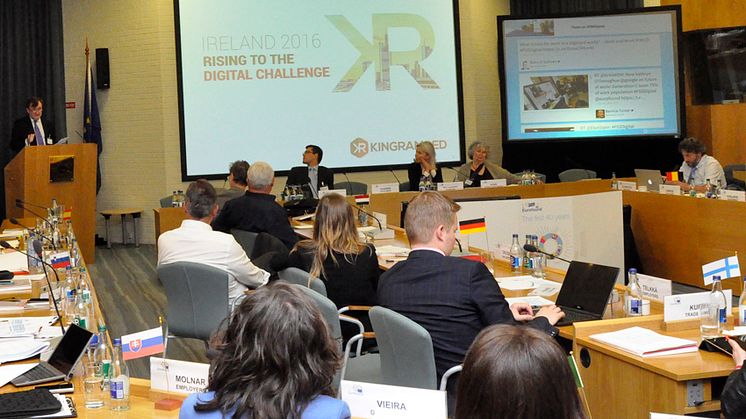
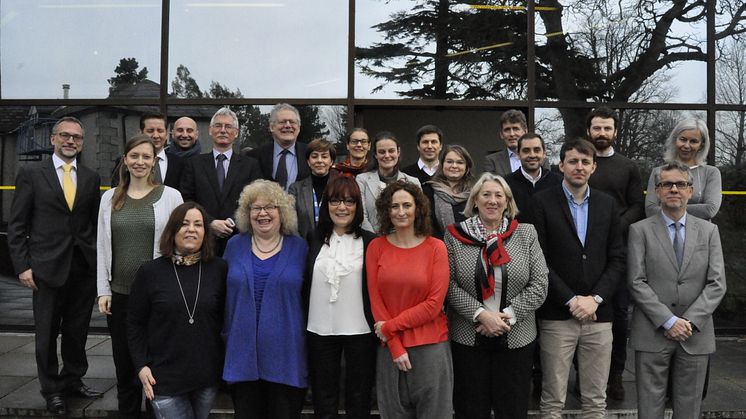
    Eurofound hosted a delegation from the European Parliament’s Committee on Employment and Social Affairs in Dublin on 20–21 February. The delegation included Jean Lambert MEP (Greens/EFA), Joëlle Mélin MEP (ENF), Laura Agea MEP (EFDD), Javi López MEP (S&D), and Lynn Boylan MEP (GUE/ NGL).
  • Publication alert - Delivering hospital services: A greater role for the private sector?

    Our new publication Delivering hospital services: A greater role for the private sector? examines the role and contribution of the private provision of hospital services in the European Union. The report maps the extent of private provision across Europe, examines the drivers for increased private provision, describes how it takes place and presents the views of different stakeholders.

  • Mid-career reviews key to longer and healthier working lives

    Mid-career reviews (MCR), where employers organise an assessment of workers in the workplace at a mid-point in their working life, are an important tool to ensure that workers' skills continue to match the job demands, or whether a change in tasks or career is required. Eurofound's new report Changing places: Mid-career review and internal mobility, launched in Brussels today, shows that timely mi

  • Europe’s slow-burning issue – making work sustainable

    Making work sustainable is not simply a challenge for politicians and policymakers in the European Union: it is a fundamental issue that underpins the future of the world of work in Europe. It goes beyond the mantra of raising employment rates and deals with productivity and innovation – and the everyday lives of workers throughout the EU.

  • Measuring peoples’ perception of quality of life in Europe

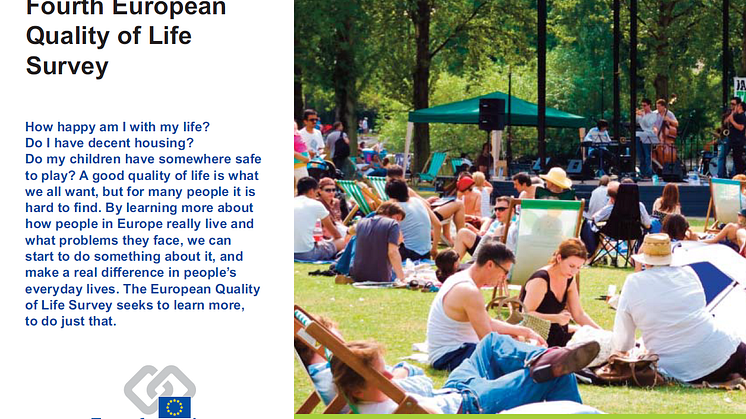
    Eurofound launches the fieldwork for the fourth edition of its European Quality of Life Survey today. The survey, which offers a comprehensive picture of the views of people living across 33 countries including the EU Member States and candidate countries, will be carried out over the coming 13 weeks.
    The fourth edition of the European Quality of Life Survey covers 33 countries, 28 EU Member S

  • Inadequate housing is costing Europe €194 billion per year

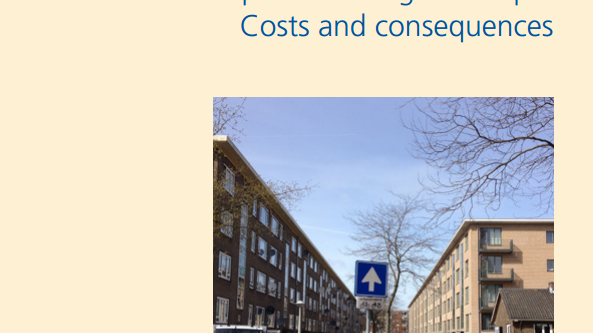
    Inadequate and poor housing is costing EU economies nearly €194 billion per year in terms of both direct costs associated with healthcare and related medical or social services, as well as indirect costs such as lost productivity and reduced opportunities. The removal of housing inadequacies across the EU, or at least improving them to an acceptable level, would cost about €295 billion at 2011 pri

  • Findings in Figures - Eurofound News July/August 2016

    Some interesting figures from the July/August edition of Eurofound News:
    13,000 – the entire workforce of Marinopoulos, one of the largest supermarket chains in Greece, who have been made redundant as a result of the company’s bankruptcy.
    22% – the gender pay gap in the Czech Republic, which in March 2016 prompted the Minister of Labour and Social Affairs to launch a five-year campaign to na

  • Eurofound News July/August 2016 - In Brief

    From Eurofound News July/August 2016
    Taking action to make work sustainable
    For Europe to achieve its goals for growth, workers will have to work for longer and more people will have to work. This requires new thinking to make work sustainable over the life course. In other words, it means achieving living and working conditions that enable workers to retain their physical and mental health,

  • Factors influencing the job-creation potential of SMEs

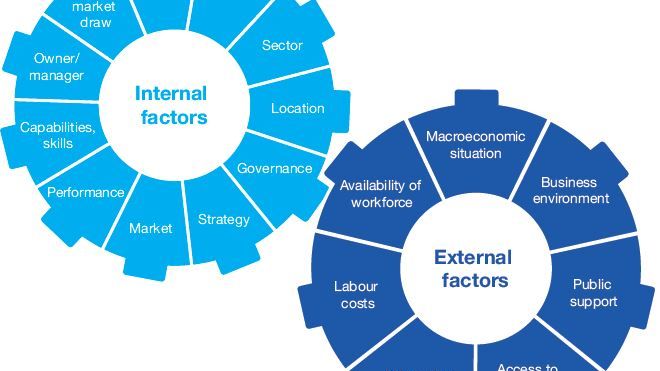
    The figure above, derived from Eurofound’s recent report on Job creation in SMEs, illustrates the bundle of factors that determine whether an SME will create jobs – some relating to the company itself (internal) and others relating to the economic and institutional environment in which it operates (external). 
    Several of the elements are interrelated or have an influence on each other. The stre

  • ​Cooperation with EU Fundamental Rights Agency

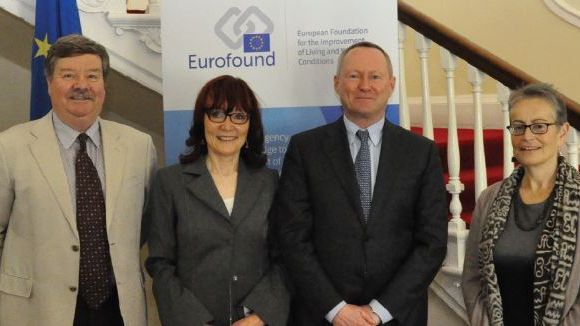
    Newly appointed Director at the European Union Agency for Fundamental Rights (FRA), Michael O’Flaherty, visited Eurofound for the first time on 27 May. 
    A meeting with Eurofound’s Deputy Director, Erika Mezger, and other Agency staff included an open exchange on the activities of the network of EU Agencies and discussion on the work of the cluster grouping of Justice and Home Affairs Agencies. 

  • ​New European Platform to tackle undeclared work

    Fairness in the European labour market was the vision evoked by Commissioner Thyssen in her opening speech at the launch of the European Platform to tackle undeclared work on 27 May.
    Aimed at enhancing cooperation in tackling undeclared work, the new European Platform was set up by the European Commission, together with Member States and stakeholders. 
    Eurofound has observer status in the P

  • ​Slow but steady return to employment growth

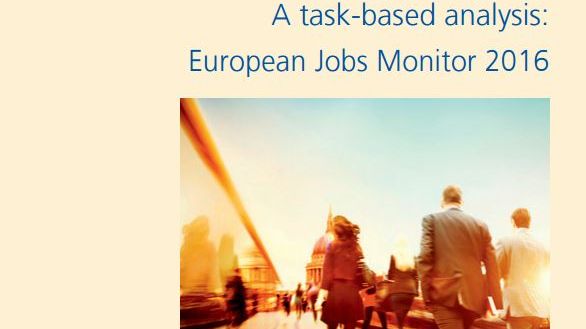
    Europe has begun to emerge from its prolonged economic slump: in 2014–2015, for instance, over four million new jobs were created in the EU28. Eurofound’s fifth annual European Jobs Monitor report looks at changes in net employment between Q2 2011 and Q2 2015, at Member State level and in the EU overall. 
    It uses a ‘jobs-based’ approach to describe employment shifts quantitatively (how many job

  • ​Studying the impact of digitalisation on work

    A 2014 study from think-tank Bruegel estimates that over the next 20 years, more than 50% of the EU workforce will have their job partly replaced through automation. Advances in machine learning, artificial intelligence, and mobile robotics are likely to affect low-wage, low-skill sectors that have traditionally been immune from this high-tech automation.
    This is the context of change against w

  • ​A year in the life of Europe

    The Eurofound yearbook 2015: Living and working in Europe has just been published, highlighting research into pivotal social and employment issues in Europe, in a year when Eurofound celebrated the 40th anniversary of its establishment.
    The yearbook describes 12 months of divergent trends in the work and lives of people in Europe. Working conditions of those at work have not, on the whole, been

  • Going beyond the headlines to find out what it is really like to live and work in Europe

    In this blog piece, originally posted on Social Europe Journal, Eurofound Director Juan Menéndez-Valdés looks the complex and multi-faceted story of what it is to live and work in the European Union of today.
    Brexit dominates political debate, migrants stream through borders, social protection systems are collapsing, changing forms of work are corroding conditions, unemployment levels remain hi

Show more