Skip to content

Topics: Public sector

  • Combating labour market segmentation in Europe

    A common understanding of labour market segmentation is necessary to tackle poor quality jobs with lack of opportunities, affecting especially young people, women, immigrants and lower-educated individuals on the labour market. A new ambitious report explores why segmentation is problematic and identifies policy approaches which could be helpful in tackling this phenomenon.

  • Ageing Europe puts pressure on informal care

    The high levels of reliance on informal care across EU Member States - with 15% or more of care being provided on an informal basis in countries such as Belgium, France, Latvia and Romania – comes with significant social and economic costs for both carers and society, including loss of employment, social protection expenditure, social isolation and the healthcare needs of informal carers.

  • Almost half of Austrian women work part-time to provide informal care

    ​Austria has one of the highest female part-time rates in the EU. This is linked largely to a heavy reliance on informal care where 80% of those in need of long-term care are being cared for informally by a family member. The high level of part-time work (47.9% of women compared to just 8.1% of men) has significant consequences for Austria’s gender pay gap.

  • Improved public services key to better quality of life in Europe

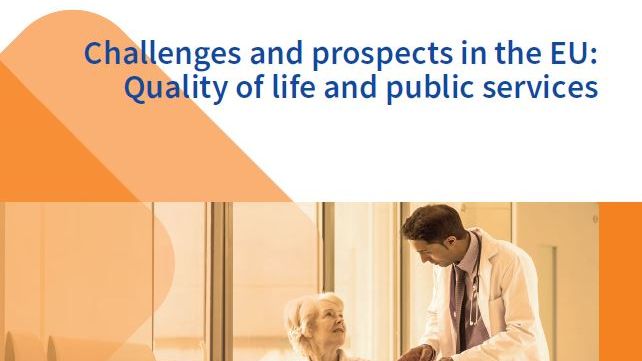
    Levels of trust and social cohesion have recovered overall in the EU since the financial crisis, perceived social exclusion has declined and there has been an increase in active citizenship and civic engagement, according to Eurofound’s flagship report ‘​Challenges and prospects in the EU: Quality of life and public services’.

  • Young people, particularly those low qualified, bear the brunt of social inequalities in Spain

    This week Spain celebrates the Fiesta Nacional, and we mark the occasion by sharing our research data, findings and analysis to provide a snapshot of the country’s living and working conditions. Eurofound has been monitoring and reporting on living and working conditions in Spain, in comparison to other EU Member States, since before its accession to the EU in 1986.

  • Eurofound's upcoming research in 2019

    With a new European Parliament in place, and a new Commission imminent, it's all change at European level. Eurofound's upcoming research for the rest of 2019 reflects both established priorities under its work programme, as well as ongoing developments in work and life in Europe.

  • Potential of platform work may depend on greater protection of workers

    Platform work across the European Union can facilitate better access to the labour market for disadvantaged groups, encourage participation among those with other responsibilities and foster self-employment and entrepreneurship. Eurofound’s new policy brief highlights the main opportunities and challenges of platform work and illustrates some of the first attempts at addressing them.

  • Quality of life improving in Malta, but concerning issues on the horizon for young people

    As Malta celebrates its Independence Day, we mark the day by sharing our research data, findings and analysis to provide a snapshot of living and working conditions in Malta today. Eurofound has been monitoring and reporting on the improvement of living and working conditions in Malta, in comparison to the other EU Member States, since before accession to the EU.

  • We need to boost motivation at work to ease Europe’s demographic headache

    Motivated workers have higher levels of engagement, better health and are able to work longer. Improving motivation at work is therefore a key component in meeting the challenges of Europe’s ageing workforce and improving the EU’s long-term competitiveness on a global scale. This means that fostering motivation at work isn’t just about personal or business success, it's about Europe’s success.

  • Quality of life improving in Ireland but challenges remain

    Quality of life is improving in Ireland, particularly in relation to social cohesion, with the country recording some of the highest levels optimism in the EU and lowest reported levels of tension between racial and ethnic groups. However, a number of challenges remain, notably in public transport, childcare services, and social housing – all of which are rated below EU averages.

  • Platform work – Breaking barriers or breaking bad?

    Platform work is neither good nor bad – it just is. We need to adapt to this reality by finding ways to capitalise on the positive while at the same time counteracting the negative. This needs to be done in a differentiated way, taking account of the great variety in platform work. One-size solutions simply will not fit all.

Show more