Skip to content

Topics: Public sector

  • Trust in national institutions is falling: Data behind the decline

    Trust in national institutions has declined across the EU over the past two years. Driven by increasingly difficult economic circumstances and unreliable news sources, even people who previously expressed higher trust levels – such as those in financially secure positions – have become less trusting. We take a closer look at e-survey data to explore this decline in trust.
  • Webinar: Living and working in an era of disruption – Insights from Eurofound

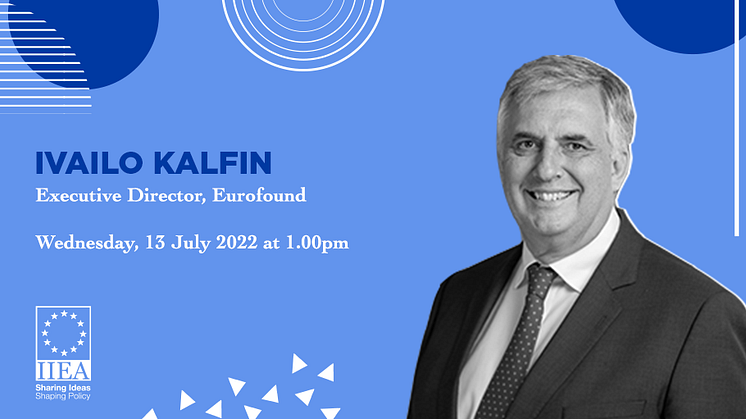
    Living and working in an era of disruption in one of the first public presentations of the results of Eurofound’s unique online Living and working survey which tracked the experiences of Europeans over the last two years - a period which saw a global pandemic, seismic shifts in the world of work, rising costs of living and now the war in Ukraine.

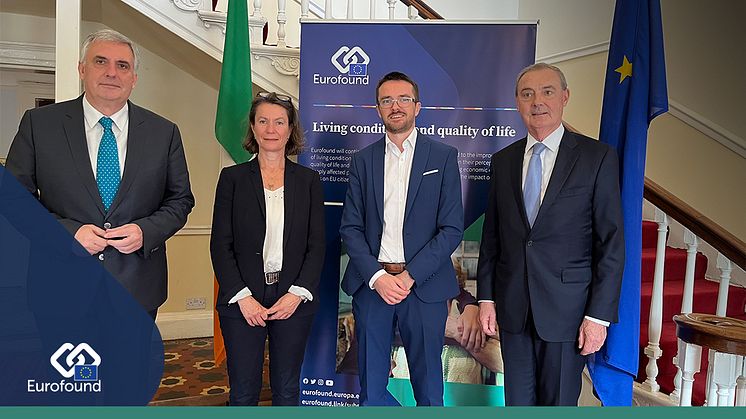
  • Eurofound and IIEA discuss labour market change and future of work

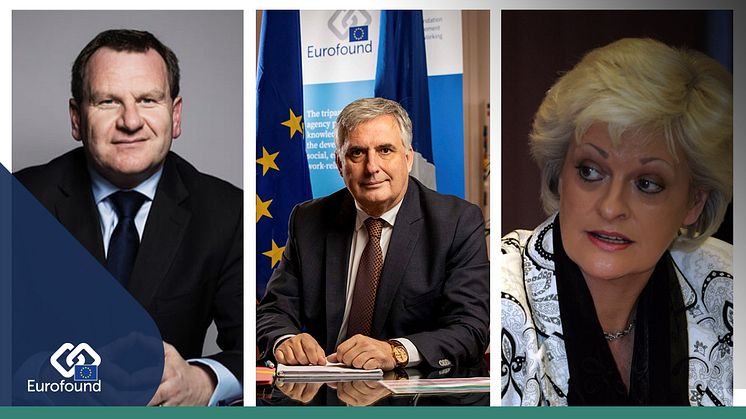
    The Directors and senior staff of Eurofound and the Institute of European Affairs (IIEA) met at Eurofound, Dublin this week, following the recent appointment of David O’Sullivan as the Director General of IIEA. It was an opportunity to review ongoing collaboration between the two organisations, as well as discuss latest research; including on the economic, employment and social impacts of the COVI

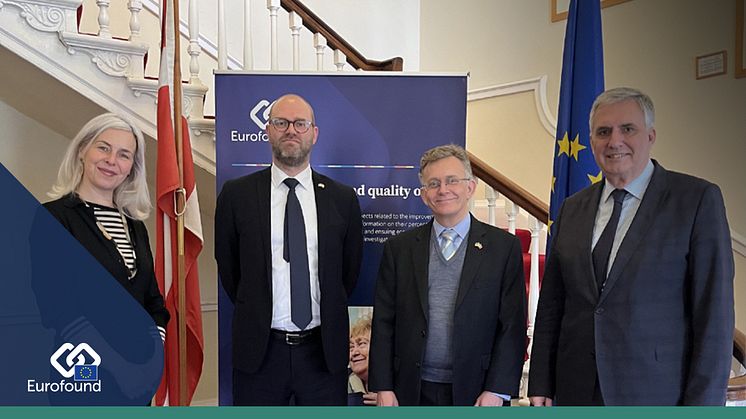
  • Impacts of COVID-19 and labour market change central in discussions between Eurofound and Danish Ambassador

    Ivailo Kalfin, Eurofound’s Executive Director, and Mary McCaughey, Head of Information and Communication, met with H.E. Uffe Balslev, Ambassador of the Kingdom of Denmark to Ireland, and Nikolaj Mølsted Andersen, Deputy Head of Mission and Head of Trade, at Eurofound in Dublin this week to discuss the Agency’s latest research; including on the economic, employment and social impacts of the COVID-1

  • Eurofound takes stock of post-pandemic Europe in new wave of landmark e-survey

    The COVID-19 pandemic has had a significant impact on the lives of people across Europe over the past two years. Although EU and national-level policy and fiscal interventions mitigated some of the most severe potential economic and employment impacts of crisis, the wide-ranging consequences of the pandemic endure. It is in this context that Eurofound launches the latest round of its Living, worki

  • Lithuania looks to re-establish pre-pandemic progress

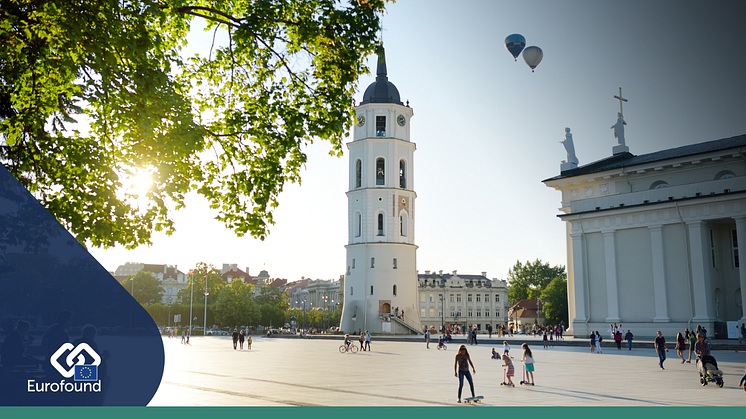
    In the decade prior to the COVID-19 pandemic Lithuania had a steady increase in unweighted average disposable income, recording the largest increases alongside Romania. It also recorded the lowest gender employment gap in the EU in 2019. Like other Member States, however, the pandemic has set Lithuania back in a number of labour market and social indicators, and in particular it saw a rise in unem

  • One third of people aged 80+ did not leave home during COVID-19 outbreak

    In summer 2020, 34% of people in the EU aged 80+ had not left home since the COVID-19 pandemic began, and 88% of people in this age group reported visiting family members less often. Although people of all ages became more at risk of mental health issues and loneliness during the pandemic, the impact was particularly severe on both young people and people aged 80+.

  • Eurofound welcomes European Year of Youth 2022

    Eurofound welcomes European Year of Youth 2022 #EYY2022. The situation of young people in the EU has long been an important focus for Eurofound’s work. Eurofound remains committed to continuing its work to provide policymakers with the most timely, relevant and reliable data and research to address the challenges facing young people.

  • Changes in the world of work to the fore of discussions between Eurofound and Irish social partners, ICTU and IBEC

    Eurofound’s management met with Irish social partners, Patricia King, General Secretary, ICTU and Danny McCoy, Chief Executive Officer, Ibec, at Eurofound in Dublin, on Wednesday, 15 December 2021, to discuss some of the Agency’s most recent research findings on changes in workplace practices, work organisation, hybrid working, gender, labour market dynamics and the role of collective bargaining.

  • Pessimism gap in Spain among the largest of EU

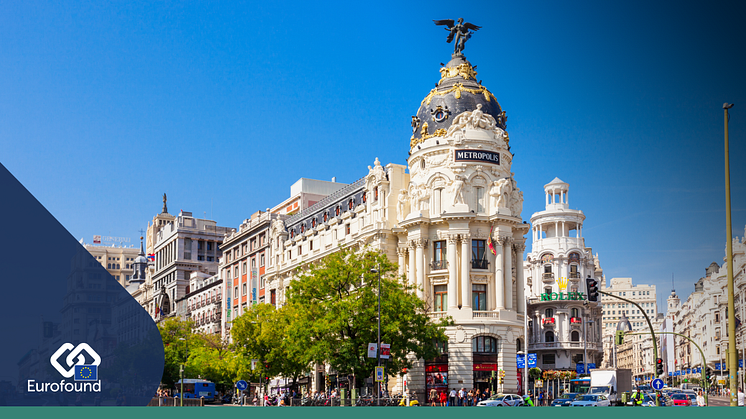
    While 57% of respondents in Spain are pessimistic about the future of their country, only 7% expect their personal life to get worse in the next 12 months. This pessimism gap, which relates to the contrast between societal and personal perceptions of the future, of 50 percentage points in Spain is among the largest of the EU27. The European average equals 34 percentage points, however, the variati

  • COVID-19 one year on: A changed Europe

    The outbreak of COVID-19 in Europe may be moving gradually into history, but the long-term impacts of the pandemic on our work and lives is just beginning.

  • EU structural inequalities in healthcare exposed by COVID-19

    The COVID-19 pandemic has exposed structural inequalities in healthcare capacity across EU Member States threatening convergence in healthcare - where central and eastern Member States with lower health indicators had been catching up with more affluent Member States in a number of areas. This could have serious consequences for economies, labour markets and cohesion across the Union.

  • Eurofound: Looking forward to post-pandemic Europe

    As Europe moves to the final stages of its initial vaccination programme, workers are now returning to offices and other places of work, and citizens in general are reengaging into the community. Eurofound will be releasing important new research this autumn investigating how COVID-19 has impacted our lives and what these changes mean for Europe.

  • Mental health in Slovenia above EU average during COVID-19 pandemic

    ​Slovenians have fared comparatively well in terms of mental health during the COVID-19 pandemic compared to their EU counterparts standing at 53.2 on a scale of 100, behind only Denmark and Finland. According to Eurofound’s large-scale Living, w​orking and COVID-19 online survey, the EU average was 45.3 in spring 2021.

  • Almost three quarter of people in Croatia are struggling financially during COVID-19 pandemic, but minimum wage increases slightly

    ​74% of people in Croatia report difficulties making ends meet, according to Eurofound’s large-scale ​Living, working and COVID-19 online survey​. This is the highest figure among EU Member States, where the average was 45.1%. For Croatia, this number remained consistently high throughout the pandemic at 73.5% in April 2020 reporting a difficult personal financial situation.

  • Vaccine acceptance hinges on transparent communication

    Vaccine acceptance is key to the success of COVID-19 vaccination campaigns worldwide. Worryingly, over a quarter of people living in Europe are hesitant about taking a COVID-19 vaccine, and the level of hesitancy is especially high among heavy users of social media.

Show more