Partial retirement schemes can help secure pensions
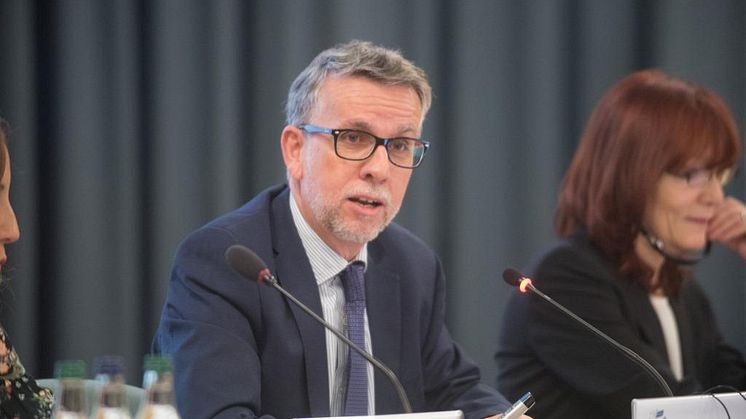
Partial retirement schemes can be an important part of the solution to improving sustainability of Europe’s pension systems.
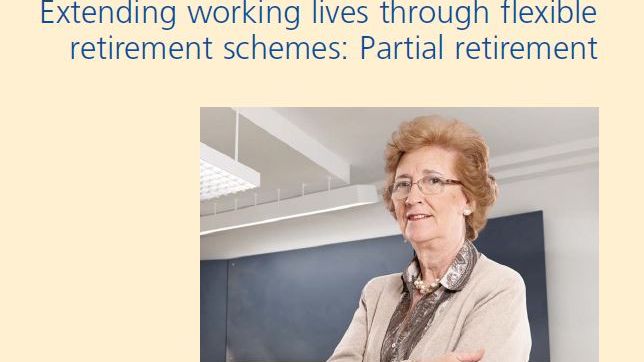
Partial retirement schemes can be an important part of the solution to improving sustainability of Europe’s pension systems.
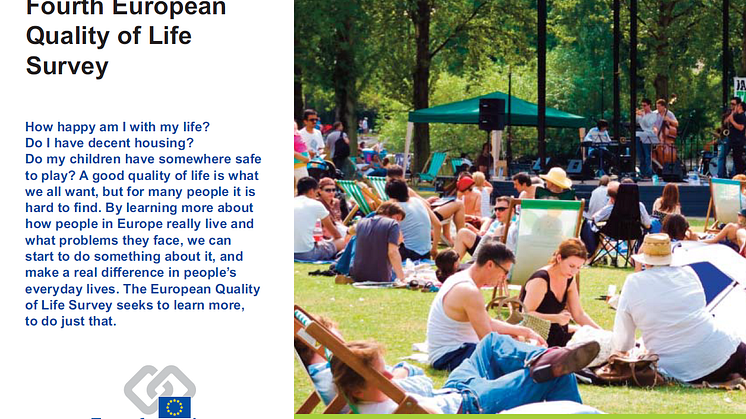
Eurofound launches the fieldwork for the fourth edition of its European Quality of Life Survey today. The survey, which offers a comprehensive picture of the views of people living across 33 countries including the EU Member States and candidate countries, will be carried out over the coming 13 weeks.
The fourth edition of the European Quality of Life Survey covers 33 countries, 28 EU Member S
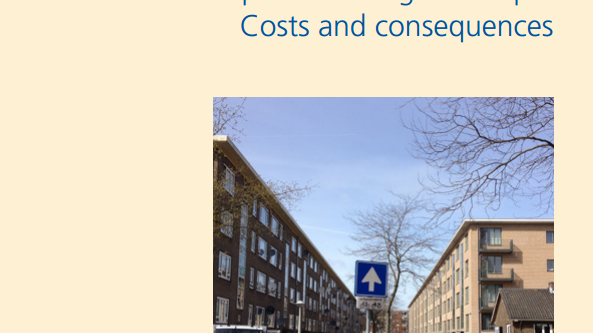
Inadequate and poor housing is costing EU economies nearly €194 billion per year in terms of both direct costs associated with healthcare and related medical or social services, as well as indirect costs such as lost productivity and reduced opportunities. The removal of housing inadequacies across the EU, or at least improving them to an acceptable level, would cost about €295 billion at 2011 pri
Some interesting figures from the July/August edition of Eurofound News:
13,000 – the entire workforce of Marinopoulos, one of the largest supermarket chains in Greece, who have been made redundant as a result of the company’s bankruptcy.
22% – the gender pay gap in the Czech Republic, which in March 2016 prompted the Minister of Labour and Social Affairs to launch a five-year campaign to na

From Eurofound News July/August 2016
Taking action to make work sustainable
For Europe to achieve its goals for growth, workers will have to work for longer and more people will have to work. This requires new thinking to make work sustainable over the life course. In other words, it means achieving living and working conditions that enable workers to retain their physical and mental health,
En el siguiente texto - basado en la contribución de Eurofound a la reunión informal de Ministros de empleo, política social, salud y consumo (EPSCO), de julio de 2016 - el director de Eurofound Juan Menéndez-Valdés echa un vistazo a cómo el mercado europeo se ha transformado en los últimos años y evalúa algunos retos del futuro.
Gran parte de las discusiones sobre el futuro del trabajo
In this blog piece, based on Eurofound’s contribution to the July 2016 informal meeting of the Employment, Social Policy, Health and Consumer Affairs Council (EPSCO), Eurofound Director Juan Menéndez-Valdés looks at how the European labour market has changed in recent years and assesses future challenges.
Most discussions on the future of work are dominated by the impact of key changes in socie
von Stefanie Ledermaier
Seit 2010 hat das NEET-Konzept, damit werden junge Menschen zwischen 15 und 24 bezeichnet, die sich weder in einem Arbeits- noch in einem Ausbildungsverhältnis befinden, in der politischen Debatte Einzug gehalten. Grund dafür war hauptsächlich der starke Anstieg der Jugendarbeitslosigkeit infolge der Wirtschaftskrise. Für Jugendliche und junge Erwachsene wurde es zunehme

Although recent statistics show an improvement in the labour market situation of young people, Eurofound’s new report ‘Exploring the diversity of NEETs’ emphasises the ongoing need to focus on the specific needs of different groups of young people who are NEET.

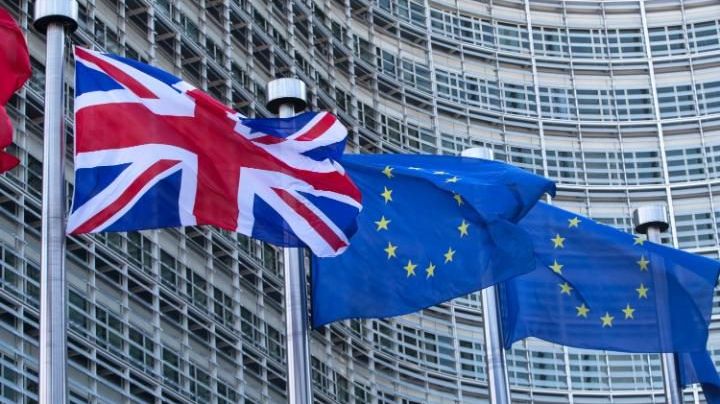
Following the result of the United Kingdom referendum on EU membership, Eurofound will continue to implement its work programme and provide European policymakers with high-quality, timely and policy-relevant knowledge as input to better informed social and work-related policies, covering up to 35 countries (EU Member States, candidate countries and other European countries).
To repeat the reass
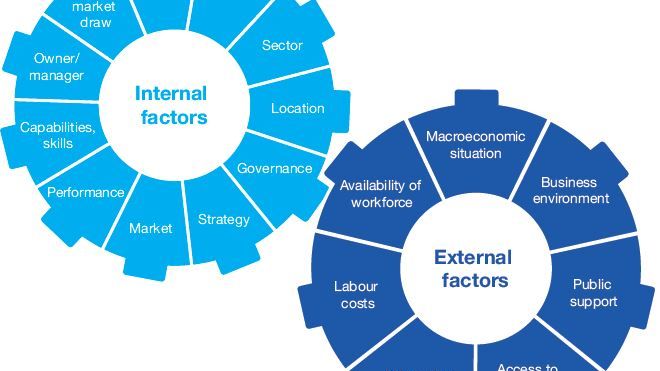
The figure above, derived from Eurofound’s recent report on Job creation in SMEs, illustrates the bundle of factors that determine whether an SME will create jobs – some relating to the company itself (internal) and others relating to the economic and institutional environment in which it operates (external).
Several of the elements are interrelated or have an influence on each other. The stre
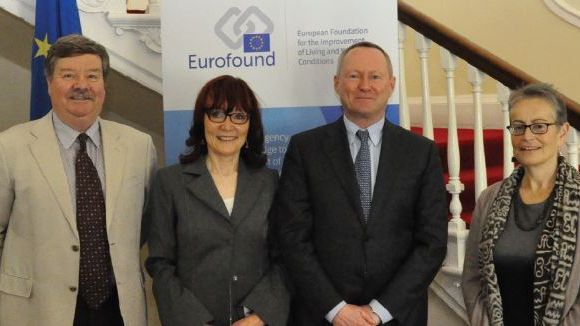
Newly appointed Director at the European Union Agency for Fundamental Rights (FRA), Michael O’Flaherty, visited Eurofound for the first time on 27 May.
A meeting with Eurofound’s Deputy Director, Erika Mezger, and other Agency staff included an open exchange on the activities of the network of EU Agencies and discussion on the work of the cluster grouping of Justice and Home Affairs Agencies.
Fairness in the European labour market was the vision evoked by Commissioner Thyssen in her opening speech at the launch of the European Platform to tackle undeclared work on 27 May.
Aimed at enhancing cooperation in tackling undeclared work, the new European Platform was set up by the European Commission, together with Member States and stakeholders.
Eurofound has observer status in the P
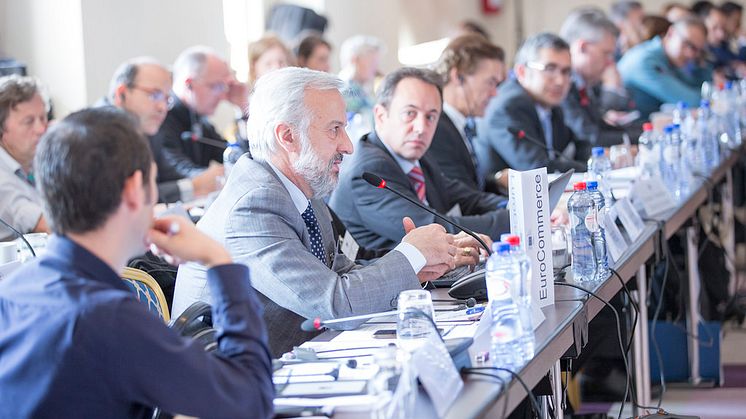
Europe has begun to emerge from its prolonged economic slump: in 2014–2015, for instance, over four million new jobs were created in the EU28. Eurofound’s fifth annual European Jobs Monitor report looks at changes in net employment between Q2 2011 and Q2 2015, at Member State level and in the EU overall.
It uses a ‘jobs-based’ approach to describe employment shifts quantitatively (how many job
A 2014 study from think-tank Bruegel estimates that over the next 20 years, more than 50% of the EU workforce will have their job partly replaced through automation. Advances in machine learning, artificial intelligence, and mobile robotics are likely to affect low-wage, low-skill sectors that have traditionally been immune from this high-tech automation.
This is the context of change against w
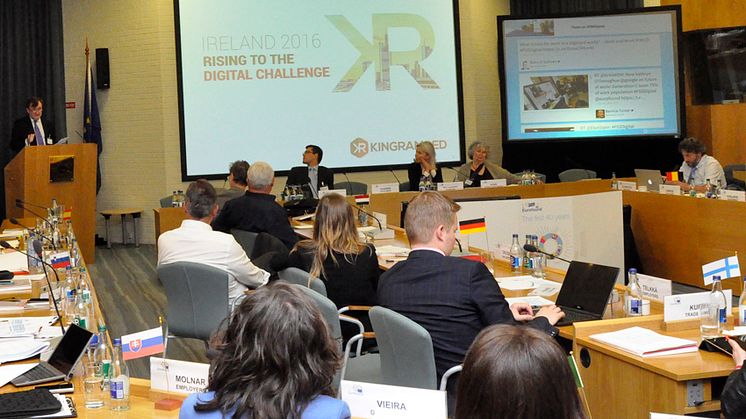
The Eurofound yearbook 2015: Living and working in Europe has just been published, highlighting research into pivotal social and employment issues in Europe, in a year when Eurofound celebrated the 40th anniversary of its establishment.
The yearbook describes 12 months of divergent trends in the work and lives of people in Europe. Working conditions of those at work have not, on the whole, been
Europe has begun to emerge from the prolonged slump caused by the global financial crisis in 2008 and exacerbated by the euro zone single-currency crisis in 2010–2011. In 2014–2015, aggregate employment levels rose faster than at any time since 2008: over four million new jobs were created in the EU28. The fifth annual European Jobs Monitor report looks at employment shifts in the European Union.
In this blog piece, originally posted on Social Europe Journal, Eurofound Director Juan Menéndez-Valdés looks the complex and multi-faceted story of what it is to live and work in the European Union of today.
Brexit dominates political debate, migrants stream through borders, social protection systems are collapsing, changing forms of work are corroding conditions, unemployment levels remain hi
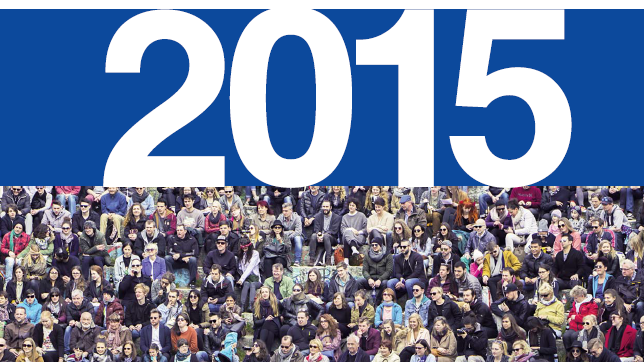
Eurofound has published its yearbook for 2015. The report shows that employment in Europe is on a slow growth trajectory after a long period of job loss and economic stagnation, but quality of life has slipped for many Europeans, and poverty is a threat for millions. Download the report: http://bit.ly/LWE2015
Cliccare qui per ascoltare la ricercatrice Sara Riso introdurre il nuovo rapporto
Il nuovo rapporto di Eurofound ‘misure a sostegno delle start-up giovanili: dall’implementazione alla valutazione’ offre una mappatura della varietà delle misure agevolative a favore delle start-up giovanili e rivisita in modo critico i risultati che emergono da valutazioni di tali interventi volte a stabilire la