Press release —
VOICES OF THE FJORDS - She Came Home to Hyllestad and Found a 1000 Years Waiting
VOICES OF THE FJORDS - Episode #4
Hyllestad, Fjord Coast • Western Norway • June 2026
She left as soon as she could — and spent two decades at sea, navigating the world's busiest shipping routes as a master mariner. Then she came back. And what Frøydis Akse found in the fjords of Hyllestad was more extraordinary than anything she had encountered abroad: a landscape still shaped by the same hands, the same skills, the same choices as a thousand years ago. Her project, Viking Footprints, is not a museum. It is a living argument — that the real Viking story is still here, still breathing, and still largely untold.
There is a place on the Fjord Coast of western Norway where the stone under your feet was once cut and shipped across the trading routes of Europe. The millstone quarries of Hyllestad produced grindstones that fed grain-hungry households from Iceland to Poland and Northern Germany, and the rock is still here, split and scarred, half-buried in hillsides above a fjord that looks exactly as it must have done in the Viking Age. It is on this land, on a small coastal farm her great-grandparents built with their own hands, that Frøydis Akse has built something quietly remarkable.
Frøydis, you left Hyllestad when you were young 'as soon as you could'. What brought you back?
I think it is normal for young people to want to get away. When I was young, I could not leave here quickly enough. I thought the place was too small, not much going on. So I left, got my maritime certificates, worked as a deck officer, all the way up to master mariner. My job took me around the world. And the more places I visited, the clearer it became - almost like a craving - how unique my home place actually is. It was not one single moment. It was a feeling that developed over time, the longer I was away.
Viking Footprints is not your typical Viking experience. What was missing in how the Viking Age was being told?
The actual story is far more interesting than what you find in the movies or on Netflix. It should not always be about the drama of warriors and battles. I want to tell a story of people, of skills, hardship, and ways of living that left a profound legacy into the modern era. Much more so than you might realize. There is a need to move away from the obvious, stereotypical image of the male Viking warrior. The craftsmanship, creativity and everyday lives of both men and women in Scandinavia are far more complex and interesting. I would like to show the real thing in a real place. No screens. No AI.

"I believe that a small-scale, personal experience could be a better way to share knowledge - maybe actually more genuine and honest. It is all about meetings between people. And the fact that I grew up here adds value. It is the real thing. It is not made up or constructed."
Your farm is literally surrounded by thousand-year-old traces. Does the history ever feel present - almost alive?
Yes, here in Hyllestad we are literally stepping on our cultural heritage. The land and fjord around us tell many stories from the past - a Viking Age coin hoard found on a neighbouring farm, rocks in the landscape littered with traces of millstone production. We see the evidence everywhere. And the fact that the handcraft of carving millstones is not forgotten; the fact that you can actually grind your flour on a genuine, locally made millstone is something that makes the history come alive. The sounds, the smell, the taste: it could be exactly the same as the people here experienced more than a thousand years ago.

You are passionate about bringing the role of Viking women back into the story. What surprises people most?
If you only talk about half of the population, you only get half a story. You miss the connections. I think people are surprised above all by the status, the legal rights, that women had in the Viking Age. The right to divorce. Property ownership. Boat ownership. In certain circumstances, a presence in the decision-making assembly, the ting. And women had some pretty important, life-saving skills. They could make clothes and textiles from almost any fibre they could find. They knew the plants for nutrition, for medicine, and for making contact with the gods. This is power. Why has it taken so long to be told? I suppose it has something to do with old established structures in academia. But that is changing now.

"The people of the Viking Age were not only the strong, self-absorbed individuals we know from the TV shows. We forget that people's lives depended entirely on the community they lived in. Individualism was not the ideal amongst everyday people."
Your work spans textile culture, traditional wooden boats, a Viking Age garden. Is there a thread connecting all of it?
Yes, of course there is a thread. I come from a small farm by the fjord, where you had to do many different things to survive. You needed many skills. If you needed or wanted something, you had to make it yourself. This has been the case for the past few hundred years along this coast — and was absolutely the case in the Viking Age. Today we specialise. We lose the ability to have a broad base of skills for living. In the past, everyone had to know a little of everything to get by. That is the model I am trying to replicate with Viking Footprints.

Where do you see Viking Footprints going — and what is the one story from this region the world has not yet heard?
It is still just at the beginning, and that is exciting. I have no desire to expand into something that loses the essence - the intimacy you get with small groups of people. Perhaps in time there will be more educational experiences, courses to pass on the knowledge and skills.
I am also involved in the new UNESCO Global Geopark in our area, the Fjord Coast Park. The story it tells is life on the edge. Literally on the edge of the sea. How people forged a life here for thousands of years despite the climate, the geography, the difficulties. Those footprints can still teach us something today.
"We are building a bridge from the past into the present - and with the opening of the Fjord Coast UNESCO Global Geopark, this place is now recognised internationally for exactly what it has always been: somewhere truly extraordinary."
Frøydis Akse can be found, in her Viking dress or not, at her farm in Hyllestad on the Fjord Coast of western Norway. Viking Footprints runs small-group experiences from spring to autumn, from half-day introductions to the Viking Age and guided nature walks to hands-on textile workshops in weaving, band-weaving, and needle-binding. The project is also part of the new Fjord Coast UNESCO Global Geopark. Full details and booking atwww.vikingfootprints.com.
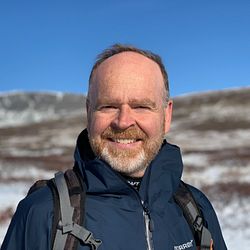
Frøydis Photos: Mal Dickson Photography / Mal Dickson Guiding & Photography, Norway
VikingFootprint.com Photos :Visit Fjordkysten & Sunnfjord.
All images available for editorial/press use only. All other use strictly prohibited without the photographer's written consent.
Frøydis Akse is available for press interviews: contact@vikingfootprints.com
Related links
Topics
Categories
Fjord Norge AS/Fjord Norway is the official tourist board of Western Norway. Our main functions are international marketing of the Fjord Norway region, press-and study trips, and to convey information from the Fjord Norway region to tour operators, press and consumers worldwide. Find more information on our website.
For more pictures and video material click here.