Press release —
NGK's Honeycomb Structure Ceramics for DAC Deployed and Operating in Avnos' Project Brighton DAC System
NAGOYA, Japan, October 6, 2026 – NGK Corporation today announced that its honeycomb structure ceramics for Direct Air Capture (DAC) have been deployed and are now operating in Avnos, Inc.'s Project Brighton facility in Bridgewater, New Jersey. The deployment represents a significant milestone for NGK's DAC technology, advancing from development-stage validation to operation in an active DAC system under real-world conditions. Through participation in the project, NGK will gather operational data and performance insights to support the continued development of advanced honeycomb structure ceramics for carbon removal applications.
Deployment in Project Brighton
Project Brighton is the largest operating Hybrid Direct Air Capture (HDAC™) deployment currently operated by Avnos. Located at the company's Technology Development Center in Bridgewater, New Jersey, the facility is designed to capture up to 450 tons of atmospheric CO2 annually while producing approximately 475,000 gallons of clean water per year. The project is also evaluating the use of captured atmospheric CO2 as a feedstock for sustainable aviation fuel (SAF) production.
NGK's honeycomb structure ceramics have been incorporated into the solid-sorbent DAC process deployed at the facility. The project provides an opportunity to evaluate honeycomb structure ceramic performance and durability under continuous operating conditions while generating practical knowledge to support future product development and deployment.
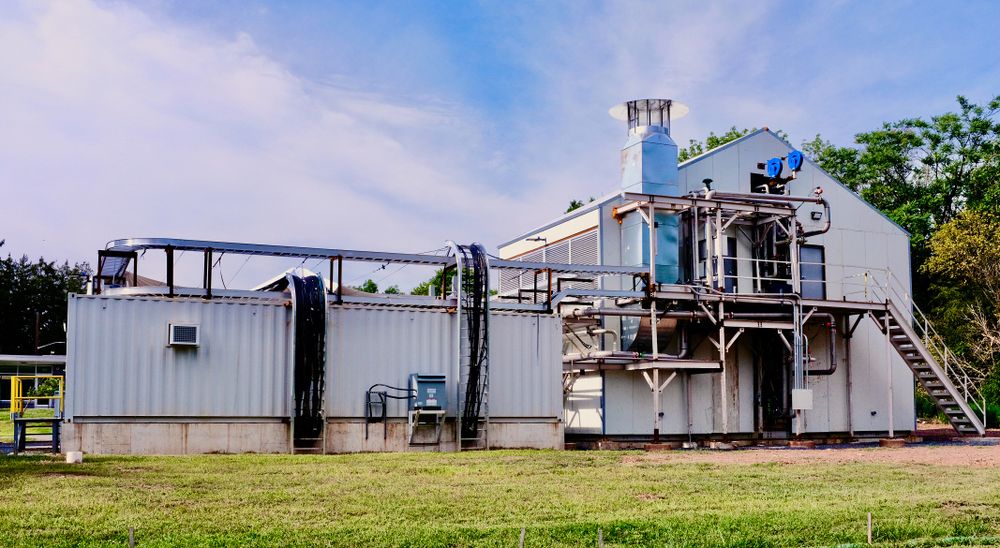
Project Brighton DAC facility in Bridgewater, New Jersey
Collaboration Background
NGK and Avnos initiated a joint development program following discussions on applying NGK's ceramic honeycomb technology to solid-sorbent DAC systems. By leveraging experience gained through decades of honeycomb structure ceramic development, NGK proposed a honeycomb-based approach capable of supporting the requirements of DAC applications.
Throughout the collaboration, NGK worked closely with Avnos to optimize honeycomb structure ceramic specifications for the company's DAC process. Rapid responses to optimization requirements and the performance achieved through the development program contributed to the adoption of NGK's honeycomb structure ceramics in Project Brighton.
Key Features of NGK's Honeycomb Structure Ceramic for DAC
NGK's honeycomb structure ceramics for DAC are based on ceramic honeycomb technologies originally developed for automotive emissions-control applications, including HONEYCERAM™.
- Large Surface Area Within a Compact Structure
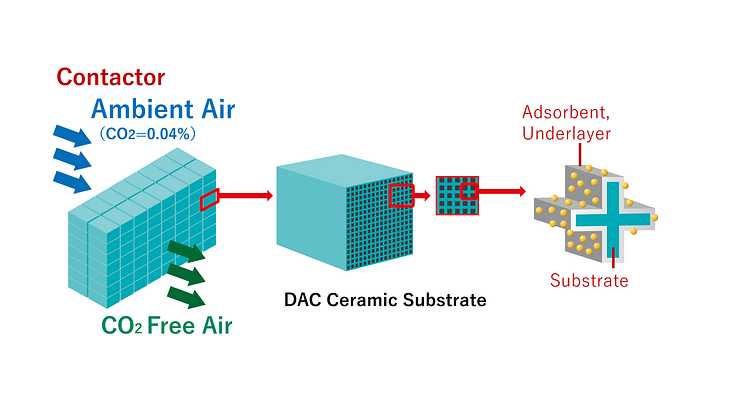
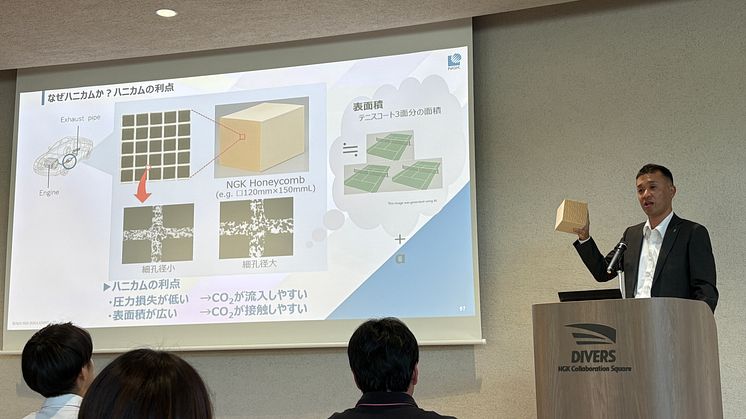
The honeycomb architecture provides a large contact area between air and sorbent materials while maintaining a compact form factor. This design is well suited for applications that require efficient processing of large volumes of air.
- Low Pressure Drop
The straight-channel honeycomb structure promotes airflow with significantly lower pressure drop than conventional pellet-based configurations, helping reduce blower power requirements within DAC systems.
- Scalable Manufacturing Platform
NGK manufactures honeycomb structure ceramics through a global production network spanning 11 locations across eight countries. This manufacturing foundation provides a pathway toward future deployment as the DAC market expands.

NGK ‘s honeycomb structure ceramics for DAC
Looking Ahead
Building on the operational experience gained through Project Brighton, NGK will continue improving the performance of its honeycomb structure ceramics for DAC and advancing technologies suited to a broad range of DAC applications and deployment models.
The company also aims to participate in future DAC projects, including potential follow-on developments associated with Avnos' ongoing activities, while pursuing opportunities across the broader carbon removal market. Through these efforts, NGK will accelerate the development of DAC technologies as part of its carbon-neutral business portfolio and contribute to the wider deployment of negative-emissions solutions.
About NGK Corporation
Founded in 1919, NGK Corporation is a global ceramics manufacturer active across mobility, energy, digital society, and industrial markets. Leveraging proprietary ceramic technologies, NGK develops products and solutions that contribute to a carbon-neutral and digital society. The company changed its corporate name from NGK Insulators, Ltd. to NGK Corporation in April 2026 as part of its ongoing business transformation.https://www.ngk-global.com/
About Avnos, Inc.
Avnos builds infrastructure-scale technology that transforms data center and industrial waste heat into cooling, clean water and durable carbon removal through a single platform.Avnos' Hybrid Direct Air Capture (HDAC™) technology integrates directly into data centers, carbon storage hubs and next-generation fuel facilities, helping customers address energy, water and carbon challenges through a single infrastructure solution. Avnos HDAC Modules are designed to deploy quickly and scale across diverse sites and applications.Avnos is advancing commercial HDAC deployment at infrastructure scale with global partners. Learn more at www.avnos.com.
Related links
Topics
Categories
About NGK
NGK Corporation (NGK) is a leading company in the field of ceramics. Since its foundation in 1919, NGK has leveraged its unique ceramic technologies to deliver numerous groundbreaking products that address social challenges.
Today, NGK operates in more than 10 countries worldwide, with business areas including mobility, energy, IT, and industry. As one of the largest manufacturers of ceramic substrates for automotive catalytic converters, NGK is actively working to reduce environmental impact on a global scale.
Under its medium- to long-term vision, “NGK Group Vision Road to 2050,” the NGK Group is promoting the transformation of its business portfolio toward the Carbon Neutral (CN) and Digital Society (DS) fields.
In the CN field, the Group is advancing initiatives such as Direct Air Capture (DAC) technologies that capture CO₂ directly from the atmosphere.
In the DS field, NGK’s advanced product lineup includes the “EnerCera” series—compact, thin, high energy-density lithium-ion rechargeable batteries that support sustainable energy infrastructure—as well as translucent alumina wafers, key components gaining attention as indispensable materials for chiplet integration processes in semiconductor manufacturing.
Through the provision of innovative, high-quality products, NGK is committed to contributing to society. To help create a future in which people can coexist with nature, NGK will continue to develop and provide products that support social infrastructure while preserving the environment.