Nyhet —
CliN-BluFeed Brings Together Nordic Stakeholders to Advance Sustainable Marine Resource Management
On November 5 the European research project 'CliN-BluFeed' brought together key stakeholders from Norway, Iceland, and the Faroe Islands for a full-day workshop in Tromsø . The event provided a platform for dialogue between researchers, industry representatives, and fisheries stakeholders. The focus was on utilizing innovative ocean observing technologies and scientific knowledge for sustainable harvesting and management of Calanus finmarchicus, a promising marine resource for the aquaculture feed industry.
Project manager from Akvaplan-niva, Lionel Camus, says: "The workshop demonstrated the importance of bringing together industry and researchers to jointly identify challenges and develop solutions. The strong engagement of stakeholders and the opportunities identified for future collaboration confirm the relevance of the CliN-BluFeed approach."
Unlocking the Potential of a Sustainable Marine Resource
The growing global demand for aquaculture products is driving the search for sustainable, nutritious, and environmentally responsible alternatives to conventional fish feed ingredients. Calanus finmarchicus, a small marine copepod widely distributed across the North Atlantic and Nordic Seas, represents a promising resource due to its high lipid content and nutritional value.
However, ensuring the sustainable exploitation of this resource requires a better understanding of its distribution, seasonal variability, population dynamics, and ecological role. Traditional ship-based monitoring is expensive, carbon-intensive, and often unable to capture the rapidly changing and uneven distribution of zooplankton populations.
The 'CliN-BluFeed project (2024–2027)', funded through the European Sustainable Blue Economy Partnership, addresses these challenges by developing an innovative, low-carbon, autonomous ocean observing and forecasting system to support science-based management of C. finmarchicus stocks in the Norwegian Sea.
Coordinated by Akvaplan-niva (Norway), the project brings together an international consortium comprising the AIR Centre (Portugal), Alfred Wegener Institute – AWI (Germany), Institute of Oceanology of the Polish Academy of Sciences – IOPAN (Poland), and Cyprus Subsea Consulting and Services – CSCS (Cyprus).
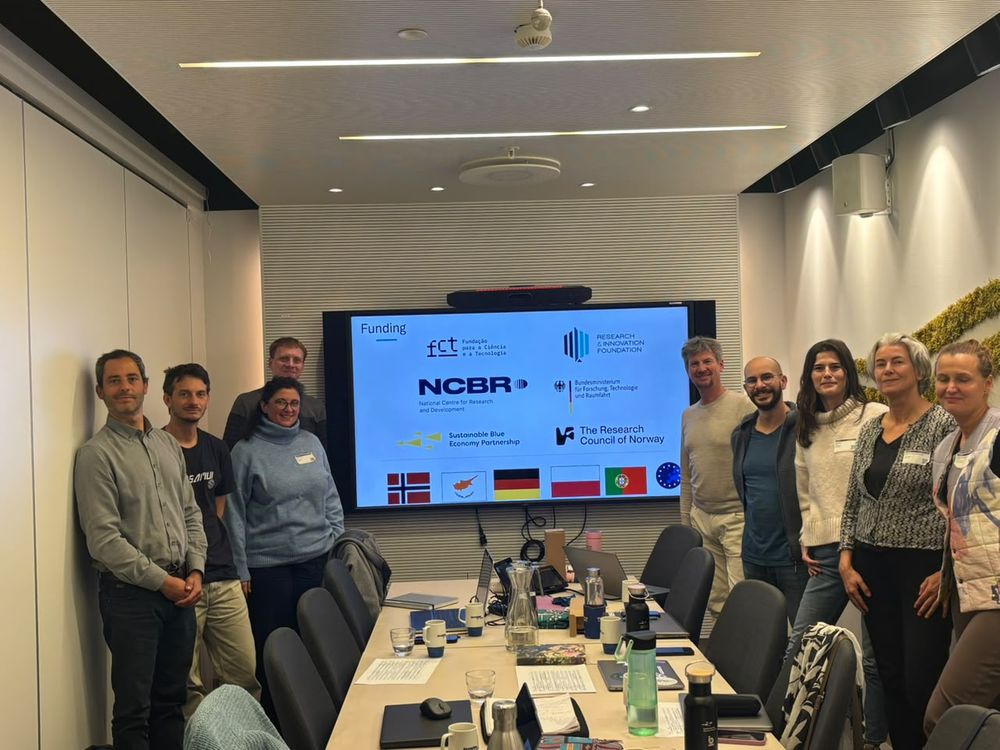
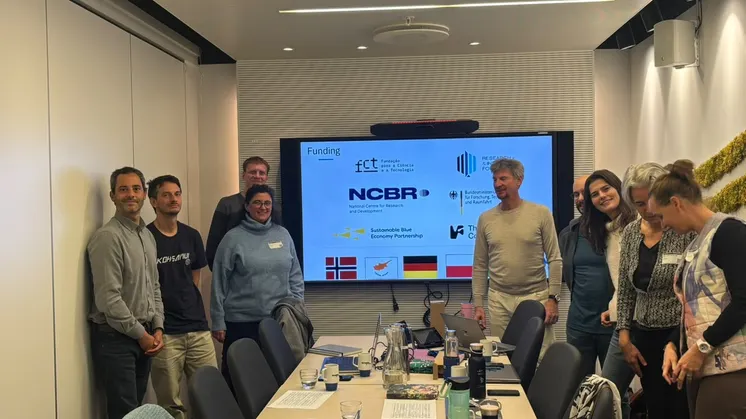
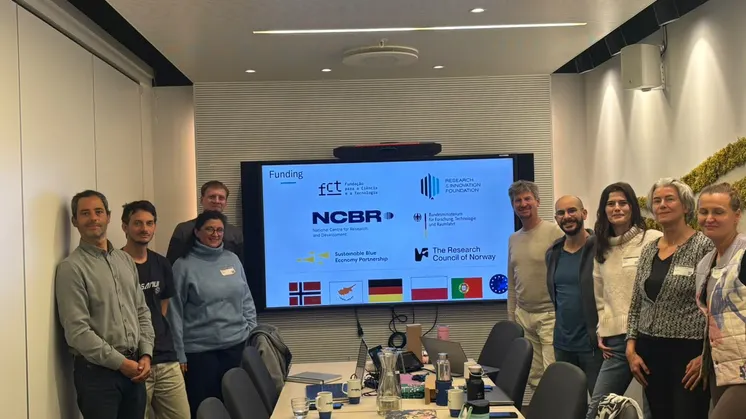
The project team gathered in Tromsø, Norway to discuss project findings and prepare for the stakeholder workshop (Photo: CSCS)
Harnessing Autonomous Technologies for Smarter Ocean Monitoring
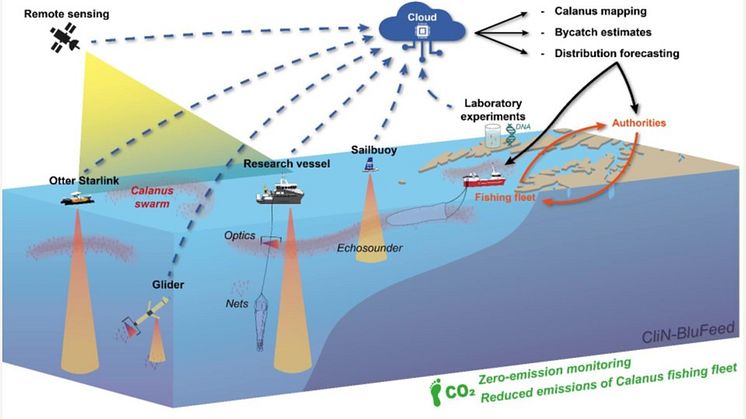
CliN-BluFeed combines advanced marine technologies, including autonomous underwater gliders, uncrewed surface vehicles, acoustic echosounders, optical imaging systems, and satellite remote sensing.
By integrating these complementary observing technologies, the project aims to improve the spatial and temporal coverage of zooplankton monitoring while reducing the dependence on conventional research vessels. These ocean observations will contribute to a better understanding of C. finmarchicuspopulations and can support the development of forecasting tools for sustainable resource management and cost- and carbon-effective harvesting.
Beyond scientific advances, the project seeks to demonstrate how autonomous ocean observing systems can deliver cost-effective, low-carbon environmental monitoring solutions that benefit both industry, marine resource managers and the environment.
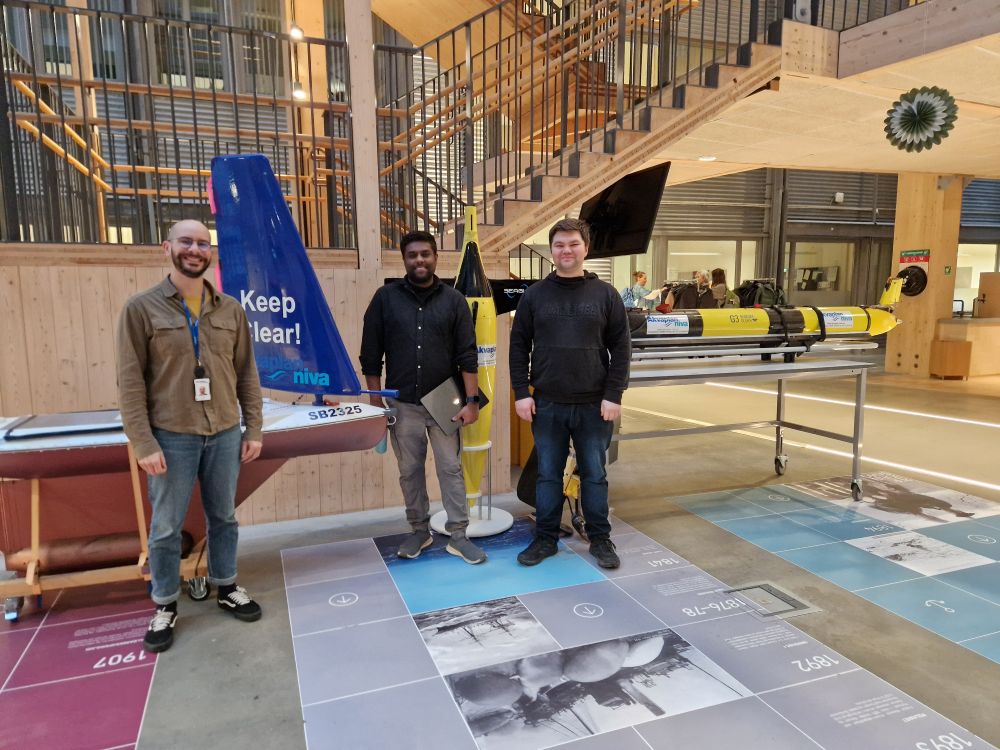
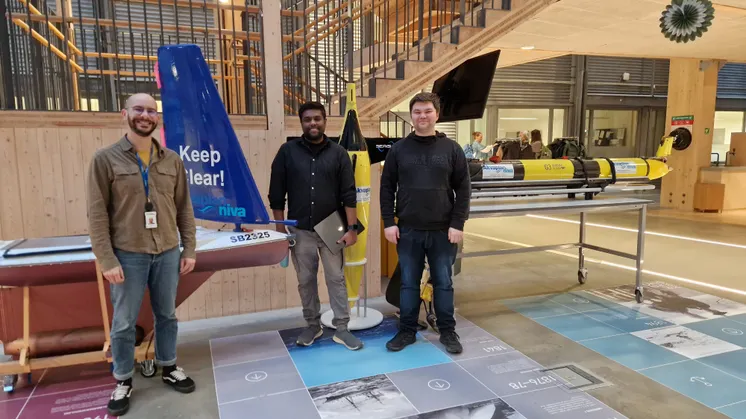
Mobile observing technologies used for CliN-BluFeed (Sailbuoy, Seaglider and Slocum).From left Pierre Priou, echo sounder specialist, Kanchana Bandara numerical plankton ecologist and Håvard Buschmann autonomous observing systems operator. All Akvaplan-niva (Photo: Trude Borch/Akvaplan-niva).
Bringing Science and Industry Together to Address Real-World Challenges
On 5 November, CliN-BluFeed partners organized a full-day stakeholder workshop in Tromsø, bringing together representatives from Norway, Iceland, and the Faroe Islands.
Participants represented commercial fisheries, fisheries organizations, scientific advisory bodies, and academic institutions, reflecting the diverse interests and expertise involved in the sustainable management of marine resources.
The workshop aimed to identify the main challenges, operational needs, and knowledge gaps faced by stakeholders and explore how scientific research, autonomous observing technologies, and improved access to environmental data could help address these challenges.
Through interactive discussions, participants exchanged perspectives on current monitoring limitations, scientific priorities, and opportunities to strengthen the cooperation between research institutions and the fishing industry.
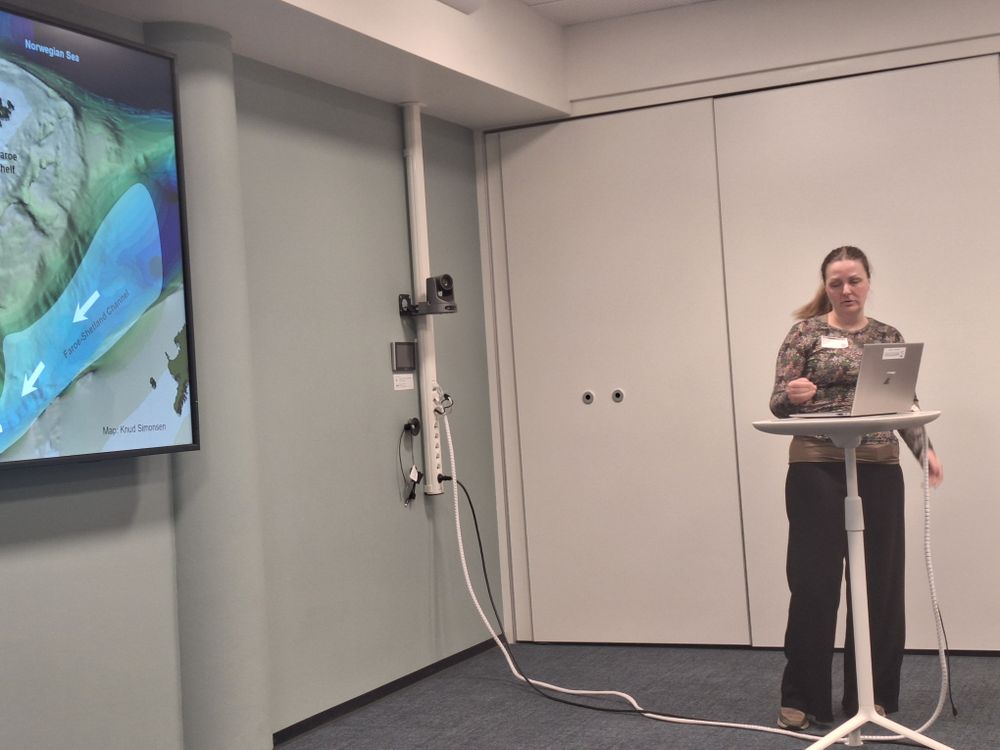
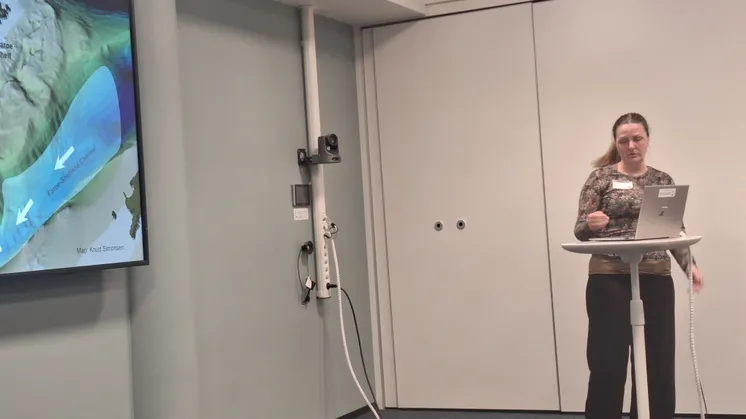
Sólvá Jacobsen, Scientist at Faroes Marine Research Institute, Faroe Islands
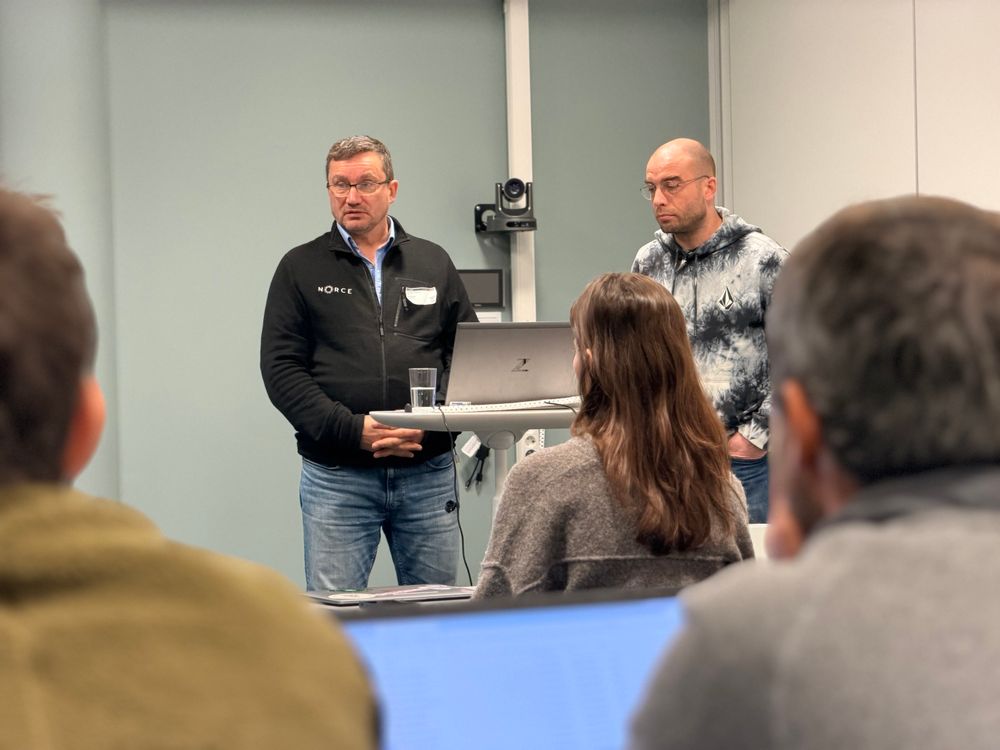
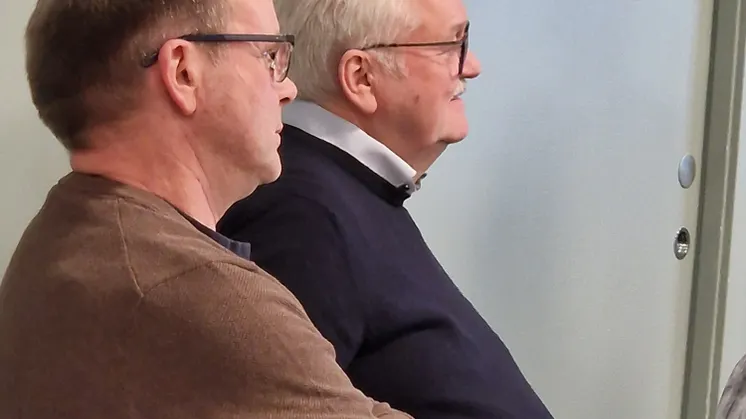
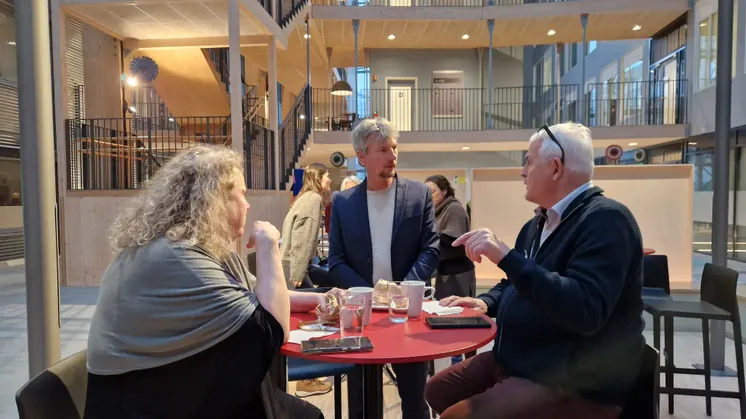
Left, Ole Petter Pedersen, Scientific coordinator at Calanus AS and right, Einar Heinesen, boat skipper at Nordnes AS.
Strong Alignment Between Research and Stakeholder Needs
The workshop confirmed a strong alignment between the scientific and technological developments pursued by CliN-BluFeed and the needs expressed by stakeholders.
Discussions highlighted the potential of innovative ocean observing technologies to improve knowledge of C. finmarchicus distribution and dynamics, providing valuable information for fisheries operations, scientific assessments, and sustainable resource management.
Importantly, the workshop also identified several promising opportunities for follow-up activities and future collaboration, opening the door to joint initiatives that could extend beyond the current project.
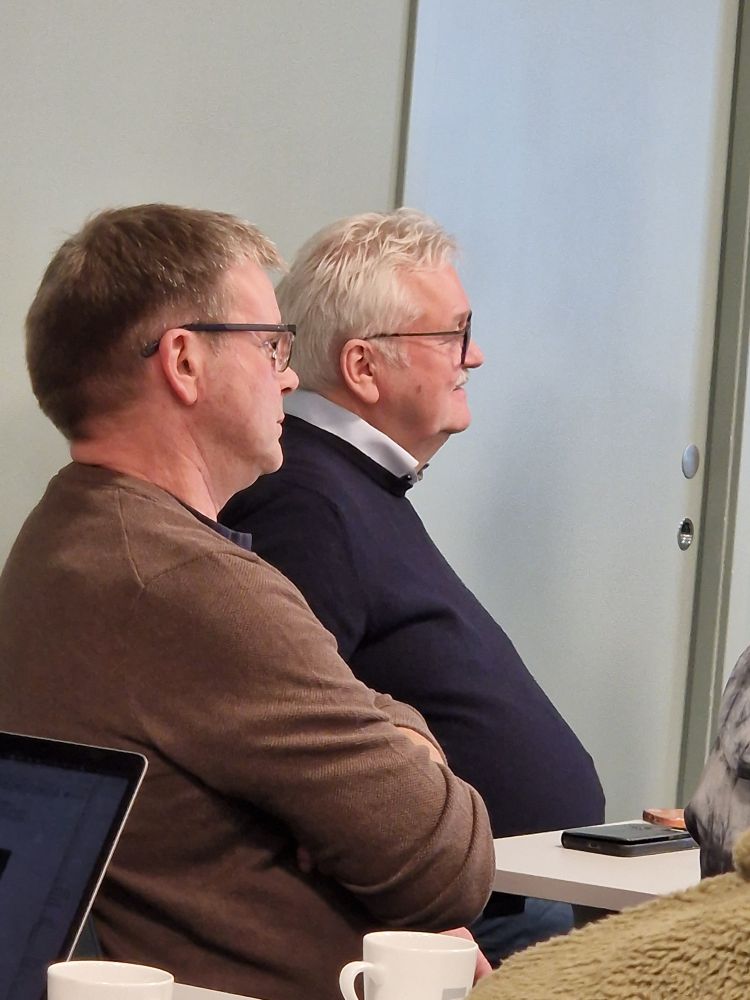
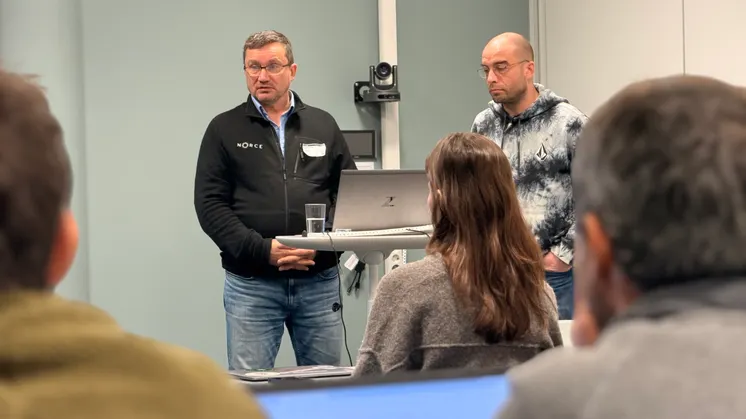
Left, Tormund Grimstad, CEO Nordnes AS and right, Hanus Hansen CEO of JFK fishing company, Faroe Islands.
Building Long-Term Partnerships for a Sustainable Blue Economy
The successful workshop represents an important milestone for CliN-BluFeed, reinforcing the value of cross-sectoral collaboration and stakeholder-driven innovation.
By connecting scientific expertise, technological capabilities, and industry knowledge, CliN-BluFeed aims to accelerate the development of practical solutions that respond to real-world challenges while supporting the sustainable use of marine resources.
A concrete outcome of the workshop was the need to test and CliN-BluFeed observing technologies during the fishing operations to minimize scouting time and to guide the fishing boats.
The project partners will build on the outcomes of the workshop to explore new opportunities for collaboration, strengthen stakeholder engagement, and identify potential pathways for future joint research and innovation activities.
CliN-BluFeed demonstrates how European research cooperation, combined with active industry engagement, can contribute to a more sustainable, innovative, and knowledge-driven blue economy.
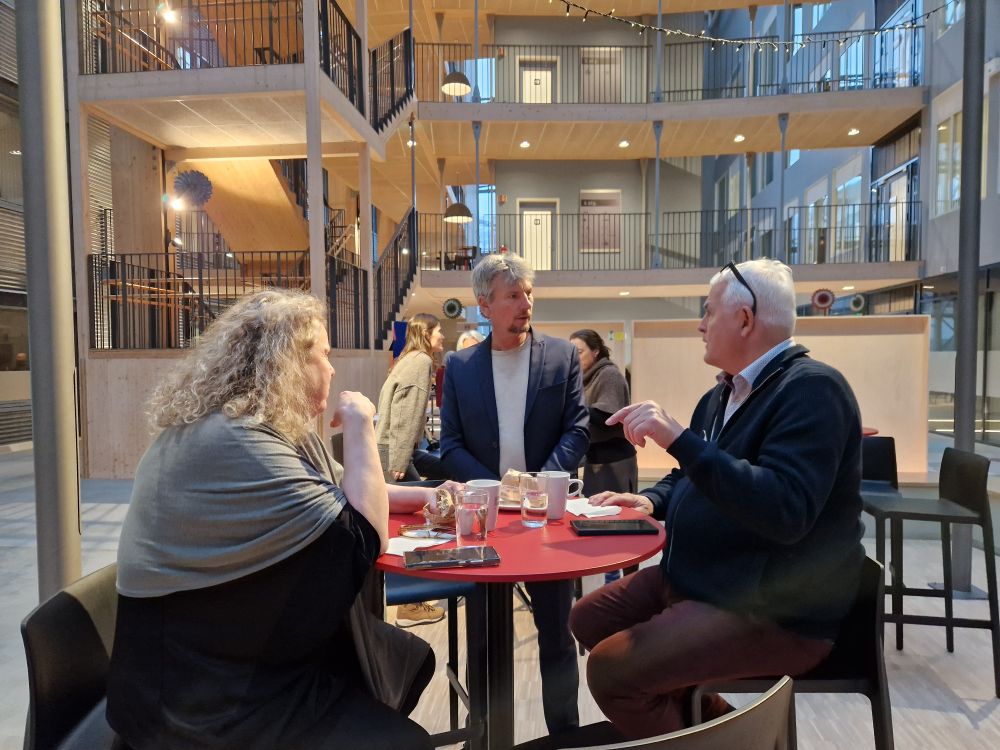
Left, Hildur Pétursdóttir, scientist at Marine and Freshwater Research Institute of Iceland, middle, Lionel Camus, CliN-BluFeed project manager, and right, Hördur Baldvinsson CEO of the R&D institute the Knowledge Centre in Vestmannaeyjar Iceland