Press release —
Osaka Sets Out Its Vision to Become Japan’s Second Capital
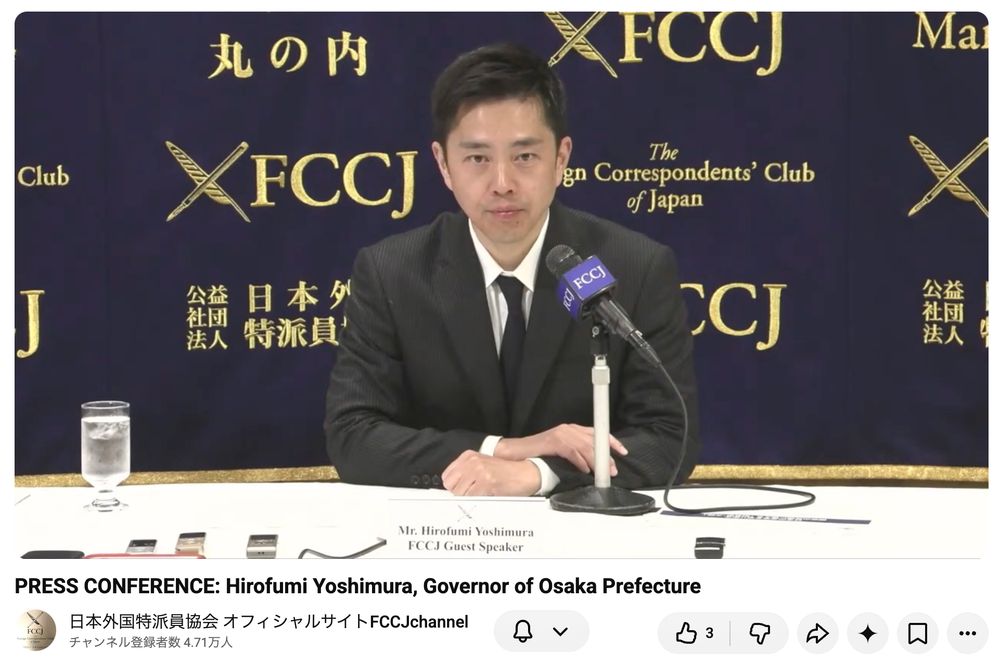
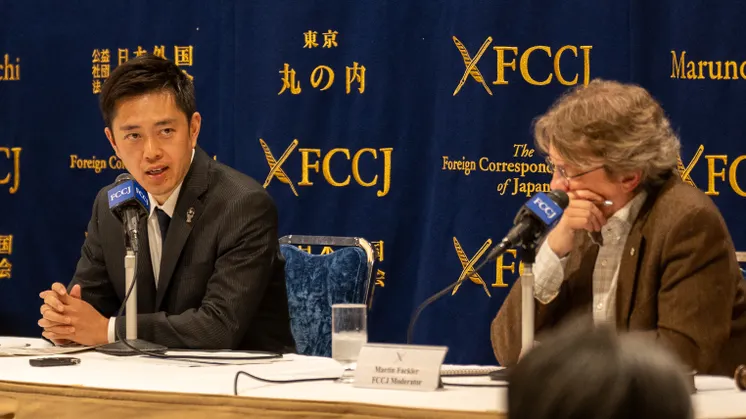
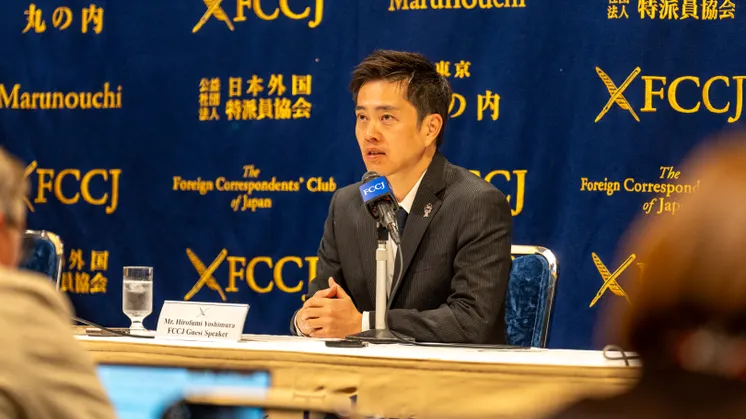
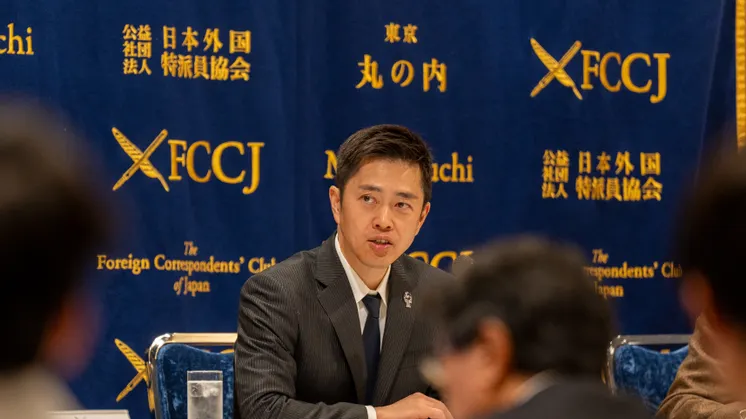
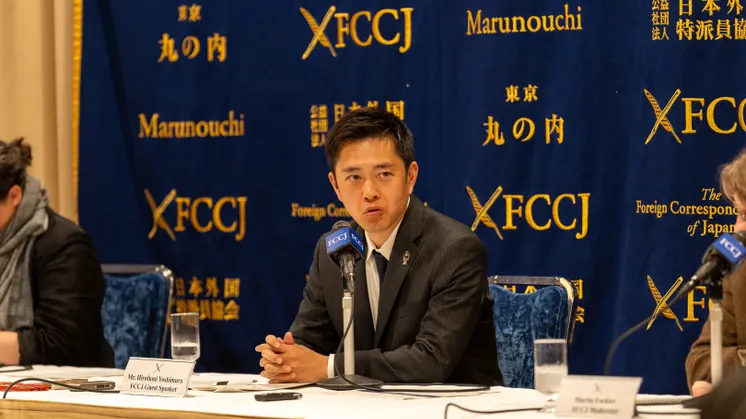
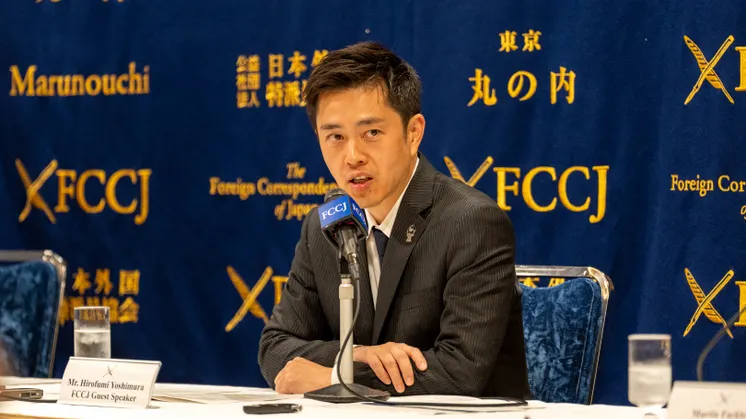
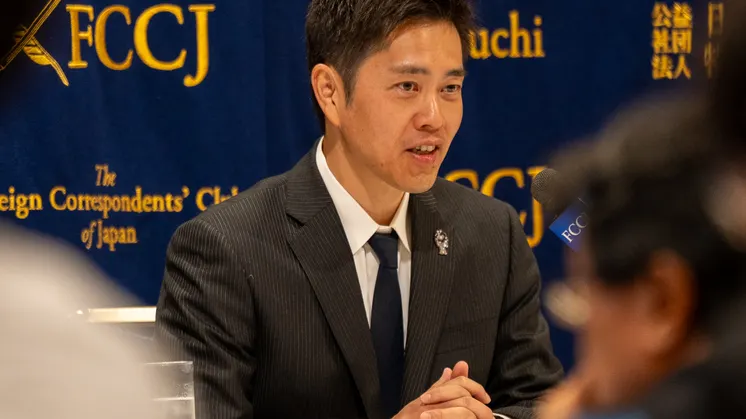
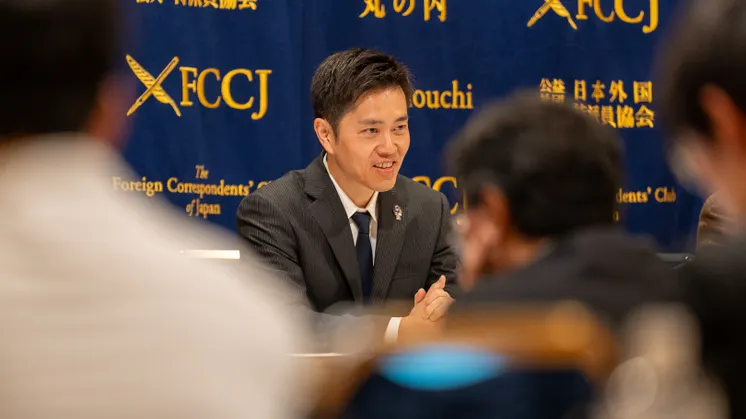
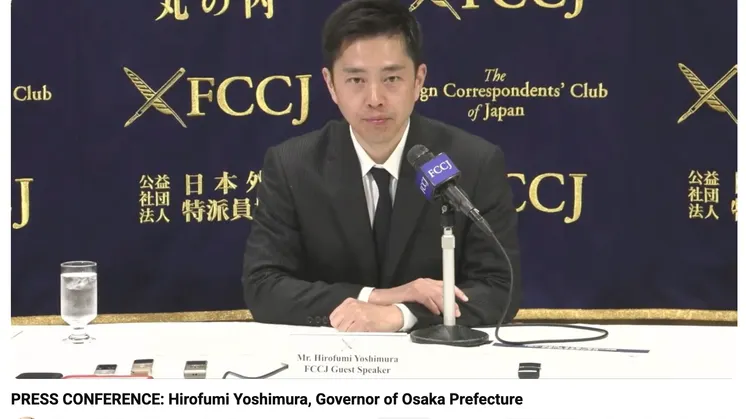
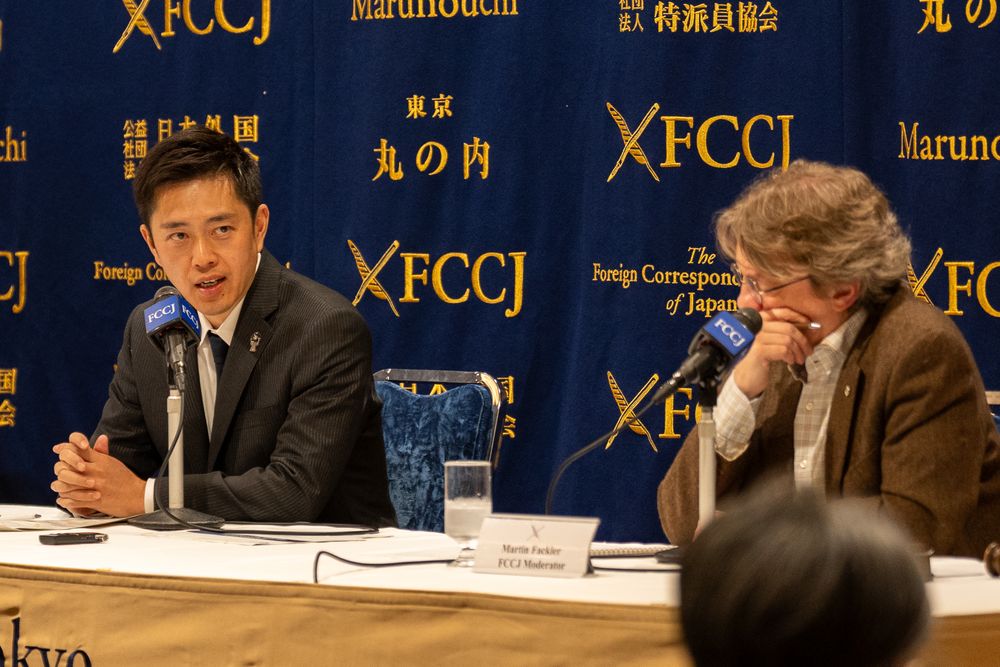
On November 25, 2026, Osaka Governor Hirofumi Yoshimura presented his vision for Second Capital Osaka at the Foreign Correspondents’ Club of Japan (FCCJ). He said a second capital would provide backup for core national capital functions in emergencies and help drive Japan’s economic growth in normal times.
Why Japan Needs a Second Capital
Yoshimura said Japan’s economic, political and administrative functions are heavily concentrated in Tokyo. A major earthquake directly beneath the capital or an eruption of Mount Fuji could disrupt national functions, with consequences for Japan and beyond. He also pointed to population decline, a falling birth rate and an aging population as challenges to sustaining economic growth.
The Second Capital Law
Yoshimura said the National Diet passed the Second Capital Law in July and that it took effect in October. The law sets out two roles for a second capital. It would immediately provide backup for core legislative, executive, judicial and economic functions in a major disaster affecting the Tokyo area. It would also play a central role in developing multi-polar economic growth zones.
The national government is to consult the governor of each second capital before setting out its development policy, Yoshimura said. He pointed to the development of facilities, regulatory easing and tax measures as steps the national government would take. He described the law as a first step toward closer cooperation between prefectures and designated cities and toward giving cities a larger role in economic policy alongside the national government.

Why Osaka
Yoshimura cited Osaka’s population of about 8.8 million, its economy of approximately ¥43 trillion and the round-the-clock operation of Kansai International Airport. He also pointed to Osaka’s urban infrastructure, its regional transport network and the relatively low risk of Osaka and the Tokyo area being affected by the same major disaster.

Growth Vision of Second Capital Osaka
“So what we are aiming for is not a ‘mini Tokyo.’ Rather, it is a second capital that would realize Japan’s growth and resilience by leveraging the unique identity and strengths of Osaka,” Yoshimura said. To prepare for emergencies, Osaka aims to develop a joint office complex for the national government and Osaka Prefecture. The vision also calls for backup arrangements for corporate headquarters, financial and telecommunications infrastructure, and a system for coordinating emergency relief across a wider area.
To support the development of multi-polar economic growth zones, the vision calls for putting advanced technologies into use and creating conditions for private companies to grow through regulatory easing and tax measures. It also envisages an integrated resort and a stronger night-time economy. Other priorities include attracting and developing global talent, working with companies and universities to address social challenges and create new businesses, and strengthening transport, digital infrastructure and financial functions.

Proposed Hubs Across Osaka
Across the prefecture, the vision identifies Hokusetsu for healthcare and advanced science, including quantum technologies, and Kita-Kawachi and Naka-Kawachi for manufacturing. Sakai and Senshu would support AI, green energy, logistics and tourism. Minami-Kawachi would serve as a suburban testing ground for solutions to social challenges.
Within Osaka City, Yoshimura cited Nakanoshima for life sciences research and development, Kita for global companies and headquarters functions, and Yumeshima for international tourism building on the integrated resort and the legacy of Expo 2025 Osaka, Kansai, Japan. He also described plans for a future technology testing hub east of Osaka Castle, potentially using a new special zone framework.

Local Governance
Under the Osaka metropolis plan, a new regional government would bring together the wider-area functions now handled by Osaka Prefecture and Osaka City, while four special wards would provide services directly to residents. Yoshimura said the prefecture and city are designing the proposed system and would seek residents’ judgment through a referendum.

Questions from the Press
Backing Up Capital Functions in an Emergency
Asked whether the proposal involved moving parts of central government ministries and agencies to Osaka, Yoshimura said it did not call for their relocation. He explained that the aim was to ensure Osaka could back up capital functions in an emergency. He also said that national government officials in key roles could carry out their duties from a second capital to help make those arrangements effective.
Giving Cities a Greater Role in Economic Growth
Yoshimura said deregulation and tax, fiscal and legal measures would be important in enabling each second capital to pursue a growth strategy suited to local circumstances. He said these measures could make it easier for businesses to invest and pursue new ventures, and that individual cities’ growth strategies should form part of Japan’s national growth strategy.
A National Vision Beyond Osaka
Asked how the initiative might extend beyond Osaka, Yoshimura cited Hokkaido, Aichi Prefecture and Fukuoka Prefecture as examples of regions that could also serve as second capitals. He said each second capital should build on its regional strengths and help drive Japan’s economic growth.
Next Steps for Osaka’s Second Capital Initiative
Asked about the timetable, Yoshimura said Osaka aims to hold a referendum in spring 2027 so residents can decide whether to proceed with the Osaka Metropolis Plan, which he sees as a suitable governance structure for a second capital. He also noted that some media reports had suggested the national government could begin accepting applications for second capital designation around summer 2027 and announce the designations around autumn of that year.
Media Materials