Press release —
A new take on conventions: Tableware trends for 2027
In 2027, tableware reflects the qualities that people appreciate in their home. The kitchen is an open living space, shades like deep cobalt blue adding character to maritime colour schemes and textures remaining the benchmark for value. Three trends with one common denominator: reinterpreting rather than replacing traditional themes, from rooms to colours and surfaces.
1. The kitchen becomes a living space
The kitchen no longer serves a purely functional role and becoming part of an open living area. Kitchen islands are focal points for conversations, shared meals and informal get-togethers rather than practical work surfaces. Because of this evolution, people’s expectations for crockery and table accessories are changing too: they need items that are both design objects and functional everyday helpers.
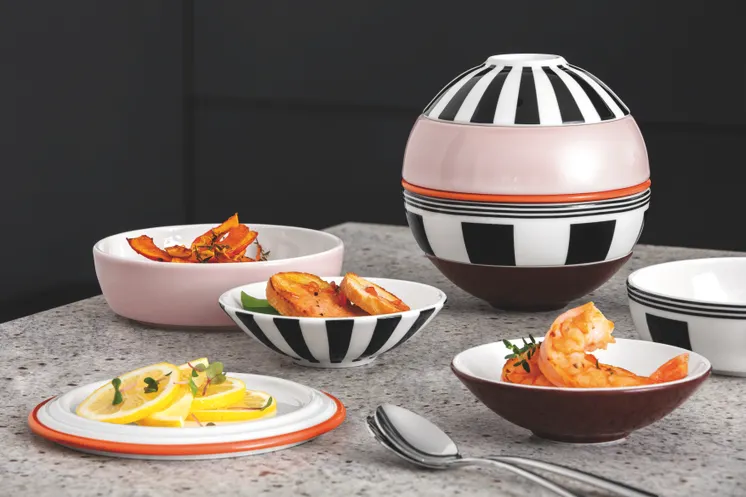
La Boule and La petite Boule body this development. As a sculptural porcelain sphere, La Boule is a design object that adds a special touch to every living area. Dismantled into its individual components, it becomes a crockery set for two people. La petite Boule transposes this principle to smaller, spontaneous occasions, such as aperitifs before dinner, and shows that a few carefully designed items are all you need to celebrate dining rituals. Both collections illustrate the increasing convergence of design and functionality in the kitchen.
2. The coastal trend meets deep shades of blue
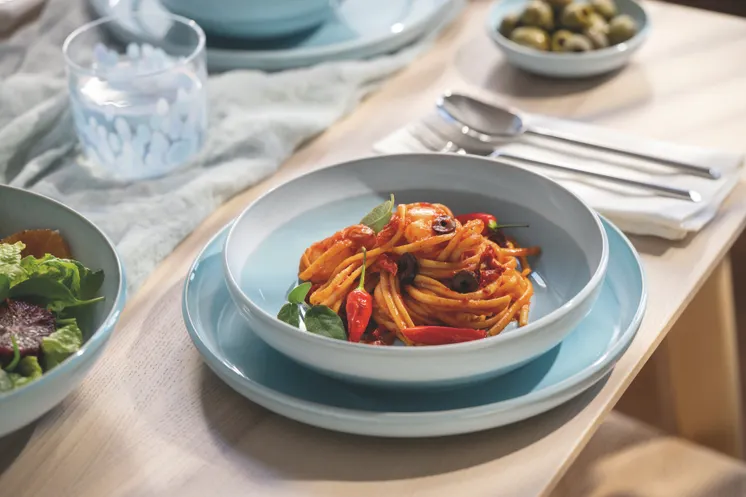
Maritime colour palettes and decors are once again strong themes for interior and tableware designs in 2027. Light, flowing shades of blue come together with neutral colours to create a peaceful, natural atmosphere at the table and in the room. The Perlemor collection, for example, captures the carefree feeling of a day at the beach with its shades of Sand, Alga and Aqua and brings this mood into the home.
The maritime colour scheme is complemented by rich blue shades that add greater depth while forging a link with the roots of ceramic history. Traditionally the dominant colour in tableware, the familiar cobalt blue shade conveys both modernity and nostalgia.
3. Texture remains the benchmark
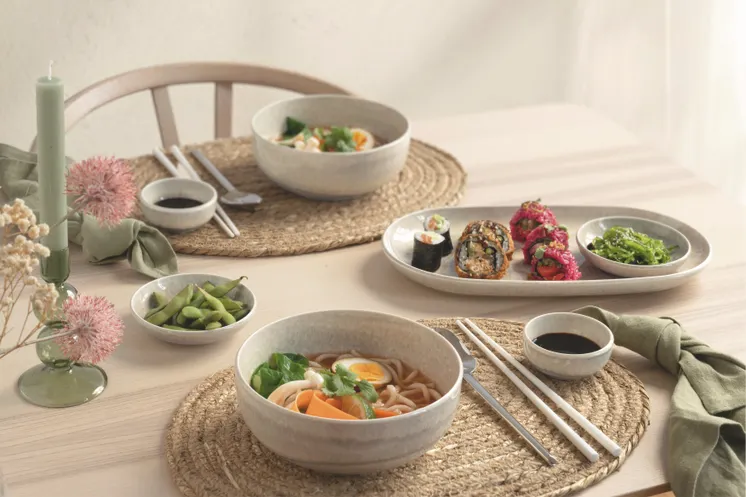
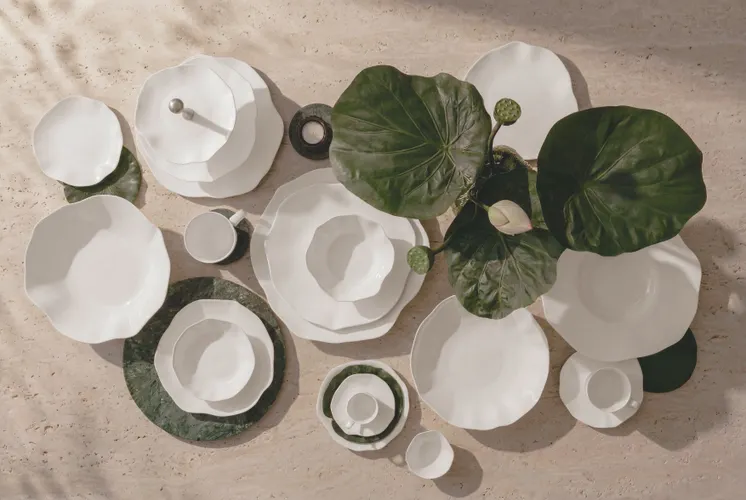
Porcelain and glass are materials that have all-round sensory appeal, and this makes texture a relevant theme once again in 2027. Finely contrasting matt and glossy surfaces, organic compositions and tangible value define the tactile dinner experience. In parallel, classic, strictly geometric shapes are softening unconventional, organic-looking silhouettes are becoming design statements, creating an inviting look and feel that emphasizes the tactile impression.
This development is reflected in two current Villeroy & Boch porcelain collections, each in its own distinctive interpretation.
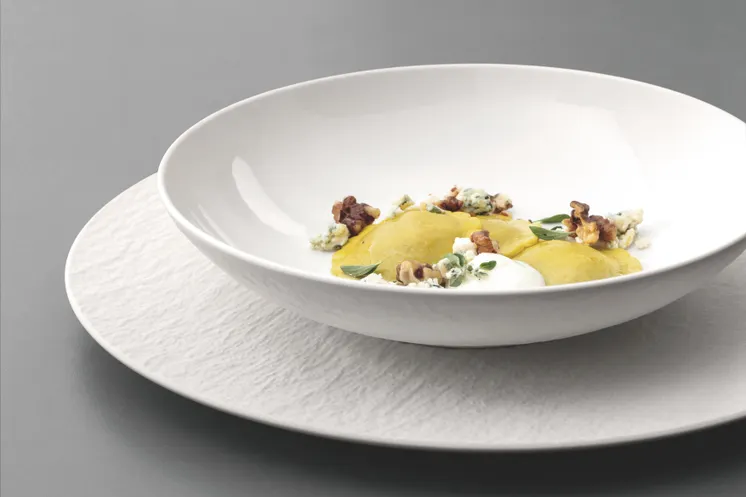
Manufacture Ice’s fusion of glazed and matt surfaces presents a carefully conceived combination of visual and tactile appeal. Pura, winner of the German Design Award 2027, combines a flowing shape with a fine, smooth texture that draws attention to the elegant material quality.
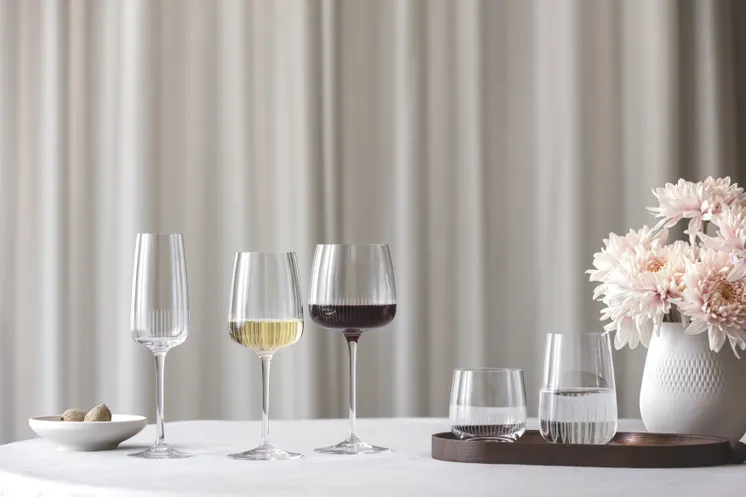
Tactile effects are becoming a key theme for glass items too. The Rose Garden and Afina glasses are perfect examples, with their subtle relief patterns that refract the light and are perceptible to the touch.
“In an age of global uncertainty and constant sensory overload, people are looking for stability, consistency and real connection in their homes,” explains Claudia Knaupp, Executive Vice President Marketing and Global Branding at Villeroy & Boch. “Table settings are becoming a deliberate contrast to a turbulent world: they bring people together. This is precisely why we are rethinking conventions. Novel design ideas preserve the table’s traditional role while adding surprising twists.”
Topics
Categories
The Villeroy & Boch Group is one of the global leaders in premium dining & lifestyle, as well as bathroom and wellness products. Founded in 1748 and headquartered in Mettlach, Germany, the company stands for innovation, design and quality. With its two main brands Villeroy & Boch and Ideal Standard, the Group has about 12.000 employees and is present in around 140 countries worldwide.