Press release —
Umicore introduces nickel-free IGEPIG process for high-frequency and ultra-fine line applications in Europe
Umicore Electroplating is introducing the IGEPIG process, developed by Uyemura, as its exclusive distribution partner in Europe. The nickel-free final finish combines a gold seed layer with a palladium diffusion barrier and a final gold top coat. The process is particularly suited for electronics applications that require high signal integrity, very narrow line spaces or flexible copper substrates.
With growing frequencies and rising miniaturization for electronic assemblies, the choice of a final finish is becoming even more important. Established plating systems such as ENIG (electroless nickel, immersion gold) and ENEPIG (electroless nickel, electroless palladium, immersion gold) include a nickel layer between the copper substrate and the outer precious metal coating. Among other things, this layer serves as a diffusion barrier and a base for the subsequent layer structure. In certain high-frequency, fine-line, and flexible circuit applications, however, nickel can become a limiting factor.
Nickel-free layer structure with a palladium diffusion barrier
To provide the necessary functions without a nickel layer, the standard IGEPIG (Immersion Gold, Electroless Palladium, Immersion Gold) process combines a catalytically active, 20-nanometer-thick gold seed layer with a 100-nanometer-thick, chemically deposited palladium layer and a final 80-nanometer-thick gold top layer.
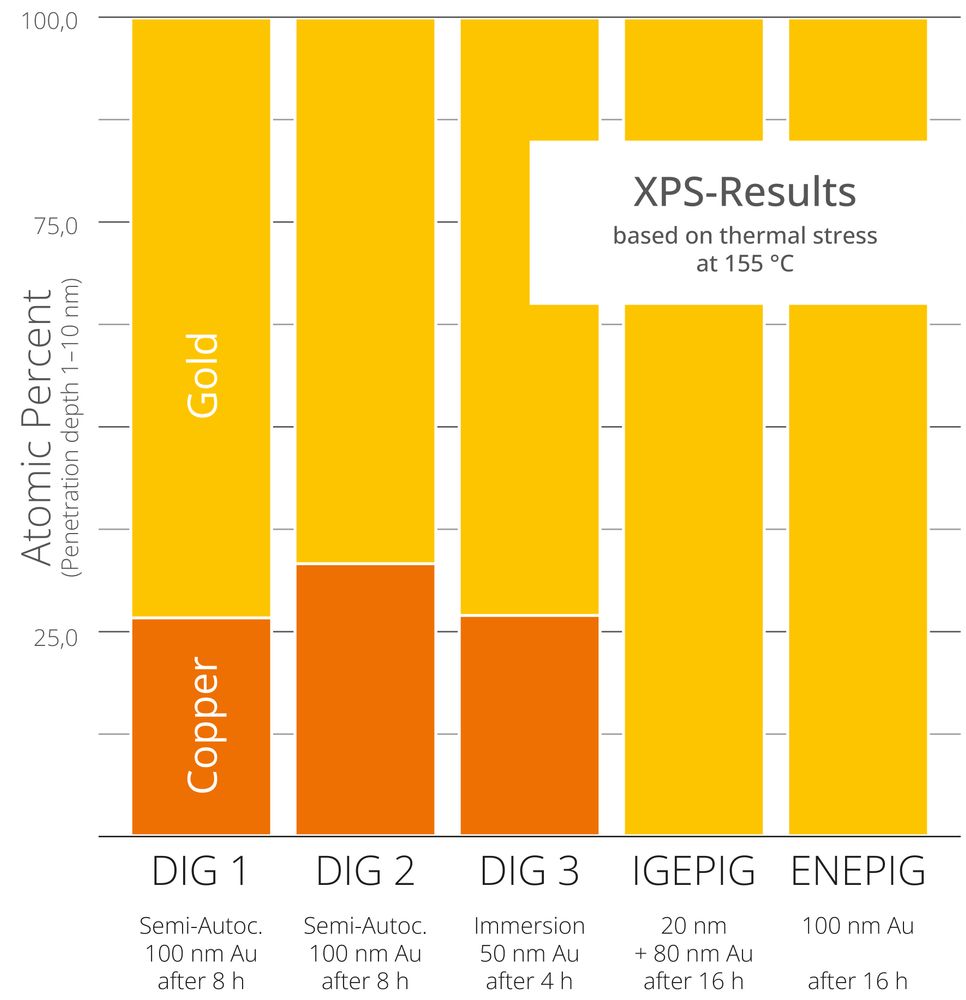
The gold seed layer forms the catalytic basis for homogeneous and controlled palladium deposition. The palladium layer acts as a diffusion barrier between copper and gold, to prevent the copper diffusion into the functional gold layer. This is particularly important for final finishes exposed to thermal stress. The final gold top layer protects the underlying palladium and provides the properties for further processing.
High frequency, ultra-fine line spaces and flexible copper substrates
At high frequencies, nickel-containing intermediate layers can contribute to the attenuation of electrical signals due to nickel’s ferromagnetic properties. This effect can become more significant as frequency increases, since the skin effect causes the current to become increasingly concentrated on the conductor’s surface. For applications where minimizing transmission losses is critical, a nickel layer can therefore be a limiting factor.
The nickel-free structure also offers advantages for very fine line and space geometries. The IPC specifications 4552 for ENIG and 4556 for ENEPIG stipulate nickel layer thicknesses of three to six micrometers to ensure an effective diffusion barrier. As structures become increasingly smaller, such a nickel layer reduces the available spacing between neighboring lines. Added to this is the activator system required for electroless nickel plating. For line spaces of less than 50 micrometers, activator residues can cause footing or stray plating, thereby increasing the risk of short circuits. Since IGEPIG requires neither a nickel layer nor the associated activator system, these process-related risks can be reduced. As part of the process development to date, IGEPIG has been used to plate line spaces of less than 20 micrometers without stray plating or bridging.
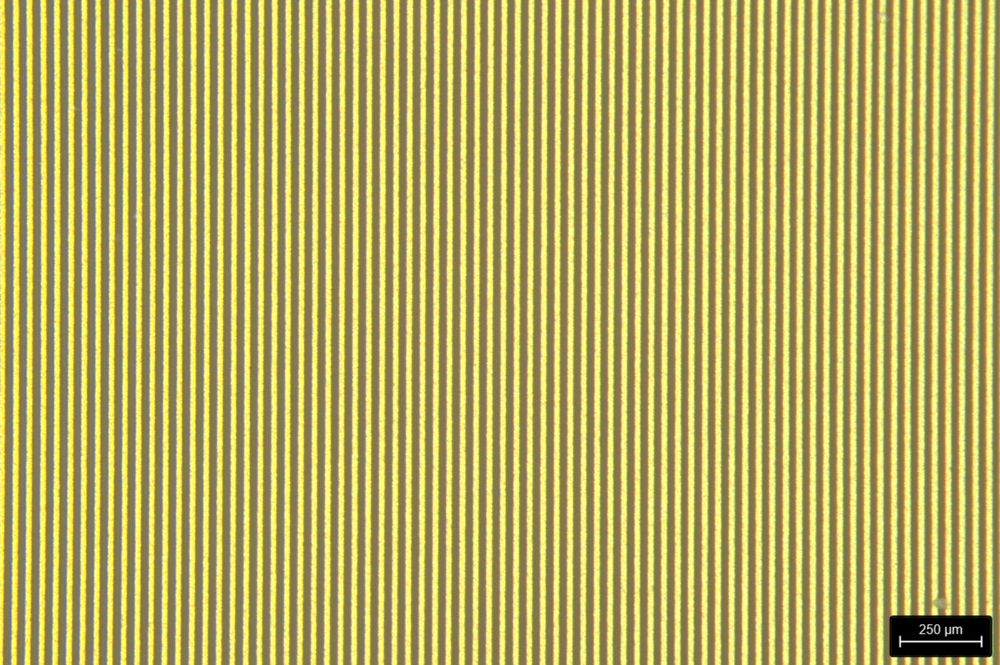
Furthermore, the elimination of the relatively low-ductility nickel layer makes IGEPIG a suitable final finish option for flexible copper substrates. Nickel can limit the mechanical flexibility of the plated copper. A nickel-free final finish is therefore also relevant for applications in which flexible copper surfaces must be reliably plated and subsequently subjected to mechanical stress.
Solder joint reliability in a comparative test
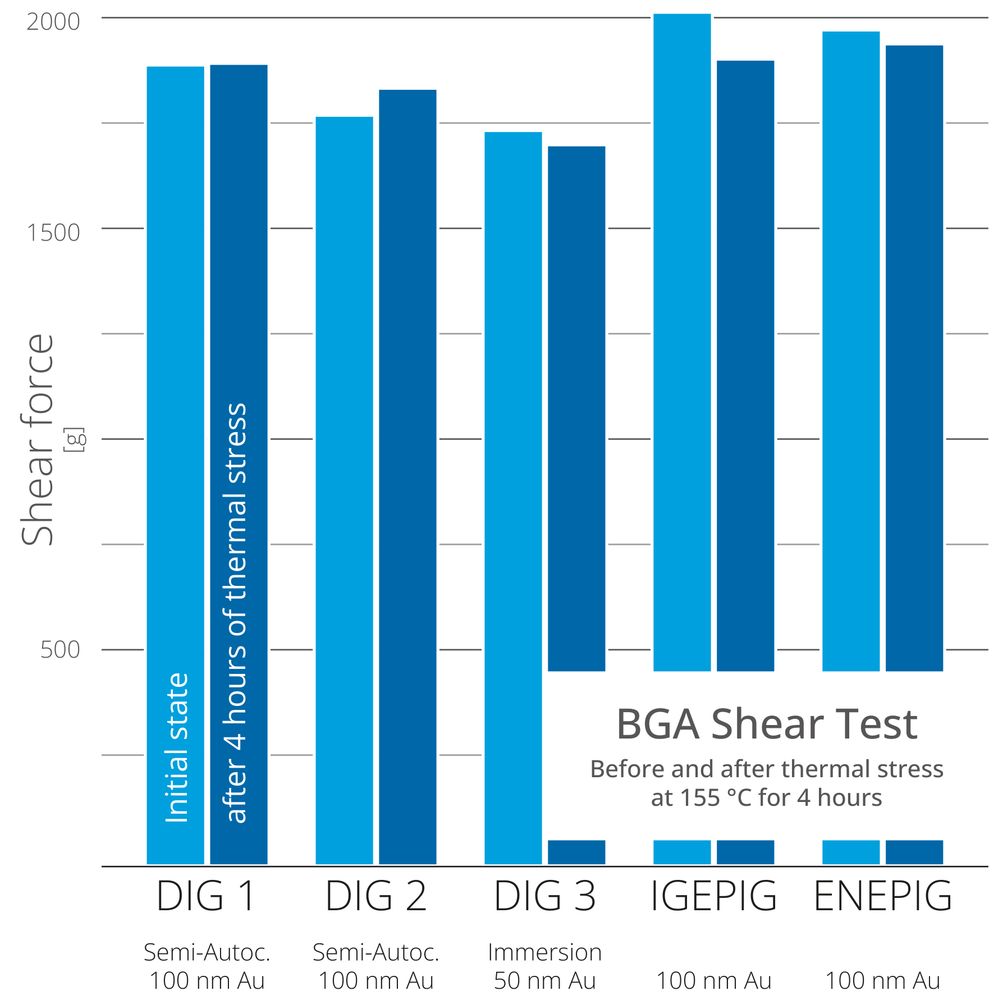
In addition to these application-specific advantages, the new layer structure must ensure the functional reliability of the final finish. The solder joint reliability of IGEPIG was therefore evaluated using ball grid array (BGA) shear tests. Under the test conditions used, IGEPIG and the established ENEPIG system achieved the highest shear forces among the variants examined. This remained even after four hours of thermal exposure at 155 degrees Celsius. The results show that, under these specific test conditions, IGEPIG achieves a level of solder joint reliability comparable to that of ENEPIG.
“With IGEPIG, we bridge the gap between simple nickel-free gold surfaces and the established ENEPIG system. Users receive a nickel-free final finish with a palladium diffusion barrier and can tailor the layer structure specifically to the electrical, geometric and thermal requirements of their application without compromising functionality,” says Andreas Gross, Division Manager PCB-Processes at Umicore Electroplating.
IGEPIG and DIG: a gold bath for both final finishes
However, not every application requires the additional palladium diffusion barrier provided by the IGEPIG system. For applications with lower thermal or functional requirements, DIG (Direct Immersion Gold) without a diffusion barrier may still be the technically and economically suitable, nickel-free solution. Umicore therefore combines both final coatings in a flexible 2-in-1 process concept.
A single gold bath is used for three deposition steps: the gold seed layer and the final gold top layer in IGEPIG, as well as direct gold deposition in DIG. This allows users to choose between the two final finishes depending on their requirements, without having to provide an additional gold bath for DIG.
Umicore Electroplating supports customers in the technical and economic evaluation as well as the implementation of IGEPIG. The offering includes test plating for initial investigations, application-specific economic analyses, consulting on the required process landscape and equipment technology, and support during process implementation. On this basis, it is possible to determine whether IGEPIG is the appropriate final finish for the respective application.
Related links
Topics
Categories
About Umicore Metal Deposition Solutions
Umicore's Business Unit Metal Deposition Solutions (MDS) is part of Umicore Group. The business unit harbors two business lines Electroplating and Thin Film Products. MDS is one of the world's leading suppliers of products for (precious) metal-based coating of surfaces in the nano and micrometer range – with the expertise of the two areas, we combine the two highest-quality processes: electroplating and PVD coatings.
MDS's solutions are used in many products for everyday use, and in some cases their production would not be possible without them. Almost all well-known manufacturers in the electronics, automotive, optics and jewellery industries purchase components that have been coated with our Umicore products, either directly or indirectly.
In addition to development and production, Metal Deposition Solutions offers a comprehensive service for its products. This includes not only advice and technical support on site, but also recycling and precious metal management.
Please activate this link for more information on Metal Deposition Solutions
Please activate this link for more information on Umicore Group