Pressemeddelelse —
Europe’s Fitness Reality: We Want to Move More, But Time Is Holding Us Back
New research from Huawei reveals a changing relationship with fitness. Europe wants to get fitter. But while the desire to exercise is clearly there, finding the time, and sometimes even knowing where to start, remains a challenge.
Huawei’s annual Health Behavior Survey, conducted by Ipsos among almost 5,000 adults across Europe[1], provides a snapshot of how Europeans approach fitness today, revealing both encouraging habits and significant barriers to becoming more active.
At first glance, the picture is encouraging. Walking remains firmly at the heart of European fitness culture, with 84% of respondents saying they walk for fitness every week. Among those who walk for fitness, the average time spent doing so is 170 minutes a week doing so, making walking by far the most popular form of fitness activity.
But beneath this simple, accessible form of exercise lies a more complicated story. More than half of Europeans (55%) believe they should be exercising more, while 45% admit they do not know how much exercise is recommended for someone of their age, gender and physical status.
The result is a familiar paradox: people recognize the importance of being active, but many are struggling to translate that awareness into action.
Lack of time is the biggest barrier
For almost half of Europeans, the biggest obstacle is surprisingly straightforward: time.
Forty-five per cent of respondents say they would exercise more if they had more time. The challenge is particularly pronounced among 35- to 44-year-olds, with 52% of this group identifying lack of time as their main barrier to exercising more. It is a finding that reflects the reality of modern life, where work, family and other commitments can leave structured exercise competing for space in an already crowded day.
The gender divide is also notable. Men report exercising for an average of 66 minutes more per week than women, while almost half of European women say that lack of time prevents them from exercising more. This suggests that the challenge facing Europe’s fitness ambitions may not simply be about motivation. For many people, particularly women and those in the busiest stages of working and family life, making exercise fit around everyday life may be the bigger hurdle.
Perception and reality don’t quite match
The survey also highlights an interesting disconnect between how Europeans perceive their own physical condition and what the data suggests.
Among European men, 56% are classified as overweight or obese based on their weight and height data, yet only 37% describe themselves as belonging to these categories. Among women, the picture is much closer: 38% are classified as overweight or obese, compared with 36% who assess themselves in the same way. The findings point towards a broader challenge around health awareness: understanding where we are today is an important first step towards deciding where we want to go next.
Could technology help close the gap?
One of the most striking findings in the survey concerns the growing role of wearable technology.
Smartwatch adoption, according to the study, has now reached 46% among European adults. More importantly, almost half of smartwatch users (47%) say that their device has encouraged them to become more active. There is also a notable difference in exercise habits: surveyed smart device users reported spending approximately 44% more time running each week than the overall survey sample.
For those struggling to find time, it could be particularly relevant. Fitness no longer necessarily needs to mean setting aside a large block of time for a dedicated workout. Tracking everyday movement, setting goals and monitoring progress can help make activity a more visible part of daily life. And the experience appears to be resonating with users. More than three-quarters of people using smart devices (76%) say they are satisfied with their decision, while 43% of smartwatch users describe themselves as very satisfied.
From fitness tracker to everyday companion
The findings point towards a changing role for wearable technology. What began primarily as a way to count steps or record workouts has increasingly become part of a broader approach to personal health and fitness.
For Huawei, this sits within a wider focus on using wearable technology to make health and fitness information more accessible in everyday life. Huawei’s wearable products are powered by its proprietary TruSense technology, combining sensors and algorithms across its range.

The company’s latest products reflect this increasingly broad approach. The HUAWEI WATCH GT 7 Series offers up to 21 days of battery life and more than 100 workout and sports modes, including skiing, cycling and golf.
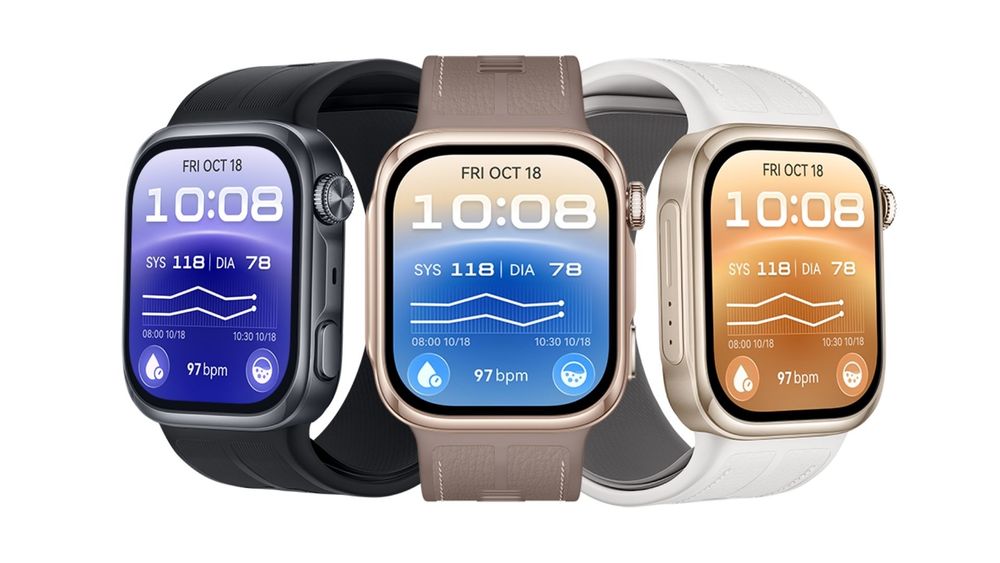
Meanwhile, the HUAWEI WATCH D3 is positioned around more advanced health monitoring, with medical certification[2]for pre- and post-exercise ambulatory blood pressure measurement[3].
The wider message from the research is clear: Europeans are not necessarily lacking the motivation to become fitter. In many cases, they are looking for ways to make fitness more achievable within the realities of everyday life.
A healthier Europe starts with understanding how we move
The first wave of Huawei’s European Health Survey offers an intriguing snapshot of where Europe stands today. Walking remains the continent’s most popular fitness activity, more than half of Europeans believe they should be exercising more, and lack of time remains one of the biggest barriers. At the same time, wearable technology is becoming increasingly mainstream, with many users saying it encourages them to be more active.
Perhaps the most important takeaway is that becoming fitter does not necessarily require a complete lifestyle overhaul. For many people, progress may begin with something much simpler: understanding current habits, setting realistic goals, or finding new opportunities with wearable technology to move more within the day.
[1] The survey was conducted by Ipsos among a representative sample of adults aged 18–64 in eight European markets: Bulgaria, France, Germany, Poland, Romania, Spain, Türkiye and the United Kingdom (N = 600 per market). The findings are representative of the markets surveyed, but not necessarily of Europe as a whole.
[2] The HUAWEI WATCH D3 is a medical device in accordance with the EU Medical Device Regulation (Regulation (EU) 2017/745). Please note that the smartwatch does not replace a medical diagnosis or assessment of your health by a healthcare professional. If you feel weak or unwell and suspect heart-related symptoms, seek emergency medical attention immediately.
[3] The HUAWEI WATCH D3 has undergone rigorous accuracy validation against the globally recognised ISO 81060-2 standard. It has obtained Class II medical device registration from China's National Medical Products Administration (NMPA) and CE MDR medical device certification from the European Union, and clinical validation for ambulatory blood pressure monitoring in accordance with ISO 81060-2.
Relaterede links
Emner
Kategorier
Regions
About Huawei
Huawei's products and services are available in more than 170 countries and are used by a third of the world's population. Fourteen R&D centers have been set up in countries around the world with several in the Nordics. Huawei Consumer BG is one of Huawei's three business units and covers wearables, audio, PC, tablets, smartphones and cloud services, etc. Huawei's global network is built on over 30 years of expertise in the telecom industry and is dedicated to delivering the latest technological advances to consumers around the world.