






New research provides clarity on convergence in Europe
Europe is back on track towards upward convergence, but some outliers remain.

Europe is back on track towards upward convergence, but some outliers remain.
Overall trust in institutions such as national governments, the legal system, the EU, and the media has rebounded in Europe following the recent economic recovery. However, in a number of the Member States most adversely impacted by the crisis, trust in national institutions has still not returned to pre-crisis levels.
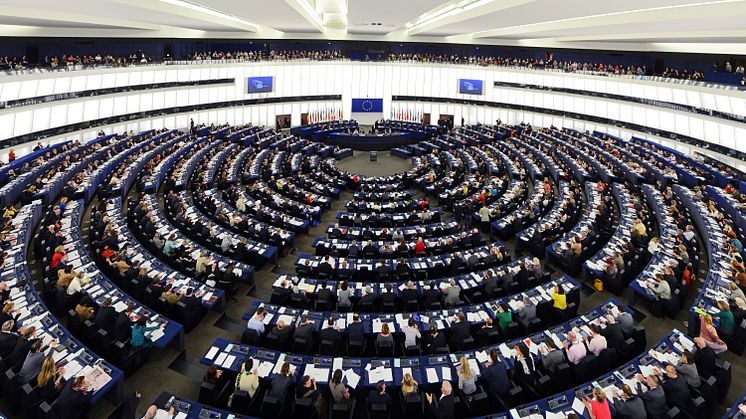
Quality of life is improving in Ireland, particularly in relation to social cohesion, with the country recording some of the highest levels optimism in the EU and lowest reported levels of tension between racial and ethnic groups. However, a number of challenges remain, notably in public transport, childcare services, and social housing – all of which are rated below EU averages.

Eurofound Director Juan Menéndez-Valdés will present to the Oireachtas Joint Committee on EU Affairs at 14:00 GMT on Wednesday 12 December. The presentation will look at Ireland-specific data from the European Quality of Life Survey and European Working Conditions Survey.

There has been an overall improvement in the employment and social situation of people with disabilities in the EU, with more people with disabilities in employment and actively participating in society in 2016 than 2011. However, disabled people are still significantly less likely to be in employment than people without disabilities, and they remain among the most disadvantaged groups in Europe.

Across the EU, on average 66% of the workforce holds a permanent contract and enjoys the most favourable standards of job quality. But for those in non-standard forms of employment, is job status negatively impacting job quality? The short answer is yes.

This graph, taken from the latest European Restructuring Monitor (ERM) report, shows the announced job losses and gains since 2008.

Eurofound's latest report from the Quality of Life Survey looks at five key aspects of social cohesion including perceived social exclusion, perceived social tensions, interpersonal trust, participation in society and a sense of community. Collectively, these aspects have an important bearing on the well-being of citizens.

On 8 November 2018 from 14:00 to 16:00 CET, Eurofound will host the webinar ‘Making the platform economy work well for workers’. This two-hour webinar will go beyond the debate about the challenges inherent in this new form of employment and focus on possible solutions to tackle the work and employment-related implications of platform work.

The equal treatment of women and men has been a fundamental principle of the European Union since its inception, but women in Europe still earn on average 16.2% less than men. Tomorrow, Saturday 3 November, marks the moment in the year when women symbolically stop getting paid compared to their male colleagues.

Apprenticeships are long established in manufacturing and are attractive for both employers and young people because of the balance between theoretical and practical education that they offer. However, in several countries in Europe and beyond, apprenticeships are lagging behind changes in manufacturing.

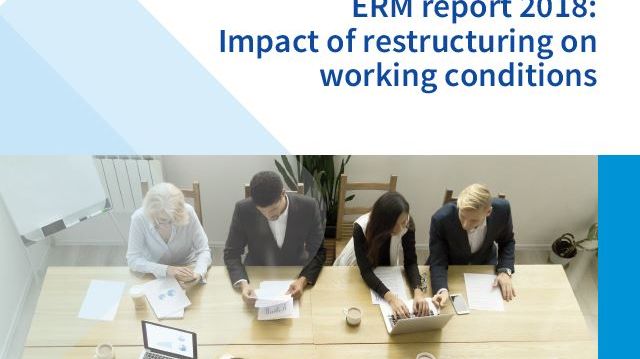
Restructuring is a common feature of labour markets and work organisation. While much research in this area primarily concentrates on the implications for those that lose their jobs, the latest report on restructuring from Eurofound focuses on the impacts for those that remain in an organisation.