







Skip to content

News archive

  • One in three households in EU is now single occupancy

    A new analysis of EU-level data by Eurofound shows that one in three households in the EU is now single occupancy. Germany now has the largest proportion of the population living in single-person households, and large increases in the share of the population living alone have been reported in Lithuania and Bulgaria.

  • Dublin and London have higher proportion of people struggling to cope

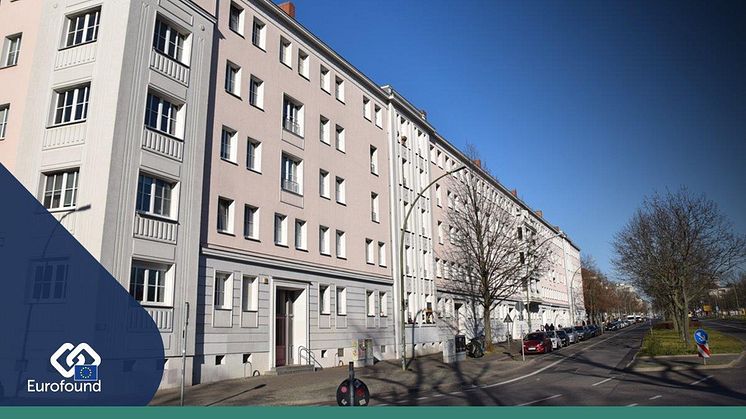
    Dublin and London have a higher proportion of people that report low resilience, which is an expressed difficulty to cope with important life problems, than both the national averages and the EU average. This goes against the general trend that people living in capital cities have a higher level of resilience than other urban or rural areas.

  • People in Europe’s capitals more satisfied with their lives

    People living in the capital cities in Europe generally have a better quality of life and report higher life satisfaction than those living in other parts of the country. Capital cities also have a larger proportion of people who report feeling being able to cope during times of hardship than other urban centres and rural regions.

  • Combating labour market segmentation in Europe

    A common understanding of labour market segmentation is necessary to tackle poor quality jobs with lack of opportunities, affecting especially young people, women, immigrants and lower-educated individuals on the labour market. A new ambitious report explores why segmentation is problematic and identifies policy approaches which could be helpful in tackling this phenomenon.

  • First-generation migrants more likely to have third-level education

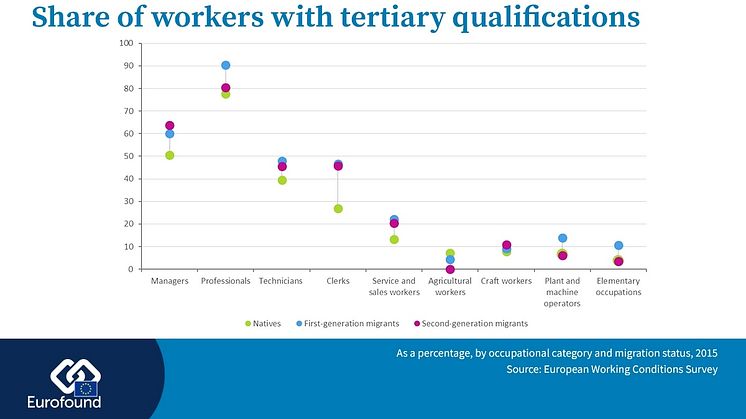
    First-generation migrants in the EU are significantly more likely to have attained tertiary qualifications than natives and second-generation migrants. However, first-generation migrant workers are also more likely to have primary education only, compared to the native population. This shows that educational attainment is more polarised.

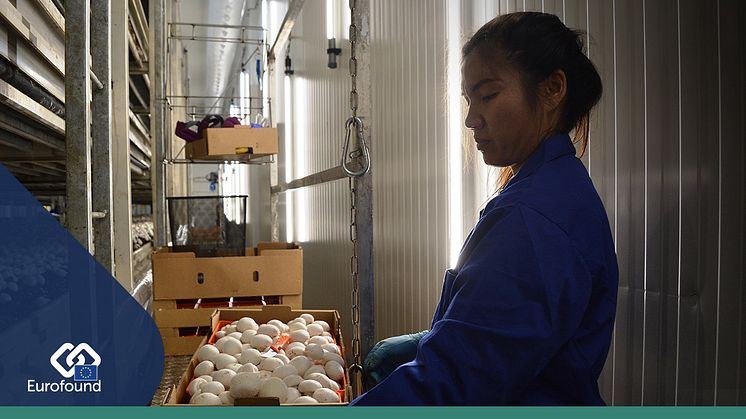
  • First-generation migrant workers 10 times more likely to experience discrimination than natives

    First-generation migrant workers are 10 times more likely to report experiencing discrimination linked to race, ethnic background or colour than native workers; second-generation migrants are five times more likely. Overall, just 2% of workers reported discrimination on these grounds in the European Working Conditions Survey, but for those that are first-generation migrants this climbed to 10%.

  • Access to education key for employment opportunities for people with disabilities

    Eurofound research shows that people with disabilities were more likely to be in employment in 2016 than in 2011. This is particularly the case for people with disabilities that have a third-level education. Despite these improvements, there remains a significant employment gap between people with and without disabilities.

Show more