Forthcoming research: Burnout in Europe
In September Eurofound will release a new report on Burnout in Europe, examining what causes burnout, the effects of burnout, and mapping where in Europe it is considered an occupational disease.

In September Eurofound will release a new report on Burnout in Europe, examining what causes burnout, the effects of burnout, and mapping where in Europe it is considered an occupational disease.
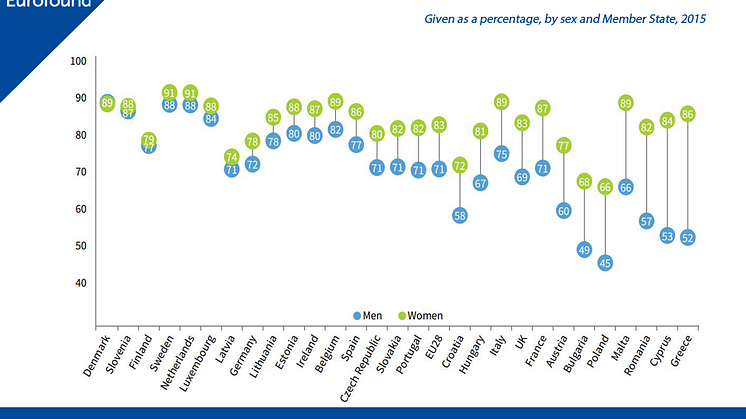
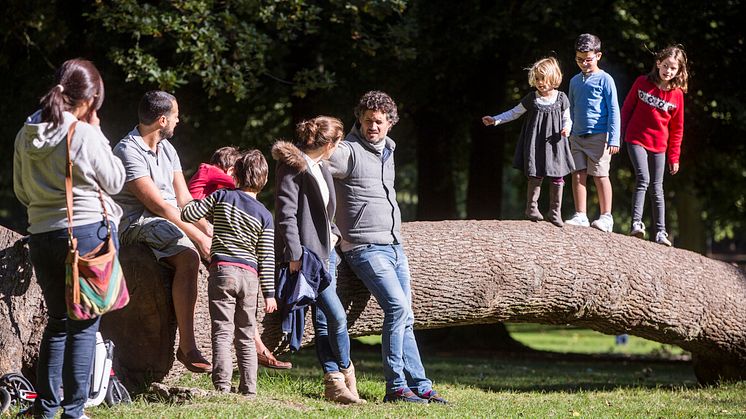
It is well known that women take more responsibility for the care of their children than men. According to the 2016 EQLS, 88% of mothers compared to 64% of fathers in the EU care for their children every day. These fathers estimate they give 21 hours a week to the care of their children, while the mothers dedicate 39 hours per week.
The number of people active in the labour market is at an all-time high, ratings for key public services are increasing and there is a marked recovery in trust in national institutions in many Member States, these developments are detailed in Eurofound’s latest Living and working in Europe yearbook for 2017.
Die führende Stellung Deutschlands in Europa in den letzten Jahren war weitgehend auf die Position als Wirtschaftsmacht zurückzuführen. Deutschlands Platz in den kommenden Jahren kann auch durch seine Fähigkeit definiert werden, ein Kraftpaket für sozialen Zusammenhalt und Integration zu werden
Germany’s commanding position in Europe in recent years has largely been due to its reputation as an economic powerhouse. Its place in Europe in years to come may well be defined by its ability to also become a powerhouse for social cohesion and integration.
Eurofound and the European Economic and Social Committee, under the banner of the Bulgarian Presidency of the EU, bring together representatives of the social partners, EU institutions, national and regional representatives, practitioners, civil society and academics to debate on access and quality of public services in EU28, as highlighted in Eurofound’s European Quality of Life Survey.
The European Quality of Life Survey explores a variety of aspects related to living standards, health, family and work–life balance, as well as people's happiness levels, and their perceptions regarding the quality of their society. The latest survey results for Finland paint a generally positive picture of the country in 2016, just a year before the 100th anniversary of its independence.
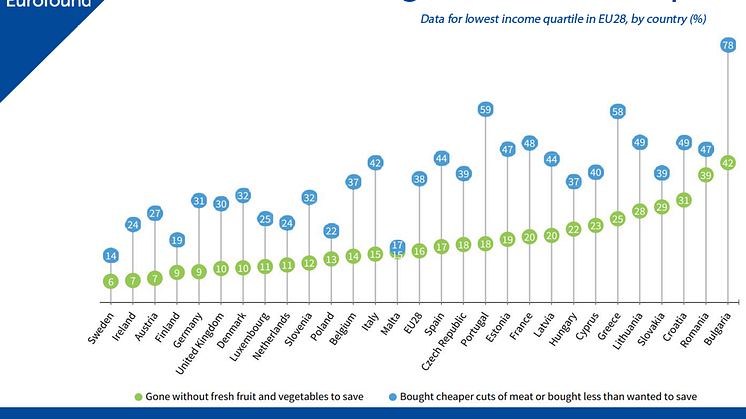
People in the lowest income quartile in the EU are going without fresh fruit and vegetables to save, and a higher proportion are buying cheaper cuts of meat or buying less meat because of money concerns. This practice is occurring throughout Europe, but there are vast differences between Member States.
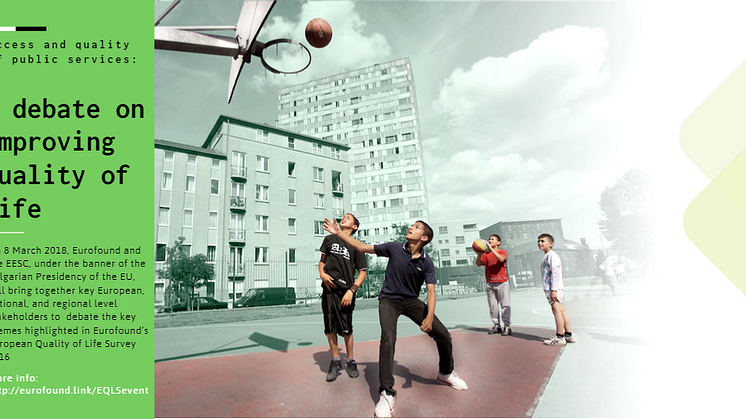
On 8 March 2018, Eurofound and the European Economic and Social Committee, under the banner of the Bulgarian Presidency of the EU, will bring together up to 80 representatives of the social partners, EU institutions, national and regional representatives, civil society, and academics in Brussels to debate the key themes highlighted in Eurofound’s European Quality of Life Survey 2016.
The overview report for the latest European Quality of Life Survey is now online. Nearly 37,000 people in 33 European countries were interviewed in the last quarter of 2016 for the fourth wave of the European Quality of Life Survey. This overview report presents the findings for the EU Member States.
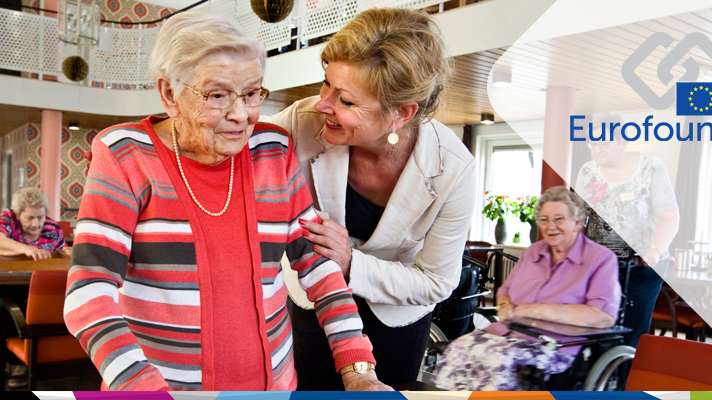
In this blog piece Eurofound Research Officer Daniel Molinuevo looks at the changes in care home provision for older Europeans since the economic crisis, and the rising importance of long-term care from both a social and economic perspective.
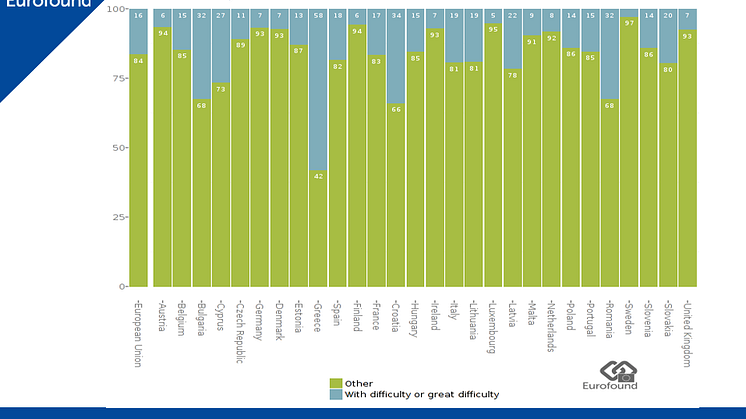
Eurofound’s European Quality of Life Survey (EQLS) 2016 shows that there are vast differences in reported abilities to make ends meet at household level in Europe.
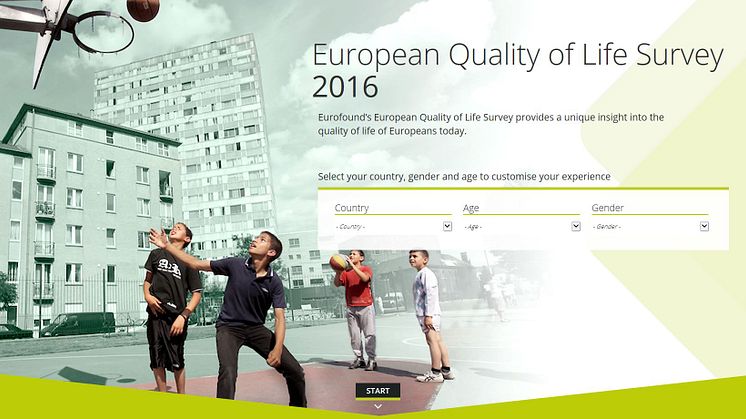
De Europese enquête over de levenskwaliteit van Eurofound geeft een uniek inzicht in de huidige levenskwaliteit van Europeanen.
L’Indagine europea sulla qualità della vita (EQLS) di Eurofound fornisce una visione unica sull’attuale qualità della vita dei cittadini europei.
La encuesta europea sobre calidad de vida de Eurofound proporciona una visión única acerca de la calidad de vida actual de los europeos.
Die von Eurofound durchgeführte Europäische Erhebung zur Lebensqualität bietet einzigartige Einblicke in die aktuelle Lebensqualität der Europäer.
Les résultats de la dernière enquête européenne sur la qualité de vie font état de progrès généraux dans les domaines de la qualité de la vie, de la qualité de la société et de la qualité des services publics.
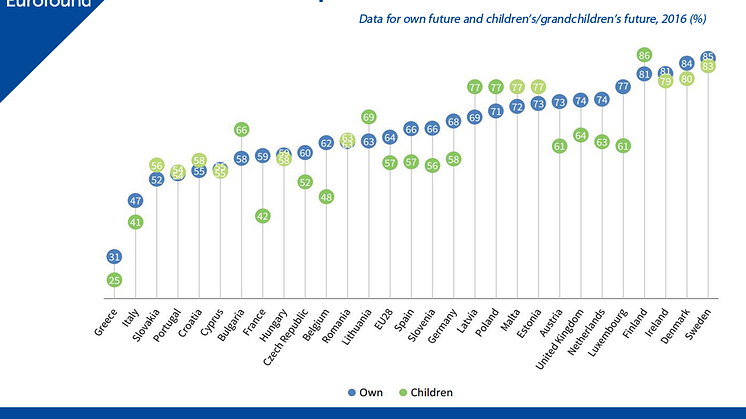
The results from the most recent European Quality of Life Survey show overall progress in the areas of quality of life, quality of society and quality of public services. We have seen improvements for many, although from low points following the economic crisis.
Results from Eurofound’s 2016 European Quality of Life Survey (EQLS) show general progress in the three key areas - quality of life, quality of society and quality of public services. Nevertheless, there remain signs of persisting inequalities and rising uncertainties in some areas with particular differences apparent between countries, gender, age and income groups.
Eurofound’s new report Care homes for older Europeans: Public, private and not-for-profit providers is the most comprehensive exercise to date to gather all available data across Member States. The report provides a picture of the quality, accessibility and efficiency of services.