Skip to content

Topics: Studies and reports

  • New technologies reshaping work, not destroying jobs

    Technology is more likely to create new tasks than remove existing ones, according to new findings from the unique pan-European Working Conditions Survey. Rather than widespread destruction, the primary challenges facing the EU workforce as digitalisation transforms the European labour market, are shifting towards skills mismatches, generational divides, and worker autonomy.

  • EU decarbonisation commitments could bring extra 204,000 jobs

    Eurofound projects that the EU’s commitments to achieve a 55% reduction in greenhouse gas emissions compared with 1990 levels by 2030 (‘Fit for 55’) will be marginally positive for employment in the EU, with a net creation of 204,000 jobs.

  • Recent losses in real minimum wages have not eroded long-term gains in purchasing power


    While losses in real minimum wages have occurred in several countries across the European Union, these have not eroded the long-term gains of purchasing power that have occurred across the EU since 2013. In an effort to offset inflation, governments have significantly increased nominal minimum wages across Europe. In 2023, the median nominal increase was almost 11%, compared with just 5% in 2

  • Exploring the socio-economic impacts of the transition to a climate-neutral economy

    The move to a climate-neutral economy doesn't only represent risks and costs, but it has the potential to create exciting new opportunities with net employment gains, new business sectors and a healthier environment. Eurofound and the EEA have brought together EU level and regional experts and stakeholders to explore what these socioeconomic impacts could be and how policy could respond.

  • Practical barriers hinder job opportunities for people fleeing Ukraine

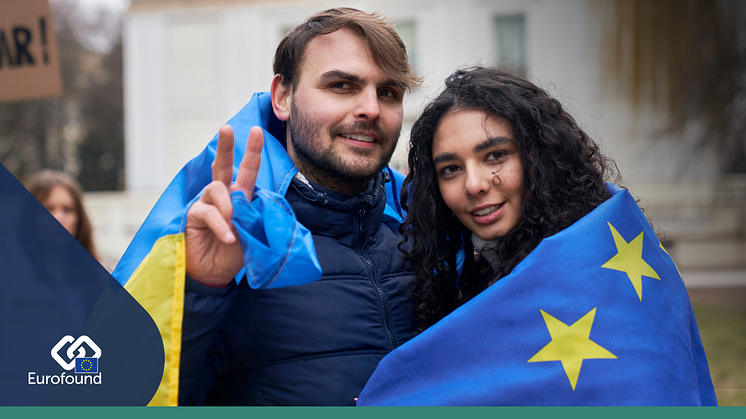
    People fleeing Russia’s invasion of Ukraine can seek jobs in Europe but not knowing the host country’s language and temporary job placements are just some of practical barriers identified in a new research paper from Eurofound and the EU Agency for Fundamental Rights (FRA).

  • Europe’s year of resilience and resolve

    Europe Day is a celebration of unity, solidarity and harmony. While we may not have had much to celebrate this past year, one thing we can be proud of is how Europe has come together in the face of large-scale challenges and threats, showing that solidarity is the key to resilience and resolve.

  • Europe's employment rebounds amid existential rethink

    Eurofound's Living and working in Europe Yearbook 2022 looks at the major trends in employment, social dialogue, working conditions, living conditions and quality of life in an important year for Europe, which saw the beginning of Russia's brutal war of aggression against Ukraine, and the fallout for Europe and its citizens, including a cost-of-living crisis felt throughout the continent.

  • EU lack of labour won't be solved by skills alone: Improving job quality is key

    While an initiative such as the European Year of Skills is welcome, and improving skills can certainly go some way to help to address labour shortages, it is not a silver bullet. To address these challenges effectively, what is needed is a clear grasp of the drivers behind shortages in specific sectors and occupations and the policy context.

  • Skills alone will not solve labour shortages in Europe

    Eurofound’s new report looks at measures implemented at national level to tackle labour shortages in the health, care, and information and communication technology sectors, as well as those arising from the twin green and digital transition, to assesses what works and the contextual factors supporting or hindering effective policy implementation and outcomes.

  • Eurofound Talks Job Quality

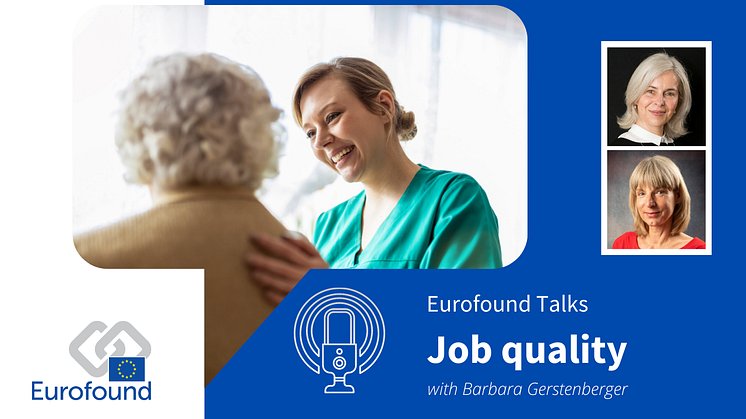
    The new episode of Eurofound Talks looks at the issue of job quality in the modern workplace. Mary McCaughey speaks with Eurofound Head of Unit for Working Life Barbara Gerstenberger about what the EWCTS reveals about job quality, the implications of poor-quality jobs on well-being and broader society, and what policymakers can do to improve the working lives of people in Europe.

Show more