Press release —
VOICES OF THE FJORDS - They Left the Laboratory and Went Looking for the Taste of 10,000 Years
VOICES OF THE FJORDS – Episode #5
Sandane - Nordfjord, Western Norway • 2026
Interview with Jann Vestby, Nordfjord Distillery
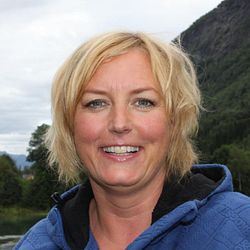
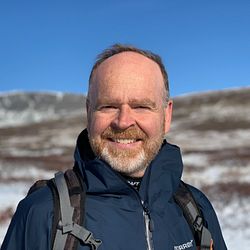
They first met among test tubes and bubbling Erlenmeyer flasks Jann was driven by the urge to understand how things worked—and rebuild them in new ways. Synnøve was fascinated by botany and discovering new uses for local heirloom crops. Together, they left promising research careers, returned to a family farm in Nordfjord, and spent years quietly asking one question: what does this place actually taste like—and what has it always tasted like? The answer became Nordfjord Distillery: 70 products, a timeline stretching from the Stone Age to the present, and a growing conviction that the real story of this landscape is still largely untold.
There is a farm in Nordfjord where the apple trees bend towards the fjord and the water runs cold off the mountains year-round. A short walk away, archaeologists have traced the remains of a pre-Viking Iron Age settlement — a chieftain's farm, centuries older than the sagas. It is on this land, beside these hills, that Jann Vestby and his partner Synnøve have spent the past decade building something quietly extraordinary: a distillery rooted not just in the present landscape, but in its entire human history.

Jann, for people who haven't come across Nordfjord Distillery — who are you, and what led you here?
I grew up fascinated by science and nature — already as a child I wanted to understand how things worked. I studied chemistry and followed that into research. Synnøve and I met at the university in Trondheim in 2001. We were both being trained as researchers, and at the time that felt like the right path — large companies, specialist roles, a clear future ahead of us. But the more time we spent in that world, the less it felt like the life we actually wanted.
What was missing?
We kept coming back to the west coast — for weekends, for trips, to go fishing in the lakes and walking in the mountains. Each time we came back, we felt it: a particular kind of freedom. Being outside, working with your hands, setting your own hours, living close to nature. The nine-to-five desk life — we respected people who loved it, but we gradually realised it wasn't our dream.
Then came the farm.
Synnøve's family farm became available and the idea of taking it on was immediately exciting. We asked ourselves: what could we do here? What does this land offer? The climate, the heirloom fruit varieties native to this area, the water, the character of the place — it all felt like raw material. And as a chemist, the idea of distilling, fermenting, experimenting with flavour — that sounded genuinely interesting.

Starting a distillery in Norway is not simple. What were the early years like?
Slow — and at times very uncertain. In Norway, obtaining a licence to produce alcohol is a long and demanding process. It took us four years before everything was in place. Four years of waiting, while we continued to experiment, to learn our ingredients, to understand what we were building. We both kept other work going on the side to keep life moving. But we never doubted the direction.
When did things change?
2015 was a turning point. We got our first significant order from the state alcohol retail system — and it came in at five times the quantity we had dared to hope for. That was the moment we understood the market was ready. There was real curiosity for local, artisan products. Microbreweries were becoming popular, and suddenly there was appetite for locally produced spirits, ciders, liqueurs. Organic was in fashion in a genuine way. Our timing, it turned out, was right.
“As a chemist, the instinct is always to try something new — a new blend, a new ingredient, a new idea. We have to hold each other back sometimes. That is actually one of the best parts of doing this together.”

You now have 70 products. How does a chemist know when to stop experimenting?
You and Synnøve divide the work differently. How does that partnership function?
Synnøve has always been drawn to plants and agriculture — she leads the farming side of the operation. I focus on production and product development. Together we have spent years experimenting and refining. The challenge today is often the opposite of what it was in the beginning: then we didn't have enough products. Now we have too many ideas.
Tell me about the timeline project — connecting your products to 10,000 years of Nordfjord history.
It started about two and a half years ago, with encouragement from Innovation Norway to take on a more structured challenge — to really study what this region has produced throughout time, and connect it to history. We began asking: what did people in Nordfjord actually eat and drink, from the Stone Age through the Iron Age, the Viking era, right up to today? What fruits, grains and plants were available at each moment in time?
We renamed the company Nordfjord Distillery — because the story had grown beyond one farm — and began mapping the full region. About 18 months ago, we had our first products organised into historical eras. We work closely with local historians and archaeologists across the Nordfjord valley. And there is something remarkable: a pre-Viking Iron Age chieftain's farm sat literally a stone's throw from where we are standing now. That kind of discovery changes how you see everything you are doing.

Why does that history matter to you beyond the products?
Because it helps us understand who we are and where we come from. There is extraordinary knowledge embedded in local farming traditions and in the way previous generations used what nature provided. That knowledge should not disappear. If we can preserve it — and pass it on through something people genuinely enjoy — that is meaningful far beyond the bottle.
Society benefits when people can buy a product that is linked to a real farm with heirloom fruits and vegetables shaped by the local climate through generations , a real place, a real story — and understand what that connection means. We think of what we do as storytelling through taste.
Nordfjord is changing. What do you see around you?
Young people are coming back, or arriving for the first time. There is something drawing people who want a different relationship with land, with food, with work. We try to be a part of that. We exchange, we cooperate, we share what we know. There is a new group of small local producers called Nordfjord Taste — it only started a few months ago, but it already feels important. The traditional name for a local drink enjoyed together in this region is Attåt — meaning something shared alongside. That says everything about what this community is building.

What does the next five years look like?
A new, larger distillery building is coming. We expect to double our production capacity — demand for alcohol-free cider in particular is growing fast. We are developing the visitor experience: at the moment we welcome around 2,000 to 3,000 people a year, and we believe that number could grow to 30,000 or more in the region within five years. We are building a proper visitor centre, expanding our guided tours, and telling the historical story far more fully.
We are also working on a completely new visual identity — the brand needs to reflect where we have arrived. It is an exciting moment.
If Nordfjord had a flavour, what would it be?
Cold and clean, with some sweetness underneath — something that opens up slowly, the longer you stay with it.
(c) All Photos Courtesy of Nordfjord Distillery.
Nordfjord stretches from Europe’s largest mainland glacier to Norway’s westernmost Atlantic cliff. Spectacular mountains meet a dramatic coastline – and everything is close together. Surf in the morning, ski in the afternoon. Enjoy the view, experience adventures, explore Viking history, and taste local food and drinks. Ice and sand, peaks and waves: Nordfjord – all in one fjord.
Related links
Topics
Categories
Fjord Norge AS/Fjord Norway is the official tourist board of Western Norway. Our main functions are international marketing of the Fjord Norway region, press-and study trips, and to convey information from the Fjord Norway region to tour operators, press and consumers worldwide. Find more information on our website.
For more pictures and video material click here.