Cecilia Hertz, Christer Fuglesang och Mattias Hansson grundar nytt rymdbolag



Varje dag dödas i genomsnitt 55 elefanter och 3 noshörningar av tjuvjägare för sina betar och horn. Nu startar det 5-åriga innovationsprojektet Space for Wildlife som ett initiativ i linje med Agenda 2030. Det är rymdföretaget Umbilical Design och Peace Parks Foundation som visar hur teknik från rymdsektorn kan leda till nya innovationer för att stoppa tjuvjakten.
Ikväll gästar svenska rymddesignern Cecilia Hertz SVT:s Gokväll kl.18.45. Nyligen släppte Cecilia boken "Rymden – och allt den har att lära oss". Boken, och hennes nya uppdrag som ansvarig för Rymdveckan i den svenska paviljongen på världsutställningen, Expo 2020 Dubai, blir två av samtalsämnena i tv-soffan.

Dr Chiaki Mukai var hjärtkirurg och forskare när hon rekryterades som astronaut i Japan på 1980-talet. Hon har varit med på två rymdfärder och då ansvarat för olika experiment inom rymdmedicin och livsvetenskap. I dag är hon chef för Japan Aerospace Exploration Agencys (JAXA) Center for Applied Space Medicine and Human Research, och Vice President för Tokyo University of Science.

Rymdföretaget Umbilical Design arrangerar tillsammans med sin teknikpartner ÅF en drönarworkshop på Svalbard för forskningsstationschefer från 79 arktiska forskningsstationer. Syftet är att se hur drönare kan stödja klimatforskare i arbetet mot den globala uppvärmningen. Att driva hållbar utveckling med hjälp av rymdteknik har blivit något av ett kännetecken för Umbilical Design.

Rymdteknik för hållbara, smarta städer och innovationer? Det är något som ska diskuteras när den Europeiska Rymdorganisationen ESA (European Space Agency) håller konferens under tre dagar i Lund i mars.

Det svenska innovationsföretaget Umbilical Design, ledande inom design för rymden och extrema miljöer, har fått förnyat treårskontrakt som Space Broker för Sverige med den europeiska rymdorganisationen ESA. Umbilical Design arbetar med tekniköverföring från rymdsektorn till andra områden som till exempel medicinteknik, fordonsindustri och hållbar stadsplanering.

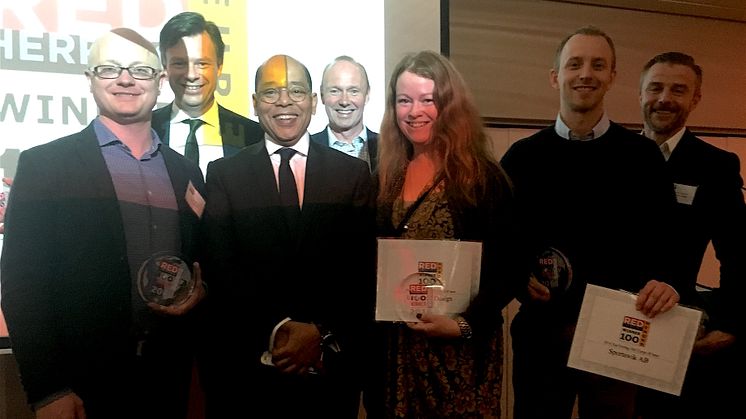
April 25, 2016, Stockholm, Sweden – Last week in Amsterdam, Red Herring announced its Red Herring Europe award winners this evening at the Top 100 forum, recognizing Europe’s leading private companies and celebrating these companies innovations and technologies across their respective industries. The Swedish innovation company Umbilical Design was chosen as a 2016 Red Herring Top 100 Europe Winner