Blog post —
Interdisciplinary Education with Laser Technology: Connecting Design, Engineering and University Research
How shared digital fabrication environments help universities connect teaching, research, prototyping and Industry 4.0 skills development .
The most interesting innovation happening in universities today often sits between disciplines rather than within them.
A product designer developing a concept, an engineering student refining functionality, and a research team exploring new materials may all approach the same challenge from different directions. Increasingly, however, they are finding themselves working in the same spaces, using the same technologies and contributing to the same outcomes. As universities place greater emphasis on interdisciplinary education, makerspaces, fabrication labs and innovation centers are becoming shared environments where students, educators and researchers can collaborate across disciplines.
Laser technology is helping support this shift because it acts as a practical interface between creativity, engineering, and research. A design concept can quickly become a physical prototype, creating opportunities to test, refine and improve ideas in a matter of hours rather than weeks. For students and educators, this ability to move rapidly from digital design to tangible results encourages experimentation, iteration and hands-on problem solving.
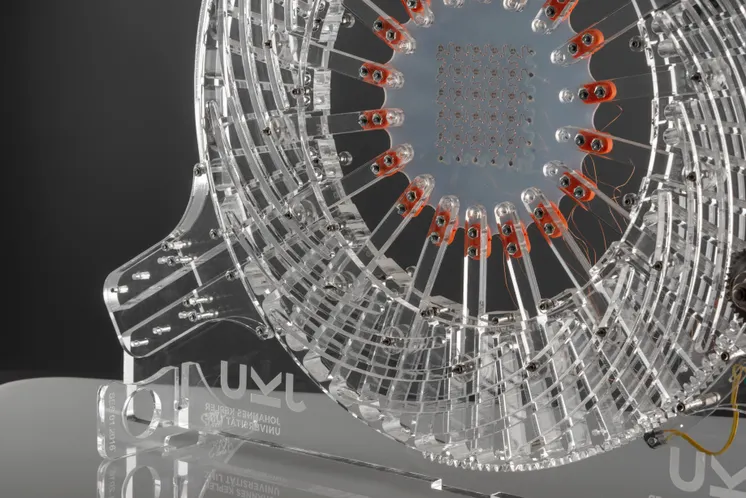
The same technology may be used very differently across campus. Design students might develop product concepts or packaging prototypes. Engineering teams may produce functional components for testing and validation. Laser applications in university research include creating experimental fixtures, evaluating material performance, and investigating manufacturing methods through practical testing. In architecture, laser systems are used to produce detailed models, while in fields such as medical technology and electronics they support precision parts and proof-of-concept development. What connects these activities is the ability to move efficiently from idea to outcome using a shared toolset.
A single university project may bring these disciplines together. Design students can develop the initial concept, engineering students can refine and test its functionality, and research teams can evaluate materials or manufacturing methods. Using shared digital fabrication tools, the project can progress from digital design to a functional prototype within one connected environment.
This hands-on approach reflects a broader shift in higher education. Universities are increasingly creating learning environments that mirror real-world innovation processes, bringing together teaching, research, and practical project work. Rather than learning solely through theory, students are collaborating across disciplines, contributing to research activities and developing solutions to real-world challenges. The result is a stronger connection between academic learning and professional practice.
Modern digital fabrication also allows research findings and emerging technologies to flow more easily into the classroom. Students can gain exposure to new manufacturing methods, material development projects and sustainability-focused research while working with technologies increasingly found throughout industry.
As these collaborative environments continue to evolve, the conversation is shifting beyond individual pieces of equipment. The challenge is rarely generating ideas. It is creating a workflow that allows those ideas to move efficiently from concept to practical outcome.
This is where educational fabrication ecosystems are becoming increasingly important. Universities often combine different laser technologies within shared makerspaces, fabrication labs, and research facilities. Flatbed laser systems may support design projects, architectural models and prototyping, while galvo laser systems enable precision applications for engineering, electronics, medical technology and research. Connected ecosystems such as the Trotec Black Line help bring these environments together through integrated workflows, software, training and support. Rather than focusing on individual machines, the goal is to create a connected digital fabrication environment that supports collaboration, consistency, and interdisciplinary project work across campus.
Workflow plays a particularly important role when projects involve different users, disciplines, and objectives. Designers may prepare files differently to engineers or research teams, yet all rely on the same equipment. Software such as Ruby® helps create a common framework by connecting design preparation and production within a single workflow. This reduces complexity for users while helping institutions manage shared resources more effectively.
Ultimately, the value of laser technology in higher education extends beyond prototyping or fabrication alone. As universities strengthen their role as drivers of innovation, these technologies are becoming a bridge between academia and industry, helping transform ideas into practical outcomes. At the same time, students gain experience with digital manufacturing, collaborative problem-solving and interdisciplinary workflows, building skills that are increasingly important in Industry 4.0 environments, and future careers.
Explore the Speedy Black Line ecosystem and discover how connected laser technology, workflow software and digital fabrication tools are supporting innovation, collaboration and hands-on learning across education and industry: https://www.troteclaser.com/en...