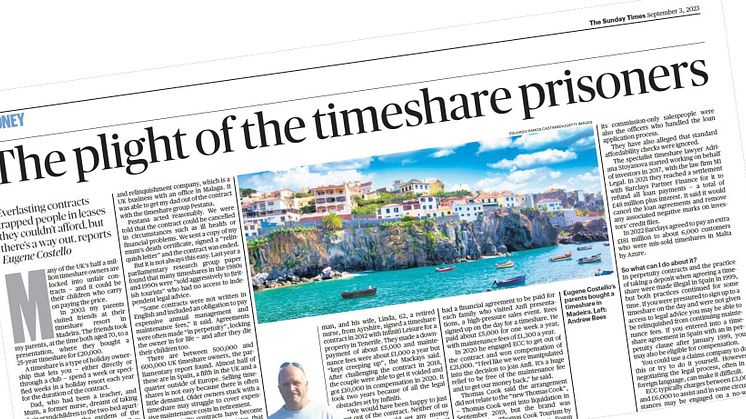
Press release —
Timeshare vacation memberships analysed as an investment choice
We ask the tough questions about timeshare vacations as a financial choice
Timeshare in brief
Timeshare is a generic term for private vacation membership based systems which first debuted in Europe in the early 60's, then exploded in the USA from 1969 onwards. Today the industry creates over £78.6 billion in annual economic output worldwide according to American Resort Development Association (ARDA). To put that in perspective, it is worth almost four times as much as the global music industry (£20.4 billion.)
According to RCI there are currently 5425 timeshare resorts in the world, averaging 130 units each. 20 million people worldwide holiday through some form of timeshare.
A timeshare ownership grants the holder the right to stay in a vacation property for an agreed amount of time, generally at the same time every year.

There is a joining fee (in 2023 the median cost was around £18,000) as well as an annual maintenance charge (the average is approximately £1000/year for a one week membership). In many parts of the world, membership term limits have been legally imposed. In Spain a contract is not permitted to last for more than 50 years.
Timeshare ownerships in some parts of the world (for example the USA, the Caribbean, Mexico and Hawaii) are often 'in perpetuity' meaning they last forever.
The result is that not only you, but when you pass on, also your estate and beneficiaries can be legally obliged to pay the fees. Forever.
This is clearly a significant commitment.
If you want to holiday at a different time or location you can theoretically do so, by 'exchanging' again at a cost.
Most modern timeshares are points based. Your points can be used as currency to book accommodation. You can also use them to book flights, car hire or even spend in shops. However the conversion rates are notoriously bad. You get a very poor exchange of points into monetary value.
Investment potential?
There is a poker adage: “If you can't see who the sucker at the table is... then you are the sucker.”
The people actually benefiting from a timeshare purchase are not the members but the sales operation and resort owners.
The membership bestows expensive, partial access to a unit. This membership has minimal (if any) fiscal value.
Here are the main issues with timeshare purchases:
- There is practically no resale market
- Once you take ownership, the membership becomes virtually worthless
- The 'exchange systems' rarely work
- The rules for booking are complex and rigid, often requiring over a year's notice to have any chance of reserving the week you need
- Timeshares are usually sold through high pressure sales presentations while you are in a buoyant mood on holiday. People rarely, if ever, approach the resort of their own volition asking to buy.
- Maintenance fees are often the same price as (or more than) a stay in an equivalent standard hotel. The fees increase every year and generally at a higher rate than inflation
- There is rarely an easy way to cancel a timeshare contract.
Timeshare does not make money
With most older memberships, what you own is the 'right to rotational occupancy' for a given number of years. These memberships logically reduce in value every year by dint of the remaining vacation potential reducing annually. In practice however the commitment of maintenance fees (and their increases) mean that the reduction in value is immediate and almost total.
With a modern or deeded timeshare you do theoretically own a percentage of a property. However you do not have any deciding input into in decoration, design or maintenance. There are strict limits on when you have occupancy and (unlike owning a freehold holiday apartment) you can not rent out the other weeks to make money/offset costs.
When you add up the individual memberships, a £100,000 apartment is regularly sold as timeshare for amounts totalling over £1 million (£20,000 multiplied by 51 weeks, leaving one for maintenance is £1,020,000). This is due to the high costs of marketing a timeshare - fly buy costs, sales commissions etc - which make up most of the actual sales price.
So the likelihood is that it would be lifetimes before you could sell and make a profit. Selling is anyway only possible if 100% of owners all agree with and commit to a sale. A condition which many members say makes a sale impossible.
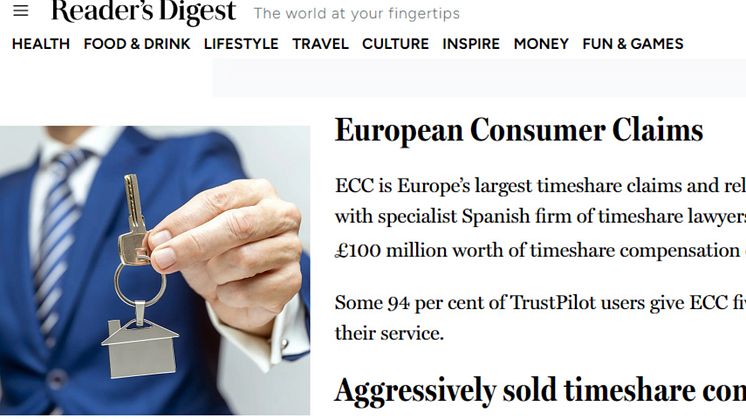
"Timeshare clearly targets the financially inexperienced," says Greg Wilson, CEO of European Consumer Claims. "They are billed as vacation properties for people who can't afford a vacation property. The sales presentation is more about the 'bling lifestyle' than investment returns. There is no financial return on a timeshare ownership."

"If something doesn't generate income or return it is an expense rather than an investment.
"It might be fun, it might give you pleasure. But it is a drain on your resources that property ownership should not be over the long term."
Timeshares are not liquid
Timeshare owners quickly come to understand that many more people are trying to sell timeshares than buy them. It is highly unlikely you will ever recover your initial investment, let alone make a profit. When you factor in the cost of maintenance fees for the years you have owned, timeshare ownership can not be considered a liquid asset.
Websites offering to sell your timeshare promise a lot, but guarantee nothing. They charge a fee to list the ownership and often an annual membership fee too.
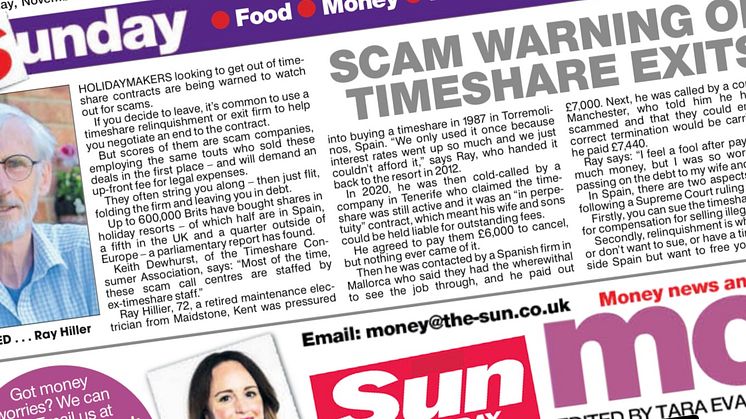
In the timeshare resale business, disingenuity very often spills over into outright fraud, for example companies who guarantee a sale because they have a buyer waiting, then disappear when the fee is paid. In more overt scams, the desperate owner is asked for a large sum (potentially over £1000) as a reservation fee which they will be refunded when the sale goes through. The sale never does, and consequently the money is lost.
The rare timeshare sales that do occur are for for tiny amounts of money. More typically an owner has to pay experts to relinquish them from the contract.
Reasons for lack of resale potential are:
- It is a saturated market with more timeshare resorts being built all the time, especially in the USA, Caribbean, Mexico and Hawaii.
- The modern holidaymaker has access to a greater variety of resorts, with more flexibility and at a better price than timeshare membership offers. This greatly reduces the appeal of private membership.
- It therefore takes a sophisticated sales process, supported by expensive marketing to sell a timeshare in the first place. An existing owner is unlikely to have access to the depth of resources required to sell this product.
I bought a timeshare but now I want out
Unfortunately the chances of making the ownership work as an investment are minimal. However it is generally possible to escape the commitment of increasing mandatory annual fees, if you retain qualified help. In certain cases there may also be potential to sue the resort if you were mis-sold.
To understand your options regarding an unwanted timeshare, get in touch with our team at Timeshare Advice Centre for a free, confidential consultation.

Related links
- American Timeshare History
- European Timeshare History
- ARDA timeshare report
- The global music market was worth $26bn in 2021
- RCI timeshare summary
- How much are timeshare resort points worth?
- Timeshare industry by the numbers
- TAC contact page
- Timeshare Advice Centre
- European Consumer Claims
- Who is Andrew Cooper? Meet the CEO of European Consumer Claims
- Freedom before your next timeshare maintenance bill?
Topics
Categories
Regions
TAC provides timeshare claims services, relinquishments expert advice and help
E: (for media enquiries): mark.jobling@ecc-eu.com
T: (for media enquiries): +44 2039962044
E: (for client enquiries) EUROPE: info@timeshareadvicecentre.co.uk USA: info@timeshareadvicecentre.us
T: EUROPE: +44 800 102 6070/+44 203 807 3388. USA: 1-888 203 5448/ 1-332 867 1213
Monday to Friday: UK timings: 9am-8pm. Saturday/Sunday closed. USA 9am -8pm EST. Sunday closed
Follow Timeshare Advice Centre UK on Facebook here. Timeshare Advice Centre US here
Follow Timeshare Advice Centre UK on Twitter here. Timeshare Advice Centre US here
Relevant websites for this article