Press release —
From field waste to fuel – and a living wage for rural women
Academics from Northumbria University have secured funding to build Pakistan's first full-scale demonstration plant that converts agricultural waste into clean energy, creating a new source of income for rural women at the same time.
Every winter, farmers across Punjab burn millions of tonnes of cotton stalks and sugarcane waste in their fields because there is no other use for it. The practice contributes to air pollution levels five to seven times above World Health Organisation limits and is a major driver of Pakistan's seasonal smog.
At the same time, Pakistan imports around 19 million tonnes of coal every year at a cost of more than $2.5 billion, while rural communities in South Punjab endure power cuts of up to 18 hours a day.
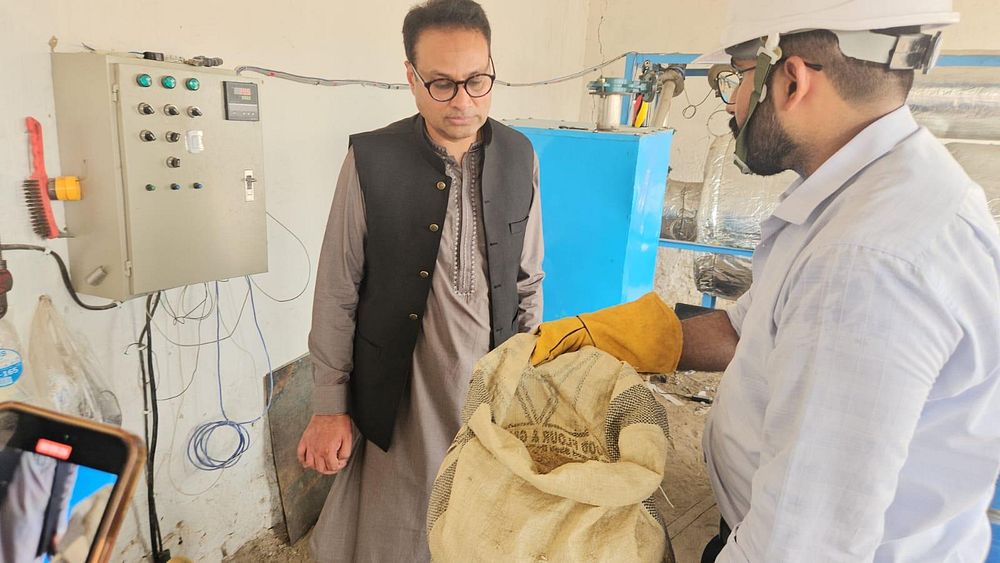
The new project, called SAFER PLUS, turns cotton stalks and sugarcane waste into engineered bio-coal pellets through a heating process known as torrefaction.
The pellets can potentially replace imported coal in brick kilns and textile mill boilers at 40 to 50 per cent lower cost, with no modifications needed to existing equipment
The process also captures surplus heat, which will be piped to local handmade textile dyeing workshops, as well as generating electricity from its own gases to power off-grid households, and producing wood vinegar, which is a natural pesticide sold directly to farmers. Once running, the system powers itself, requiring no external fuel, making it fully sustainable.
“What makes this project different is that we are not proposing another laboratory study; we have spent six years developing and validating the knowledge, and now we are building a live commercial facility with three textile mills already committed to using the fuel. This is the step that turns research findings into an investable, replicable business that Pakistan can own and scale.”
At least 60 per cent of training places on the project are reserved for women, and payments will be made directly into women's own mobile wallets to ensure they have independent control over their earnings.
Dr Yasir Nawab, Vice Chancellor of the University of Kamalia, said: “This project demonstrates that universities in rural Pakistan can be more than places of learning, they can be the engines of clean energy, skilled employment and economic transformation for the communities they serve.”
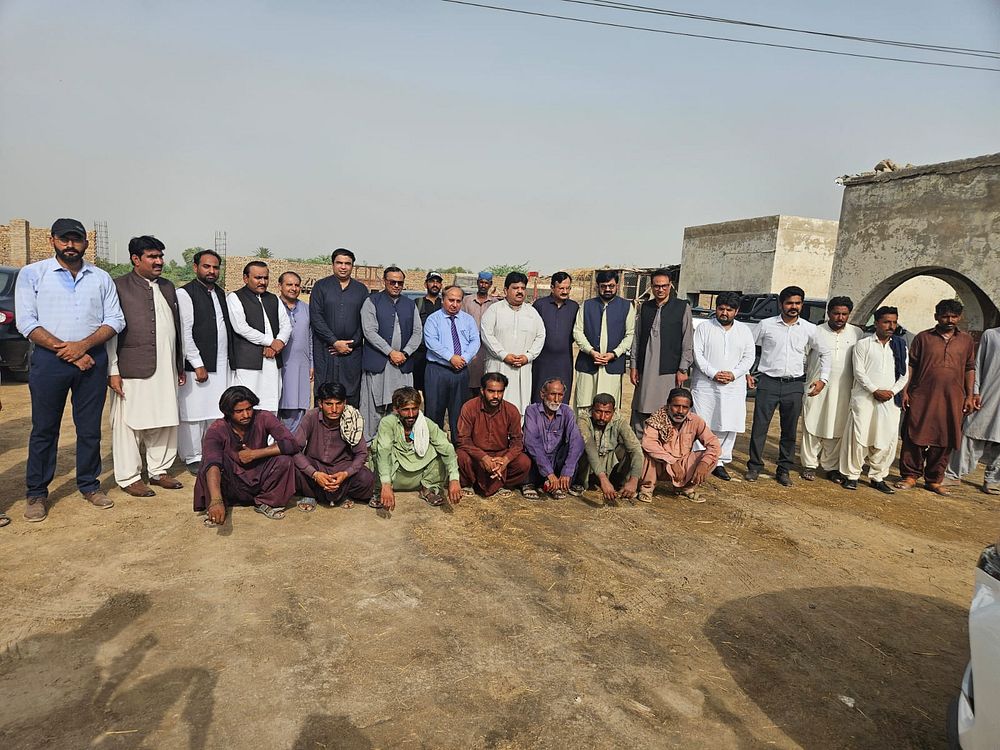
Three Pakistani textile manufacturers have already signed letters of commitment to trial the bio-coal as boiler fuel. If they are satisfied with the results, they have indicated they would purchase it commercially, making SAFER PLUS the first project to demonstrate a viable market for agrowaste solid fuel in Pakistan's textile sector.
Dr Muhammad Saghir, Chief Executive of Eco Research Ltd, is the technology lead and administrative lead for the project. He said: “Our patent-pending reactor converts agricultural waste into four commercially viable products from a single process which are coal-grade fuel, electricity, industrial heat and organic pesticide, all without consuming any fossil fuel after startup.
“That combination does not exist anywhere in Pakistan today. Moving from laboratory validation to a full commercial-scale demonstrator with paying industrial customers is the critical step that proves this technology is not just technically sound but financially viable.
“Our shared ambition as a consortium is to replicate this across thirty hubs in Punjab within the next decade, creating a domestic clean fuel industry that reduces Pakistan's dependence on imported coal and puts revenue directly into the hands of farming communities.”
The programme is funded by the UK Government's Department for Science, Innovation and Technology (DSIT) and delivered by Innovate UK. The award was announced at the Ayrton Forum 2026 in London last month (June) as part of London Climate Action Week.
Jilian Henderson, Innovation Lead at Innovate UK commented: “This funding will help grow innovative projects that bring reliable, clean energy to communities that need it most, supporting better healthcare, education and livelihoods. Through Energy Catalyst, we’re helping turn ideas into practical solutions that improve lives and support a fairer, more sustainable energy future.”
Professor Louise Bracken, Pro Vice-Chancellor for Research and Knowledge Exchange at Northumbria University said: “This project demonstrates the strength of what can be achieved when universities work across borders with genuine shared purpose. Northumbria's role in SAFER PLUS reflects our commitment to research that addresses global challenges, and we are proud to be part of a consortium that is creating tangible, lasting benefits for communities in Pakistan.”
Through that work, the team identified that cotton stalks and sugarcane bagasse offered significantly greater energy potential than banana waste. SAFER PLUS now takes that learning to full commercial scale, the first demonstration of its kind in Pakistan.
If the demonstrator proves successful, the consortium has set out a roadmap to replicate the model across 30 sites in Pakistan, which it estimates would displace more than 100,000 tonnes of imported coal every year.
Topics
Categories
Regions
UNIVERSITY OF THE YEAR (Times Higher Education Awards, 2022)
RESEARCH UNIVERSITY OF THE YEAR (Daily Mail University Guide, 2024)
MODERN UNIVERSITY OF THE YEAR (Daily Mail University Guide, 2024 and The Times and Sunday Times Good University Guide, 2025).
Northumbria is a research-intensive university that unlocks potential for all, changing lives regionally, nationally and internationally.
Two thirds of Northumbria's undergraduate students come from the North East region and go into employment in the region when they graduate, demonstrating Northumbria's significant contribution to social mobility and levelling up in the North East of England.
Find out more at www.northumbria.ac.uk
--- Contact media.communications@northumbria.ac.uk with any media enquiries or interview requests ---