Northumbria researchers investigate how facial recognition failures harm people with facial differences
Dr Juna Sathian, an Associate Professor at Northumbria University, has been elected a Fellow of the Institute of Physics (IOP) in recognition of her contributions to physics research and her work widening access to the subject across the North East.
The longest satellite record ever assembled shows that Greenland and Antarctica have lost 11.3 trillion tonnes of ice since the 1970s, raising global sea levels by more than 3 centimetres – and that most of the loss has come from glaciers flowing faster into the ocean, not from melting at the surface.
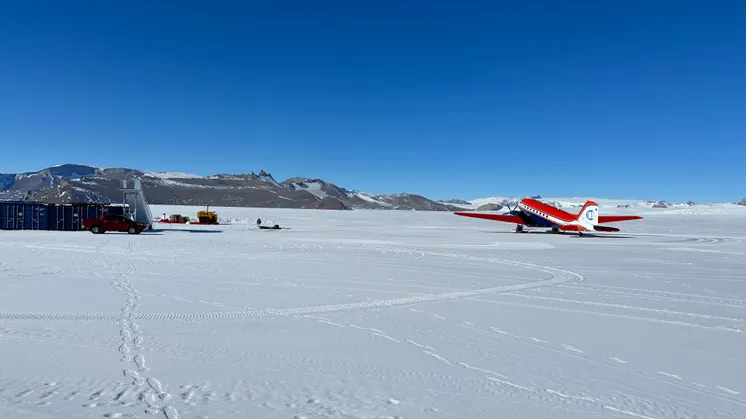
Wildfires raging through prehistoric rainforests helped create the earliest known peat bog near the South Pole, according to new research co-led by a Northumbria University scientist.
A Northumbria University astronomer has helped uncover new clues about a rare icy object from outside our Solar System, revealing that it formed in extremely cold conditions, far away from any star.
Two leading academics from Northumbria University have been elected to the Fellowship of the Academy of Social Sciences (FAcSS), in recognition of their outstanding contribution to the social sciences and to tackling major societal challenges.
A new international, community-led, scientific review warns that major gaps in knowledge along Antarctica’s coast are now one of the biggest obstacles to reliably predicting future global sea level rise.
Researchers from an outreach group at Northumbria University, which promotes opportunities for young people from all backgrounds to engage with the subjects of science, technology, engineering and maths (STEM), are celebrating after winning a prestigious Royal Society prize.
Three Northumbria University academics from across education, sport and the built environment have been named National Teaching Fellows by Advance HE, in recognition of their contribution to teaching excellence in UK higher education.
The impact of research and technical expertise at Northumbria University has been highlighted on a national stage, after a scientist's placement in Parliament led an MP to showcase his work as a flagship example of excellence in technical skills.
A rare early painting by celebrated North East artist Norman Cornish has been donated to Northumbria University, adding a significant new work to one of the most important collections of Cornish's work in the world.
A Northumbria University academic curated a major retrospective of one of India's most influential filmmakers at the BFI (British Film Institute) Southbank and Il Cinema Ritrovato, Bologna this June.
Northumbria University researchers are calling on women to support a new study, which could find out exactly why your period can make your multiple sclerosis (MS) symptoms worse.
Northumbria University is officially one of the best universities in the world for sustainability, according to the latest Times Higher Education Sustainability Impact Ratings, published today. Northumbria is now ranked 31st in the world – its highest ever position – from an assessment of more than 1,600 universities from 116 countries.
New research commissioned by Lush shows the UK's non-animal methods sector grew to more than £1.2 billion in turnover and has been cited by a leading parliamentary advocate for reform.
A Northumbria University researcher whose work is helping to shape the future of laser-based space communications has been named one of the Women's Engineering Society's Top 50 Women in Engineering (WE50) for 2026.
A Northumbria University academic whose work has helped modernise fire service operations and protect firefighters from harm has been recognised in His Majesty The King’s Birthday Honours 2026.
A Northumbria University researcher has secured a prestigious national grant to redesign wind turbine blades by borrowing two of nature's most elegant aerodynamic solutions: the humpback whale's ridged flippers and the near-silent feathers of the barn owl.
The North East Space Communications Accelerator (NESCA) has announced its second round of innovation funding, distributing almost £490,000 across 13 cutting-edge space communications and technology projects. Five of the successful projects are led by women – a fitting milestone in the week marking 63 years since Soviet cosmonaut Valentina Tereshkova became the first woman to travel to space.
From GPS and weather forecasting to the financial networks underpinning the global economy, satellites are critical infrastructure that most of us never think about. But with more than 40,000 objects now tracked in Earth's orbit, keeping satellites safe from collisions is an increasingly complex and urgent challenge.