Researchers aim to grow optical fibres using biology instead of machinery
A new project led by Northumbria University aims to grow optical fibres using proteins, mimicking a process that has occurred in nature for millions of years.

A new project led by Northumbria University aims to grow optical fibres using proteins, mimicking a process that has occurred in nature for millions of years.
Researchers from an outreach group at Northumbria University, which promotes opportunities for young people from all backgrounds to engage with the subjects of science, technology, engineering and maths (STEM), are celebrating after winning a prestigious Royal Society prize.

A Northumbria University academic whose work has helped modernise fire service operations and protect firefighters from harm has been recognised in His Majesty The King’s Birthday Honours 2026.

A North East school has partnered with solar and space physics experts from Northumbria University for a project supported by a Royal Society Partnership Grant which aims to bring academic research and STEM careers to life.

Northumbria University researchers have joined forces with the International Federation of Red Cross and Red Crescent Societies (IFRC) to deliver the third edition of the IFRC Limitless Youth Innovation Leadership Academy—a programme which has already reached thousands of young people across 150 countries with the aim of driving youth innovation.

The North East Space Communications Accelerator (NESCA) has successfully awarded its first round of innovation funding, distributing almost £340,000 across seven cutting-edge space communications and technology projects.

Researchers from an outreach group at Northumbria University are celebrating after winning a prestigious 2025 Institute of Physics (IOP) award recognising their work with children and young people across the North East and beyond.

Northumbria University will host the 21st International Conference on Ground Penetrating Radar (GPR 2026) from June 23-26, 2026. The event will gather experts to discuss advancements in GPR technology for subsurface exploration, infrastructure monitoring, and utility imaging.
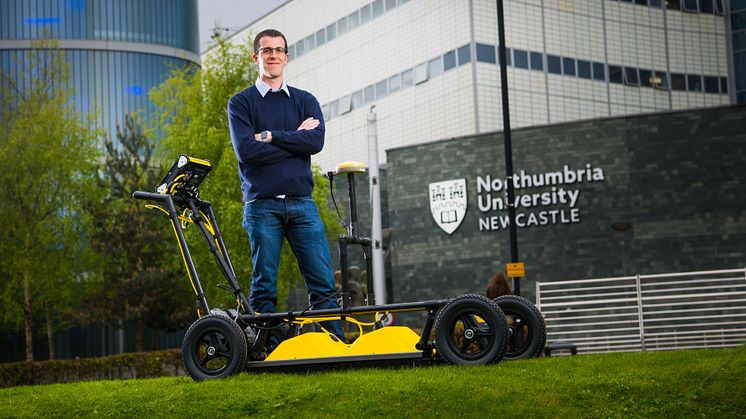
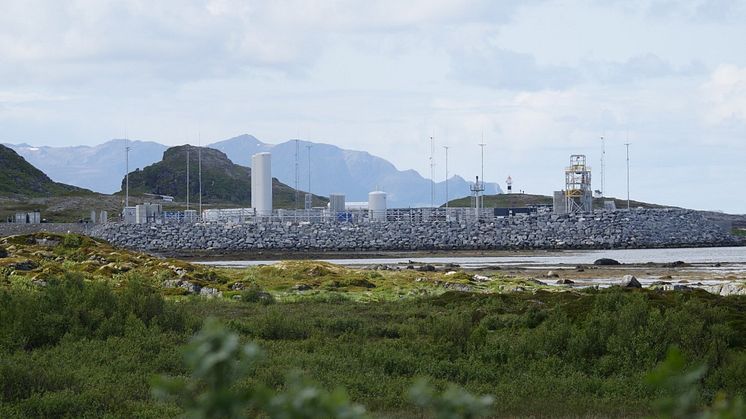
Dr. Pete Howson from Northumbria University is researching the impact of UK spaceports on local communities and environments, advocating for ethical development in the burgeoning NewSpace industry while aiming to balance commercial opportunities with social justice and sustainability concerns.
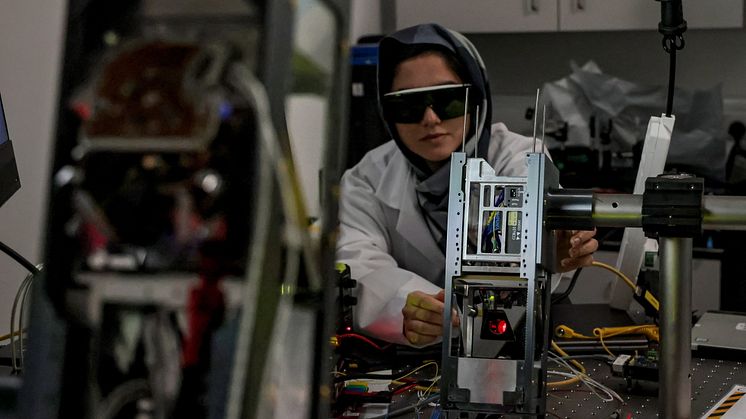
A consortium of academic and industry partners has come a step closer to launching the UK’s first university-led multi-satellite space mission after announcing it has successfully built and tested its first CubeSats.
A wooden panel, found in Hexham Abbey after being lost for more than 30 years, could be the missing part in a series of medieval panel paintings – according to art conservators using state-of-the-art multispectral imaging technology.

Scientists from Northumbria University captured Neptune's auroras for the first time using NASA's James Webb Space Telescope. This groundbreaking discovery, revealing unique auroral characteristics and significant atmospheric cooling, enhances understanding of Neptune's magnetic field and its interactions with solar particles.

Researchers have been awarded £1.6 million to develop a network which will support people living with dementia by connecting existing technology and services, as well as developing new innovations.

A team of researchers from Northumbria University are celebrating after one of their educational resources was named among the finalists of the prestigious Bett Awards, after making the shortlist in Early Years Product or Service category.

Northumbria University has announced a multi-million pound investment in its first university-wide high-performance computing facility which will give researchers access to state-of-the-art technology built to handle large scientific datasets at high speeds.
The North East space sector has received a 2.5 million investment from EPSRC, establishing the North East Space Communications Accelerator (NESCA) to enhance research, innovation, and skills in space technology, aiming to create jobs and stimulate economic growth over four years.

Ground Penetrating Radar software developed by academics at the universities of Northumbria, Edinburgh and Aberdeen has been chosen by technology giant, Google, to be part of its prestigious Summer of Code mentor scheme for the fourth time.
Northumbria University has been recognised as an Academic Centre of Excellence in Cyber Security Research for the second time, joining a select group of 21 universities in the UK. The university's research spans technical and human-centered aspects of cyber security, addressing virtual and physical risks in connected smart cities.

Professor Tom Stallard, a Planetary Astronomer from Northumbria University, has been granted access to the James Webb Space Telescope to study and capture images of the auroras on gas giants Saturn and Uranus. This unique opportunity will provide unprecedented insight into these spectacular light shows and planetary atmospheres.

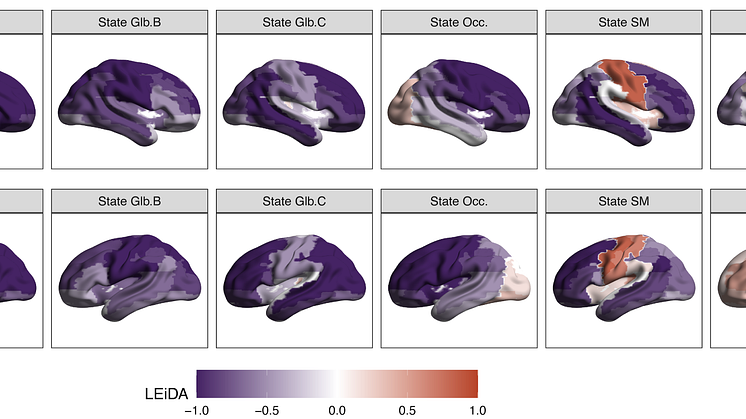
A new study involving Northumbria University has revealed scans of 390 babies show distinct patterns between term and preterm babies in the dynamic (moment-to-moment) connectivity of brain networks.