Skip to content

Topics: Economics

  • Lymphoma patients at high risk of infections after diagnosis

    Every year, around 100 people are affected by mantle cell lymphoma. A study at Uppsala University shows that these patients are more vulnerable to other diseases and that the risk of infection for this type of patient should therefore be carefully evaluated. The results of the study have been published in the journal Hemasphere.

  • Potential long-term volcanic activity on Iceland's Reykjanes Peninsula

    Given the volcanic activity on Iceland over the last three years, researchers from six universities anticipate recurring, moderately sized eruptions of similar style in the coming years to decades. They therefore stress the need for preparedness in view of the risks posed to local populations and critical infrastructure. Their study was recently published in the scientific journal Terra Nova.

  • From pets to pests: how domestic rabbits survive the wilderness

    Rabbits have colonised countries worldwide, often with dire economic and ecological consequences, but their secret has before been a mystery. In a new study published in the journal Nature Ecology and Evolution, an international consortium of scientists sequenced the genomes of nearly 300 rabbits from three continents to unveil the key genetic changes that make these animals master colonisers.

  • Ancient polar sea reptile fossil is oldest ever found in Southern Hemisphere

    An international team of scientists has identified the oldest fossil of a sea-going reptile from the Southern Hemisphere – a nothosaur vertebra found on New Zealand’s South Island. 246 million years ago, at the beginning of the Age of Dinosaurs, New Zealand was located on the southern polar coast of a vast super-ocean called Panthalassa.

  • Macrophages behave like mural cells to promote healing of ischemic muscle injury

    Innate immune cells including macrophages and neutrophils have unique properties that allows them to quickly accumulate in large numbers at the site of infection or injury. A new study from researchers at Uppsala University establishes that macrophage in the adult ischemic muscle induce a phenotype switch into mural cells to support restoration of functional blood flow and thereby promote healing.

  • UCDP: record number of armed conflicts in the world

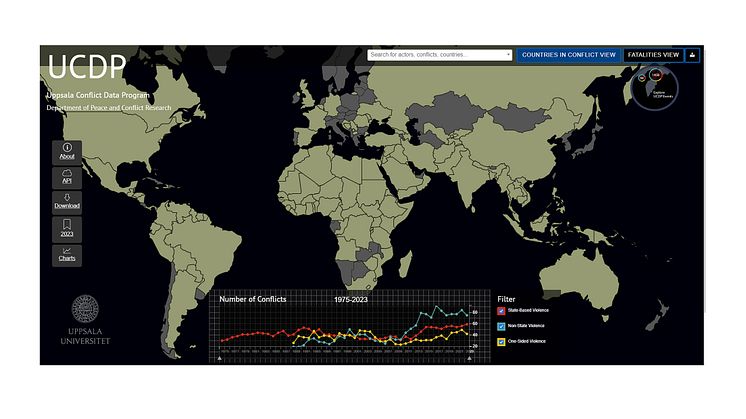
    Never before have there been so many armed conflicts across the globe. This has been shown by new statistics from the Uppsala Conflict Data Program, UCDP, at Uppsala University. In 2023, the number of conflicts involving states totalled 59, the highest number ever since the data collection’s starting point in 1946. Previous peaks were seen in 2020 and 2022, each with 56 conflicts.

  • Women vulnerable in peace processes

    New research: Post-war peace processes are a dangerous period for women, who are forced to live close to men who committed serious abuse during the war, which can be stigmatising. Women safety is not a political priority after war. There is great potential for improvement, if the UN were to start making more space for women’s perspectives, writes peace- and conflict researchers in PLOS One.

  • New mechanisms behind antibiotic resistance

    Two newly discovered mechanisms in bacteria have been identified that can contribute to the development of antibiotic resistance. Changing the number of copies of resistance genes in bacteria increases antibiotic resistance. These two mechanisms, along with a third known mechanism, can occur independently of each other, even within the same bacterial cell. (published in Nature Communications)

  • Robots' sense of touch could be as fast as humans

    Research at Uppsala University and Karolinska Institutet could pave the way for a prosthetic hand and robot to be able to feel touch like a human hand. Their study has been published in the journal Science. The technology could also be used to help restore lost functionality to patients after a stroke.

  • Return of a cermic child sarcophagus to university museum Gustavianum

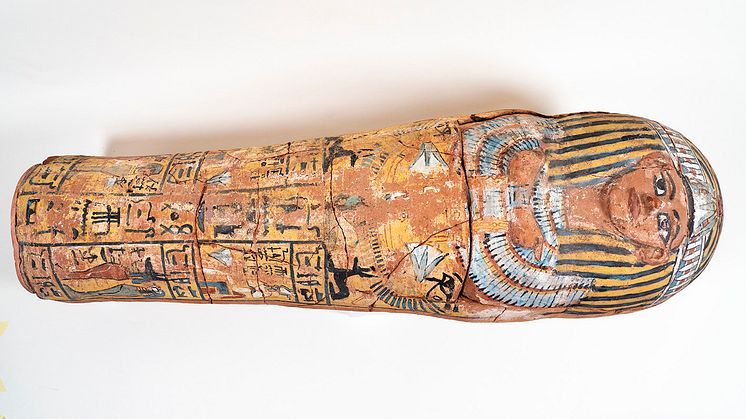
    Uppsala University Museum Gustavianum and the Museum of Fine Arts, Boston have reached an agreement on the return of an ancient Egyptian ceramic child sarcophagus, dated to the 19th Dynasty (1295–1186 BC). The sarcophagus belonged to a boy named Pa-nefer-neb.

  • Computer game in school made students better at detecting fake news

    A computer game helped upper secondary school students become better at distinguishing between reliable and misleading news. This is shown by a study conducted by researchers at Uppsala University and elsewhere. “The students improved their ability to identify manipulative techniques in social media posts and to distinguish between reliable and misleading news,” says Professor Thomas Nygren.

  • New antibiotic class effective against multidrug-resistant bacteria

    Scientists at Uppsala University have discovered a new class of antibiotics with potent activity against multi-drug resistant bacteria, and have shown that it cures bloodstream infections in mice. The new antibiotic class is described in an article in the scientific journal PNAS.

  • Vole fever spreading further south

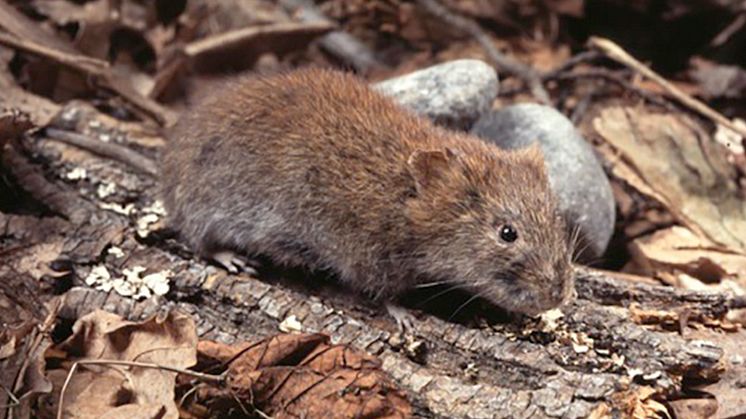
    Researchers have discovered that bank voles in Skåne, southern Sweden, carry a virus that can cause hemorrhagic fever in humans. This finding was made more than 500 km south of the previously known range. This is revealed in a new study from Uppsala University. The researchers were surprised that such a high proportion of the relatively few voles they caught were actually carrying a hantavirus.

  • When words make you sick

    In a new book, experts in a variety of fields explore nocebo effects – how negative expectations concerning health can make a person sick. It is the first time a book has been written on this subject.

  • New discovery concerning occurrence of antibiotic resistance

    A new study shows how heteroresistance, a transient resistance common in many bacteria, can act as a precursor to the development of antibiotic resistance. According to researchers at Uppsala University, this is the first time this link has been demonstrated.

  • New EU rules toothless against tax avoidance by multinationals

    The EU and OECD have jointly developed rules to prevent companies from exploiting differences in national legislation for financial gain. According to a new thesis/study at Uppsala University, however, companies are able to circumvent the rules. “The losers are mainly developing countries that are not members of the EU or OECD," explains Autilia Arfwidsson, doctoral student in Law.

  • Lower survival rates for women than men with germ cell tumours

    Women with a type of ovarian cancer known as germ cell tumours have a worse prognosis than men with similar tumours, i.e. testicular cancer. After five years with the disease, 98 percent of men were alive while the survival rate for women was only 85 percent. This has been revealed by a new study from Uppsala University and Uppsala University Hospital published in the Journal of Internal Medicine.

  • Eight new deep-sea species of marine sponges discovered

    Despite marine sponges being widespread on our planet, their biodiversity and distribution is still poorly known. Even though the Mediterranean Sea is the most explored sea on Earth, a study by Díaz et al. (2024) reveals the presence of new sponge species and new records in unexplored habitats such as underwater caves or mountains around the Balearic Islands.

Show more