Skip to content

Topics: Mental Health

  • New study links contraceptive pills and depression

    Women who used combined contraceptive pills were at greater risk of developing depression than women who did not, according to a new study. The pills increased women’s risk by 73 per cent during the first two years of use. “Since we only investigated combined contraceptive pills in this study, we cannot draw conclusions about other contraceptive options", says leading researcher Uppsala University

  • “You throw up, then you cough, then you feel better or die”

    Detailed images of illness, death and cancelled activities; these were some of the common themes of children’s drawings during the COVID-19 pandemic. A new study from Uppsala University, in which researchers studied 91 drawings made by children aged between 4 and 6, shows that the pandemic affected the children significantly and that they had extensive knowledge about the disease.

  • SSRIs and CBT lead to changes in the brain

    Neurochemical changes in the brain differ among patients with social anxiety treated using both SSRIs and CBT, compared to those treated using only CBT. While the combined treatment involving the medicine blocked the serotonin transporters, availability of such transporters increased in patients who only received CBT. In a double-blind positron emission tomography (PET) study, 24 participants.

  • Weighted blanket increases melatonin

    A new study from Uppsala University shows that using a weighted blanket at bedtime increases melatonin in young adults. This hormone increases in response to darkness, and some evidence suggests that it promotes sleep. The findings are published in the Journal of Sleep Research.

  • Mobile app reduces post-traumatic stress

    Support offered by a phone app can relieve post-traumatic stress and depression. A new study from Uppsala University’s National Centre for Disaster Psychiatry involving 179 patients shows that a dedicated PTSD app, PTSD Coach, helps adults suffering from mental health issues after traumatic events.

  • Small measures can be a big help for children of mothers with depression

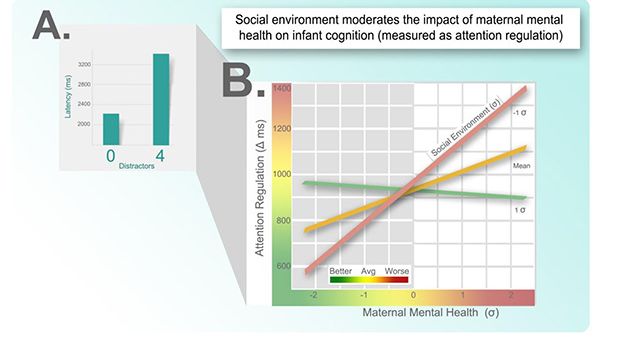
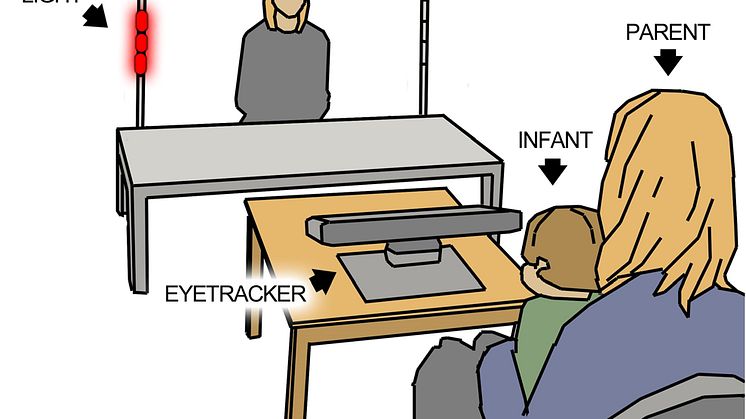
    Several new studies among Syrian refugee families in Turkey and families with infants in Sweden and Bhutan show that children of mothers in poor mental health risk falling behind in their cognitive development. However, very small changes can suffice to break this correlation and enable the children to return to their normal developmental level. The solutions where the same in all three countries

  • Expectations and dopamine can affect outcome of SSRI treatment

    Levels of dopamine and placebo effect can determine whether social anxieties improve when treated with SSRIs. The effect was four times higher for patients with high expectations compared with low expectations, even though the groups received the same medical treatment. Although SSRIs influence levels of serotonin in the brain, the effects on dopamine had the greatest impact for improvement.

  • Pathways to lifelong mental wellbeing in focus at Uppsala Health Summit

    Increasing mental ill health is one of the most urgent public health challenges in the world. The global meeting Uppsala Health Summit, to be held online on 18–21 October, will discuss which preventive measures societies should deploy to better address this troubling trend.

  • More effective treatment of Alzheimer’s

    Researchers at Uppsala University have designed new antibodies that might provide more effective treatment methods for Alzheimer’s disease. By designing antibodies that bind even to the smaller aggregates, or clumps, of the amyloid-beta protein, it may be possible to check the progress of the disease. The results presents in Translational Neurodegeneration.

  • How bullying and obesity can affect girls’ and boys’ mental health

    Depressive symptoms are more common in teenage girls than in their male peers. However, boys’ mental health appears to be affected more if they suffer from obesity. Irrespective of gender, bullying is a considerably greater risk factor than overweight for developing depressive symptoms. These conclusions are drawn by researchers at Uppsala University who monitored adolescents in a new study.

  • Tough childhood damages life prospects

    An adverse upbringing often impairs people’s circumstances and health in their adult years, especially for couples who have both had similar experiences. This is shown by a new study, carried out by Uppsala University researchers, in which 818 mothers and their partners filled in a questionnaire one year after having a child together. The study is now published in the scientific journal PLOS ONE.

  • ​Imbalance between serotonin and dopamine in social anxiety disorder

    The balance between the neurotransmitters serotonin and dopamine may affect whether a person develops social anxiety disorder. Previous research has mainly focused on either the serotonin or the dopamine system individually. Now researchers at Uppsala University have demonstrated the existence of a previously unknown link between the two. The results are published in Molecular Psychiatry.

  • Bravery cells found in the hippocampus

    Why do some people comfortably walk between skyscrapers on a high-wire or raft the Niagara Falls in a wooden barrel whereas others freeze on the mere thought of climbing off escalators in a shopping mall? In a new study, scientists have found that a certain type of cells in the hippocampus play a key role.

  • ​Group interventions reduce post-traumatic stress symptoms among unaccompanied refugee minors

    Participation in a post-traumatic stress group can be an effective help for unaccompanied refugee minors. In a new study, one in five young people completely recovered from their symptoms of post-traumatic stress disorder and many reported improved symptoms after having participated in a group. The study from Uppsala University is the first in Scandinavia using the Teaching Recovery Techniques.

  • Patients’ expectations influence the effectiveness of SSRI antidepressants

    Selective serotonin reuptake inhibitors (SSRIs) are commonly prescribed for depression and anxiety but their superiority over placebo has been questioned, generating considerable debate among researchers and clinicians. In a new study, Uppsala University researchers show that the way in which the treatment is described to the patient can be as important as the treatment itself.

  • Fifty–fifty split best for children of divorce

    Preschool children in joint physical custody have less psychological symptoms than those who live mostly or only with one parent after a separation. That shows a new Swedish study of 3,656 children, done by researchers from Uppsala University, Karolinska Institutet and the research institute CHESS, which is now published in Acta Pædiatrica.

  • Memory activation before exposure reduces life-long fear of spiders

    Many people suffer from anxiety and fears, and a common treatment for these problems is exposure therapy. In a new study published in Current Biology, researchers at Uppsala University have shown how the effect of exposure therapy can be improved by disrupting the recreation of fear-memories in people with arachnophobia.

Show more