Press release —
PT Yanmar Diesel Indonesia, Faeger and IPB University Launch Joint Research on Low-Carbon Rice Farming
West Java, Indonesia (August 12, 2026) - PT Yanmar Diesel Indonesia, Faeger Co. Ltd. and IPB University have launched a joint research project in Indonesia to assess the potential of combining Alternate Wetting and Drying (AWD) irrigation with biochar application to reduce greenhouse gas (GHG) emissions and stabilize rice yields.
Indonesia is one of the world's leading rice-producing countries, and rice cultivation plays a critical role in ensuring national food security. At the same time, methane emissions from paddy fields represent one of the major sources of greenhouse gas emissions in the agricultural sector.
In addition, agricultural residues such as rice husks generated during the rice milling process are often underutilized, despite their potential value within a circular economy framework.
This research project will investigate whether combining AWD, an established methane reduction practice, with biochar application can further support climate change mitigation and sustainable agricultural development through carbon sequestration and improved soil health.
Research Overview
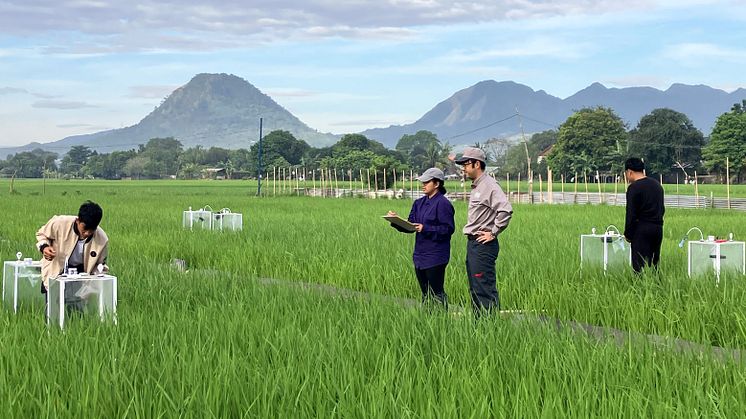
The study commenced in April 2026 at an experimental field operated by IPB University.
The project will comprehensively evaluate the methane reduction benefits of AWD alongside the carbon sequestration and soil enhancement effects of biochar application. Through this integrated assessment, the partners aim to develop a low-emission and highly productive rice cultivation model suitable for Indonesia and other rice-growing regions.
Future Outlook
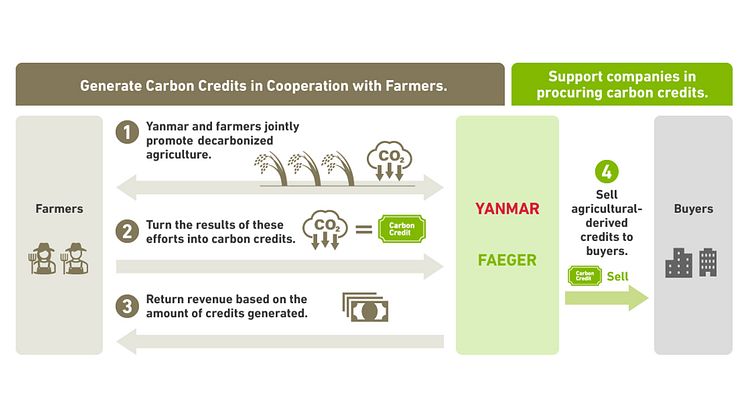
The findings are expected to support the wider adoption of low-carbon rice cultivation practices in Indonesia. It may also serve as a foundation for future carbon credit development and the advancement of climate change mitigation initiatives in the agricultural sector.
Faeger and PT Yanmar Diesel Indonesia will continue working with Indonesian research institutions, private-sector partners, and agricultural stakeholders to promote sustainable agriculture and support decarbonization efforts within the agricultural sector.
For more information about this initiative, please refer to the press release issued by IPB University .
About Yanmar
With beginnings in Osaka, Japan, in 1912, Yanmar was the first ever to succeed in making a compact diesel engine of a practical size in 1933. A pioneer in diesel engine technology, Yanmar is a global innovator in a wide range of industrial equipment, from small and large engines, agricultural machinery and facilities, construction equipment, energy systems, marine, to machine tools and components — Yanmar’s global business operations span seven domains. Guided by its Brand Statement, “A Sustainable Future – New Value Through Technology,” Yanmar provides advanced solutions to the challenges customers face on land, at sea, and in the city, working towards realizing a sustainable future.
Related links
Topics
Categories
Note: Information contained in the news release is valid at the time of publication and may differ from the most recently available information.
[Inquiries for further information]
Corporate Communications, Yanmar