Pressemitteilung —
Instead of Transformation, Shutdown Looms – Internal Gas Market Package Prevents the Transition to New Gases
- Current EnWG draft fails to implement key EU requirements for scaling up new gases.
- Lack of rules for certification, mass balancing, and a market database endangers biomethane and hydrogen and accelerates the shutdown of existing gas grids.
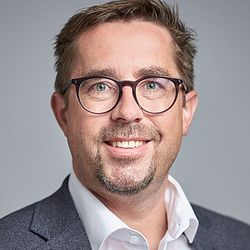
- Kehler: “In its current form, the draft aims to tightly regulate a market that does not yet exist while failing to establish essential rules for the market ramp-up of new gases.”
From the perspective of the association Die Gas- und Wasserstoffwirtschaft (GW), the current German draft of the Internal Gas Market Package leads to significant misalignments. The proposed regulations would prevent the market ramp-up of new gases and ultimately result in shutting down existing gas networks. The association submitted its statement to the Federal Ministry for Economic Affairs and Climate Action today, calling for a fundamental revision aligned with the European framework and the actual market situation.
According to the association, the current EnWG draft to implement the EU Internal Gas Market Package misses key objectives. It primarily contains provisions for the potential shutdown of existing gas infrastructure or its rapid conversion into purely green hydrogen infrastructure. The requirements for the conversion of distribution grids—crucial for supplying industry, businesses, and millions of households with biomethane and other low-carbon gases—remain vague or impose extremely narrow limits. “As laid out in its current form, the draft lacks a perspective for genuine transformation. Contrary to the government’s commendable political intention to leverage the potential of gas and hydrogen for the energy transition, it instead sends the signal of shutting down gas grids,” criticizes association board member Dr. Timm Kehler.
In its statement, the association particularly criticizes the absence of essential European requirements. Article 9 of the EU Gas Market Package is not considered in the draft. No national certification system, mass balance framework, audit and verification obligations, or linkage to the RED Union Database are included. “Without these pillars, renewable and low-carbon gases such as biomethane, synthetic methane, or hydrogen cannot be made tradable. Without this, the internal gas market package lacks the internal market,” says Kehler. “The draft slows down the ramp-up of new gases precisely where Europe intends to provide momentum.”
The biomethane sector would be particularly affected. With EEG support expiring in 2027 and without clear market access rules, a systemic disruption is looming—one that would severely impact a well-established rural industry. Kehler warns: “I am genuinely concerned by how little political backing the sector currently has. While other EU countries implement the framework pragmatically and are seeing a boom in their biomethane industries, German producers would be structurally disadvantaged and existentially threatened due to missing certification and infrastructure rules.”
Additionally, the draft shows signs of gold plating: Instead of simply transposing the requirements from Brussels, German regulators intend to add additional layers of detail and restrictions. This overimplementation creates competitive disadvantages and unnecessary bureaucracy. “What was meant to implement the European internal market is turning into a regulatory instrument of constriction,” says Dr. Timm Kehler. “We now need a clear, investment-friendly framework: full implementation of Article 9, including a mass balance system and a coherent certification regime; regulation that enables genuine transformation; and an end to gold plating.”
Kategorien
Als Stimme der Branche bündelt der Verband DIE GAS- UND WASSERSTOFFWIRTSCHAFT e.V. die Interessen seiner Mitglieder und setzt sich dafür ein, dass die Potenziale von Wasserstoff und seiner Derivate sowie Biogas und Erdgas inklusive der dazugehörigen Infrastruktur genutzt werden. Zudem informiert er über die Chancen, die gasförmige Energieträger für ein klimaneutrales als auch resilientes Energiesystem bieten, und treibt die Transformation der Branche hin zu neuen Gasen voran. Der Verband wird von führenden Unternehmen der Energiewirtschaft getragen und umfasst die gesamte Wertschöpfungskette von Produktion, Transport, Verteilung bis hin zu Handel, Vertrieb und Anwendungen. Weitere Branchenverbände und Industrieunternehmen unterstützen ihn als Partner.