Press release —
VOICES OF THE FJORDS - Two Sisters Chose Norway's Wild Outpost, and Built a Home to Share with Fellow Nature Lovers
VOICES OF THE FJORDS – Episode 6
Veiholmen - Smøla, Western Norway • 2026
Interview with Line J. Nicolaysen, Olsens Pensjonat & Gjestehus / Restaurant OlsenNaustet, Veiholmen
Most people who buy a derelict building sight unseen are chasing a bargain. Line J. Nicolaysen was chasing something harder to name - a place wild enough that nothing about it would be convenient. She found it almost ten kilometres out to sea, on a breakwater she'd never set foot on. She and her sister Hilde, with their father's quiet backing, spent the next fifteen years finding out what that choice would cost them, and what it would give back. The buildings they've restored along the way - a handful of fishermen's cottages, a restaurant in an old boathouse - are almost beside the point. The real project was choosing to explore the edge of the country on purpose.
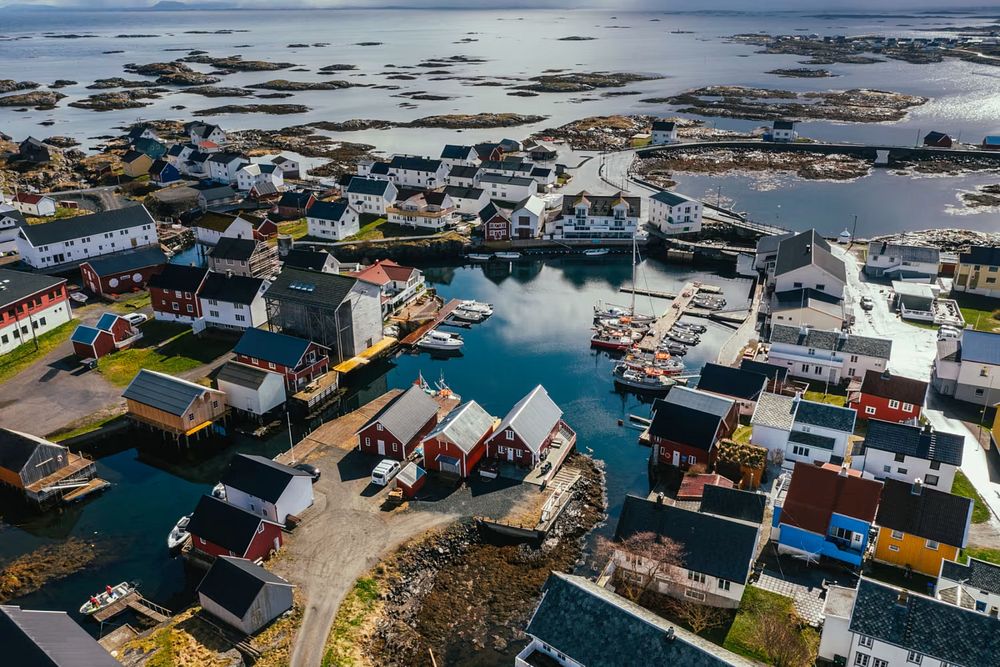
Veiholmen sits at the northern tip of Smøla, a scatter of 5,800 islets and skerries off the coast of Møre og Romsdal. Around 400 people live here year-round, sheltered behind a stone breakwater built in 1937 to hold back the open Norwegian Sea. Autumn storms throw salt spray clean over the rooftops; in summer, the skies belong to one of the densest populations of white-tailed sea eagles anywhere in the world. It is not a landscape that asks to be liked. It asks to be chosen. Line did, twice over - first almost by accident, then very much on purpose.
Of all the places in Norway, why this one? Why choose one of the wildest, hardest-to-reach corners of the country?
Because it doesn't compromise. I didn't want somewhere pretty and convenient - I wanted somewhere real, where the sea and the weather still decide things, not a calendar. When I first found what was for sale here, I didn't fully understand what I was choosing. I thought I was buying a building. I was actually choosing a place that would ask a great deal of me. I said yes anyway, almost before I understood the question I was being asked.
That first purchase happened sight unseen, from an apartment in Luxembourg. What did you think you were getting?
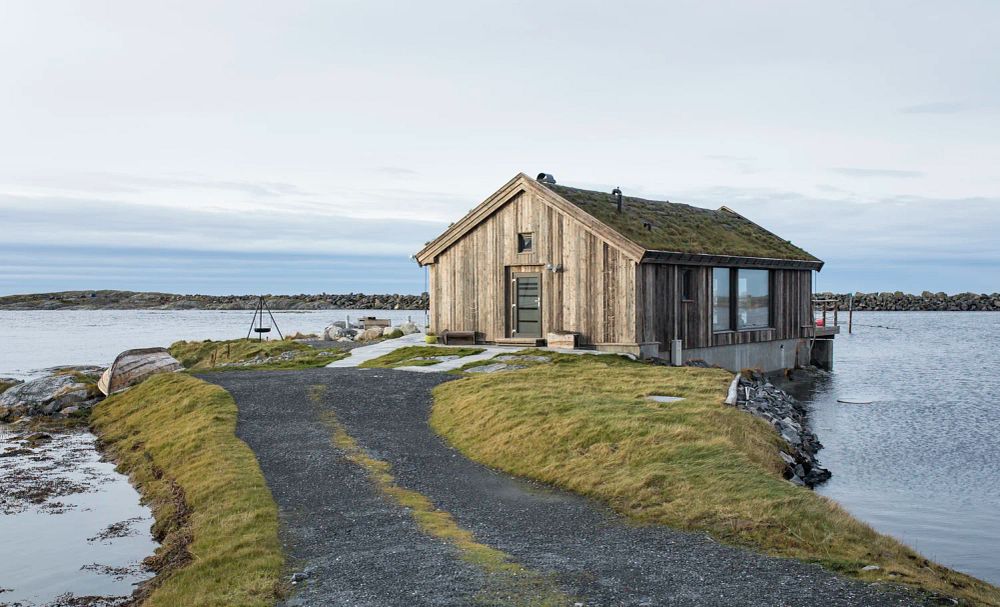
I thought the breakwater was simply a road out to the building - that it was, in the ordinary sense, land you could walk to. It turned out to be a huge stone mole with no road at all. Reaching my own newly bought house meant a boat trip every time. That was my crash course in how this coast does things: nothing here is as accessible as it looks from far away, and somehow you learn to want it precisely because of that.
Your sister Hilde and your father joined you here later. What turned this from your project into a family one?
A few years after that first purchase, I heard that the old boathouse directly opposite the molo was for sale - the perfect place, I thought, for getting to and from the mole. This time I didn't want to do it alone, and I didn't have to. Hilde and our father joined in, and together we bought it - and this time we'd actually seen it before buying!
We sisters divide the work by instinct rather than plan - one of us stays closer to the operations, the other pushes harder on permits and the bigger decisions. Our father has always been the quiet backbone financially; without his and the family's support in the early years, none of this would have survived its first winters. It has never really felt like a business in the strict sense - more a shared life that happened to need a business built around it.
“Veiholmen decides how close it lets you get, not you. You don't move somewhere this small and remote and expect to stay separate from it.”
What does a place like this ask of you that an easier life wouldn't?
Patience, mostly, and a willingness to be small in front of something bigger than you. Deliveries take longer, plans get cancelled by weather, everything is a little harder than it strictly needs to be. In return you get something that's hard to buy anywhere else: a life with real edges to it, days shaped by wind and tide rather than a to-do list. It also asks you to accept the village on its own terms - people here notice everything, and help arrives before you've finished asking.
Was there ever a point where you seriously considered walking away from it all?
Many times, if I'm honest - usually somewhere in the middle of a renovation permit, a storm, and a difficult bank conversation, all in the same week. But I don't think I ever seriously meant it. This place has a way of making itself impossible to leave once it has hold of you. You tell yourself it's just one more winter, and then years have gone by.
The restored boathouse and guesthouses get a lot of attention. How do the buildings fit into the bigger picture for you?
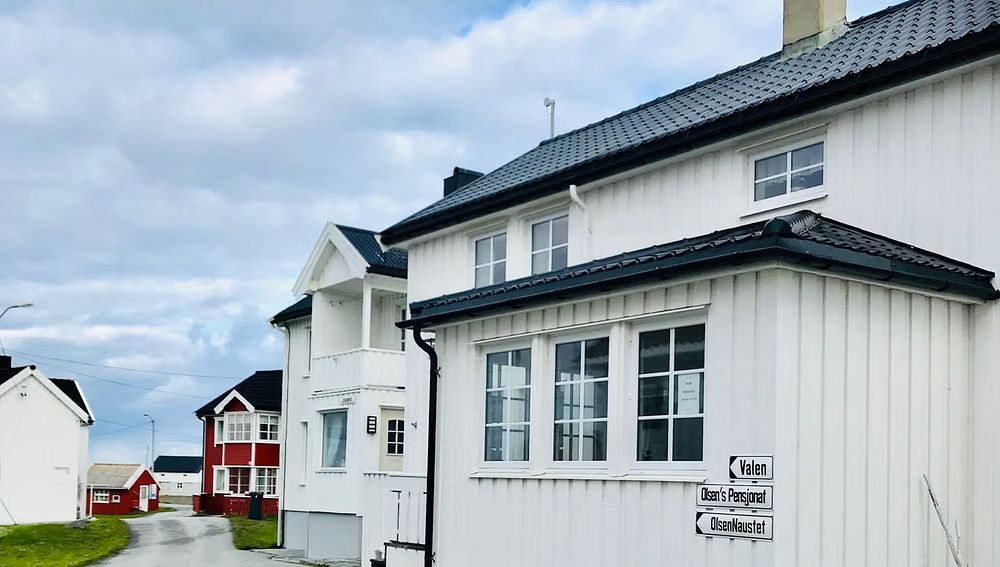
Honestly, they're the backdrop, not the point. We kept the old timber wherever we could and made sure nothing we added made the buildings feel less true to what they were. There are no televisions in any of the guesthouses - the wifi is excellent, but we want people to actually be in Veiholmen, not watching somewhere else. We ask guests to stay at least two nights, partly for their own sake and partly because the village benefits more from a slower kind of visit. But the real story is what it feels like to stand here with nothing between you and the sea. The buildings just needed to be worthy of that.
The old boathouse became a restaurant in the end….
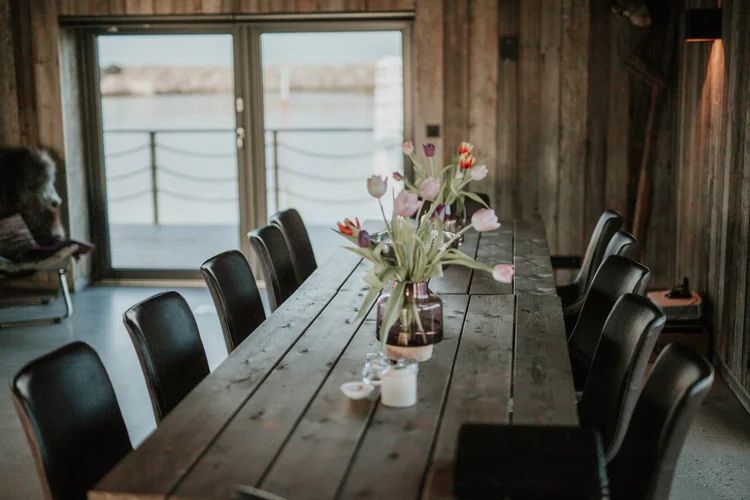
Restaurant OlsenNaustet has become a popular venue throughout the year with a proper local, sea-facing menu, in a building that's been standing at the water's edge since the 1700s. At high tide, water comes right up around it, so dinner there genuinely feels like eating on a ship's bridge. It's become a gathering point for guests, locals and for people from other parts of Smøla too, which is exactly what we hoped for when we started.
There's now a television crew following your story. Why do you think people are drawn to it?
I think it's less about renovation than people expect, and more about the choice underneath it - why would anyone pick one of the harder places in the country to build a life, when there are a hundred easier ones? I used to be the person on the sofa asking that same question about other people. Now the cameras are here, and it's both frightening and motivating at once - it pushes us to keep fighting through the many small decisions a project like this demands, because someone is actually watching us make them. We've decided not to hide the difficult moments either. If something is hard, or it moves us, viewers will see that too, not just the finished rooms.
What's next for Veiholmen - and what does 'finished' even look like for a place like this?
The big dream is the landscape hotel. There are architectural plans ready for a small maritime hotel right on the breakwater, around ten rooms, something genuinely in a class of its own for this coast. The zoning has been approved; now it's about finding the right investor. But I don't think this place is ever truly finished. Veiholmen keeps asking new questions of us, and that's the part I've come to love most about it.
If Veiholmen had one weather, what would it be?
Wind. Not gentle, not decorative - the kind that reminds you, every single day, that you're living somewhere the sea still has the final word.
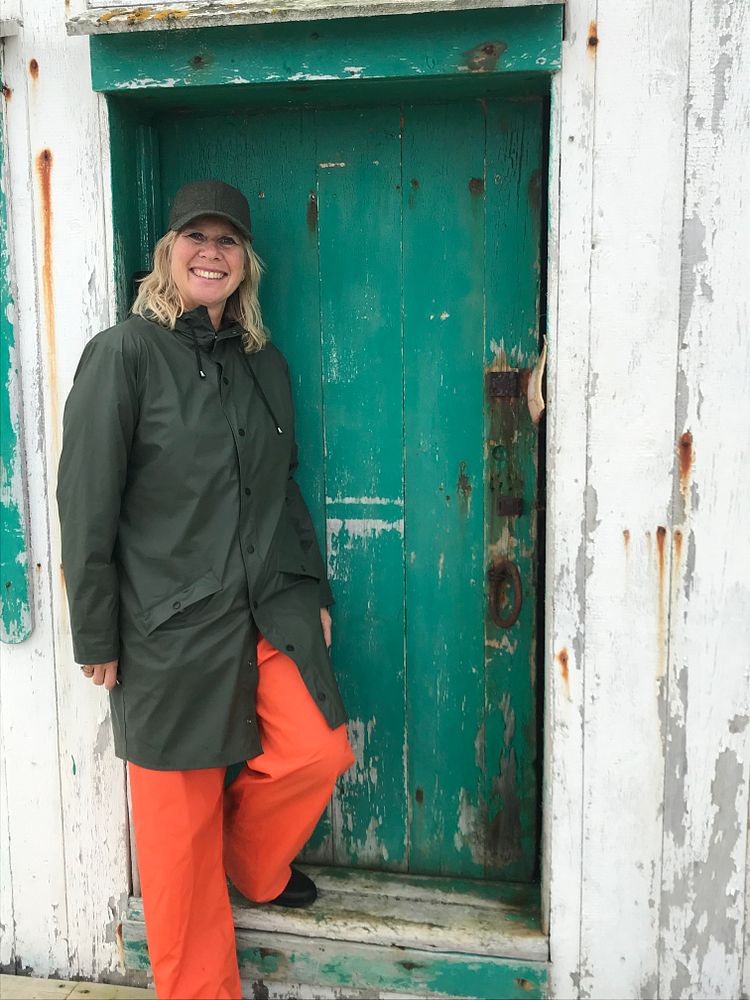
Line J. Nicolaysen is available for interviews and can be contacted at Olsens Pensjonat & Gjestehus and Restaurant OlsenNaustet, Veiholmen, 6570 Smøla. Contact: olsenspensjonat@gmail.com, +47 9770 5685. More information at moloen.com and fjordnorway.com/en/accommodation/olsens-guesthouse-veiholmen.
Smøla lies off the coast of Møre og Romsdal: roughly 5,800 islets and skerries scattered at the edge of the open sea, and home to one of the densest populations of white-tailed sea eagles in the world. The island is reached by ferry and Veiholmen itself is reached by a scenic drive over the main island and then across the archipelago - a road that runs out to sea long before it runs out of reasons to keep driving.
Related links
Topics
Categories
Fjord Norge AS/Fjord Norway is the official tourist board of Western Norway. Our main functions are international marketing of the Fjord Norway region, press-and study trips, and to convey information from the Fjord Norway region to tour operators, press and consumers worldwide. Find more information on our website.
For more pictures and video material click here.