Press release —
Lost Paradises on display at Nationalmuseum Jamtli
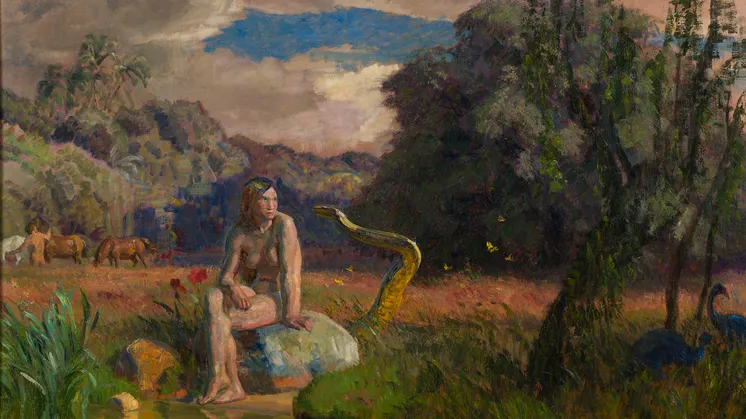
What is a paradise? When and how can it be lost? The exhibition Lost Paradises – Memory, Longing, Regret, which opens at Nationalmuseum Jamtli on 17 December, explores paradises that may no longer exist. It examines how artistic expression over time has reflected people’s experiences of loss, nostalgia and a longing for freedom and renewal.
There are many different ideas about which times, places and circumstances create our paradises. Is the potential loss of them even a prerequisite? Through ten different themes, the exhibition explores the many meanings of paradise. From the biblical Garden of Eden and the Fall of Man to the 18th-century fascination with antiquity and 19th-century historical painting. Notions of paradises past – places and times that may never have existed exactly as we imagine them.
But there are also paradises that we ourselves may have been experienced. Will we, in the future, long for winters when snow was a given, or for the time before the rivers were regulated? A paradise can also be a bygone golden age. The Swedish arts and crafts industry flourished in the late 19th century and helped the concept of ‘Swedish design’ gain international recognition during the 20th century. When industries were later closed and production relocated, new opportunities simultaneously opened for small-scale production in workshops and studios. The exhibition also features contemporary artists whose works explore places and cultural phenomena that are at risk of disappearing – or have already been lost. Another theme centres on Berlin during the Weimar Republic, where a thriving film industry and new artistic movements emerged during the 1910s and 1920s. Berlin became a key centre for early queer culture and what is now known as LGBTQI activism, a movement that came to an abrupt end when the Nazis seized power in 1933.
The exhibition brings together more than 120 works of art from Nationalmuseum’s collections, created over a period of nearly two thousand years. Together, they tell the story of paradises that have existed, been lost, or perhaps never existed at all. Several works are being shown in Östersund for the first time, including Pierre Bonnard’s Umbrellas in the Snow and Lotte Laserstein’s Polly Tieck. Works by Bruno Liljefors, Helmer Osslund, Anna Boberg, Joakim Skovgaard, Anita Berber, Tomas Colbengtson and Malin Lager are also on display.
Exhibition curators: Greger Sundin and Anders Svensson, Nationalmuseum
Exhibition designer: Henrik Widenheim, Nationalmuseum
Lost Paradises – Memories, Longing, Regret is on display at Nationalmuseum Jamtli in Östersund from 17 December 2026 to 17 April 2028.
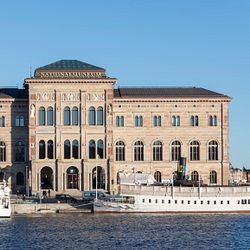
Nationalmuseum Jamtli is an arena for art and design experiences in Östersund that is run as a close collaboration between Nationalmuseum and Jamtli. It opened in summer 2018 to house exhibitions produced by Nationalmuseum featuring objects from its own collections. Lost Paradises is the eighth exhibition for Nationalmuseum Jamtli since its inauguration.
For press information
Jenny Olsson, Jamtli, jenny.olsson@jamtli.com, +46 63 15 01 35
Hanna Tottmar, Press Officer, Nationalmuseum, press@nationalmuseum.se, + 46 8 5195 4400
Topics
Categories
Nationalmuseum is Sweden’s museum of art and design. The collections comprise some 700,000 objects, including paintings, sculpture, drawings and graphic art from the 16th century up to the beginning of the 20th century and the collection of applied art and design up to the present day. Nationalmuseum is a government authority with a mandate to preserve cultural heritage and promote art, interest in art and knowledge of art.