
Blog post —
Dark Eye Circles and Tear Troughs: Causes and Treatment Options in Singapore
Updated on Oct 17, 2026
Dark eye circles are often shadows cast by hollow areas under the eyes, called tear troughs, rather than true pigmentation. If hollowness is the cause, treatment options in Singapore include tear trough fillers (EyeArt® Method), undereye fat transfer, Ultherapy Prime and RF microneedling with Erbium laser. The right option depends on the cause, your goals and how much recovery time you want.
Key Takeaways
- Dark circles are often due to shadows from deep tear troughs rather than pigment.
- Treatments for dark circles focus on hollowness rather than those caused by allergies or genetics.
- Various factors like aging, sun exposure, and poor lifestyle choices contribute to the problem.
- Tear trough fillers provide immediate results using hyaluronic acid to restore volume.
- These are temporary and require repeat treatments. For a longer-lasting solution, undereye fat transfer uses fat from your body, requiring more recovery time.
- Skin tightening treatments like Ultherapy and RF microneedling can also enhance results. At-home remedies like chilled tea bags may reduce puffiness but won't address hollowness.
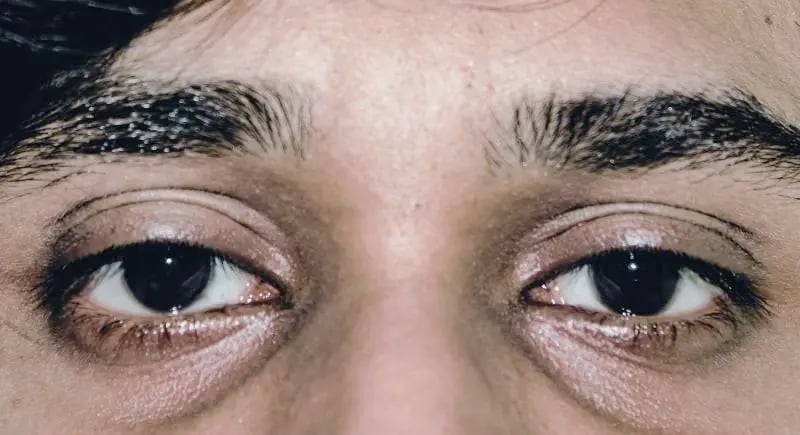
What are tear troughs and dark eye circles?
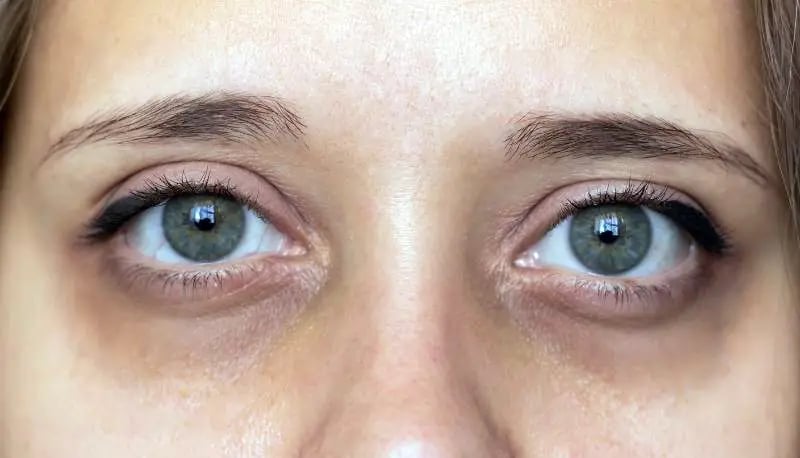
The tear trough is the depression between the lower eyelid and the cheek. A deep tear trough creates a shadow that gives a dark-circled look. Dark eye circles are shadows created by how light falls on the hollow areas under the eyes.
Because dark circles and tired-looking eyes can make you look older than you are, the under-eye area is often what people notice first.
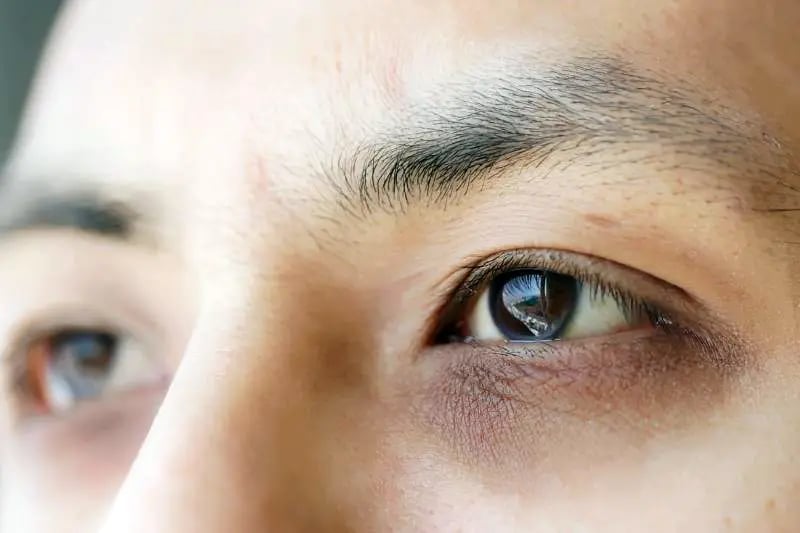
What causes dark eye circles and tear troughs?
Dark circles have many causes, which is why they can be hard to treat. The skin around the eyes is the thinnest on the body, so engorged blood vessels and discolouration show easily.
| Cause | How it contributes |
|---|---|
| Ageing volume loss and genetics | Ageing is a primary cause, though some people have hollows from a young age |
| Skin laxity | Collagen production falls with age, weakening the skin’s support |
| Hereditary pigmentation | Some dark circles run in families |
| Sun exposure and eye rubbing | Can cause melanin overproduction |
| Smoking | Constricts blood vessels, causing poor circulation and darker, more prominent vessels |
| Sleep deprivation | May make skin paler and more translucent, highlighting vessels |
| Caffeine and alcohol | Excess causes dehydration, which can swell blood vessels |
| Nasal congestion and allergies | Can inflame and enlarge under-eye blood vessels |
| Poor nutrition | Can worsen dark circles |
Treatments below suit dark circles caused by hollowness. They are less suited to circles caused by allergies or hereditary pigmentation, so an assessment comes first.
How do you treat dark eye circles and tear troughs?
| Treatment | Type | Best for | Results |
|---|---|---|---|
| EyeArt® Method (tear trough fillers) | Non-invasive injectable | Lost volume, eye bags, tired look | Noticeable immediately |
| Undereye fat transfer | Surgical, day surgery | Longer-lasting volume | More youthful, rested look |
| Ultherapy Prime | Non-surgical ultrasound | Loose skin, brow lift | Gradual |
| RF microneedling with Erbium laser | Minimally invasive | Skin tightening, crow’s feet, texture | Gradual |
What is the EyeArt® Method (tear trough fillers)?
The EyeArt® Method is a non-invasive eye rejuvenation treatment developed by Dr Ivan Puah. It addresses:
- Tired-looking eyes
- Dark eye circles
- Fine lines
- Eye bags
- Loss of volume under the eye
- Poor skin quality
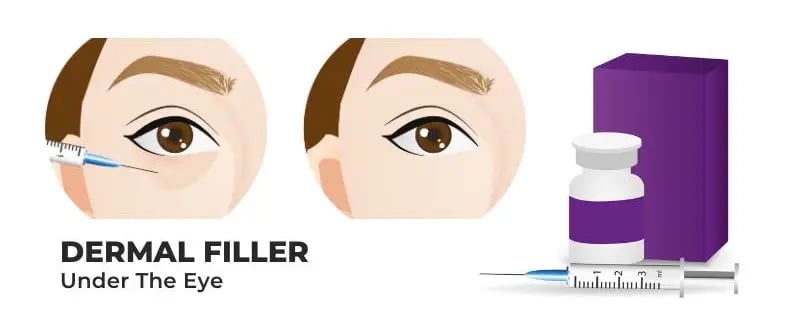
How does it work? Hyaluronic acid (HA) dermal fillers are injected at strategic points and depths to fill lost volume, lift and support the area, and reduce the look of dark circles. The technique is:
- Multi-layering: For even, natural rejuvenation.
- Micro-droplet: Very fine blunt cannulas are used instead of needles, which helps minimise bruising and swelling.
- Multi-dimensional: Lifts the skin around the eyes, improves fine lines and lightens dark circles.
Results are noticeable immediately.
What is undereye fat transfer and how does it work?
Undereye fat transfer is a 2-in-1 facial sculpting procedure. It uses your own fat, taken from areas such as the abdomen or thighs, as a filler to restore volume in the tear trough.
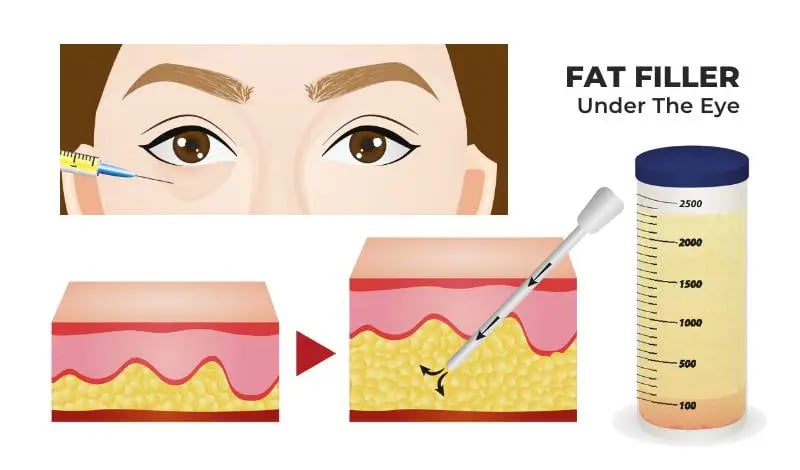
What happens during the procedure?
- It is performed in an MOH-approved Day Surgery Centre under the supervision of an anaesthesiologist.
- You are placed under light sedation rather than general anaesthesia.
- Small incisions are made in the donor area to remove fat.
- The fat is purified using a closed system.
- Dr Puah deposits fat microdroplets in several layers to fill the hollowed tear trough area.
- If required, he can also lift the brows and upper eyelids.
The result is a more youthful, well-rested look.
What is Ultherapy Prime and can it help the eye area?
Ultherapy Prime is a non-surgical, FDA-approved skin-lifting treatment using micro-focused ultrasound (MFU). It lifts and tightens loose skin and stimulates collagen production in the under-eye region.
How it works:
- Targets deep skin layers, similar to a facelift
- Real-time imaging lets the doctor see tissue layers and target precisely
- Ultrasound energy reaches up to 5mm deep
- The heat it generates stimulates the body’s natural healing process and new collagen, which gradually lifts and tightens loose skin from within
It can give a natural lift that opens up the eye area by lifting the eyebrows.
What is RF microneedling with Erbium laser?
Radiofrequency (RF) microneedling is a minimally invasive treatment with little downtime. It is particularly effective for skin tightening, especially when paired with an Erbium Glass Laser. The combination penetrates deeply, breaks down old collagen and promotes firmer, healthier collagen.
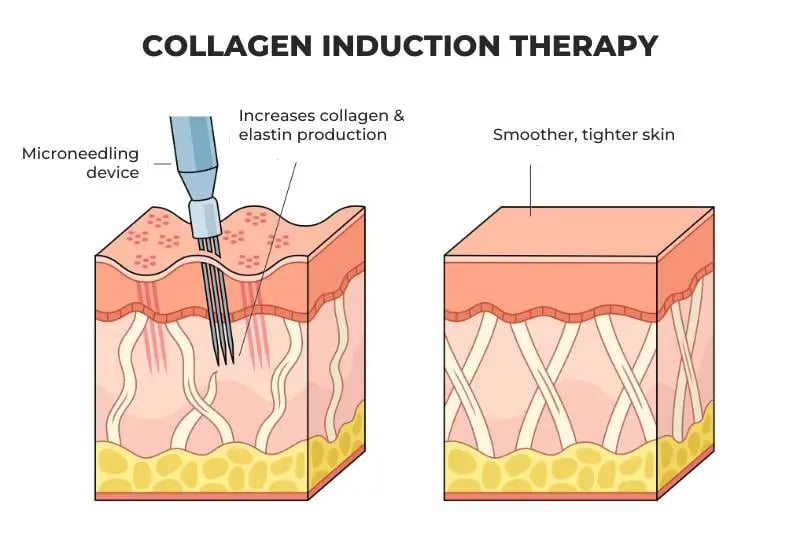
Benefits around the eyes:
- Rejuvenates the eye area
- Smooths crow’s feet
- Improves skin tone and texture
- Tightens loose skin
- Reduces the appearance of eye bags
Tear trough filler or fat grafting: which is better?
Neither is better for everyone. It depends on your preference and goals.
| Tear trough filler | Undereye fat grafting | |
|---|---|---|
| Longevity | Temporary, needs repeat treatments | More permanent |
| Best for | Shallow hollowness | Volume and skin texture |
| Recovery | Minimal | Longer |
| Source | HA filler | Your own fat |
Book a consultation with Dr Ivan Puah to find out what is causing your dark circles and which treatment suits you.
FAQ
Do tea bags help with eye bags?
Caffeinated tea bags may help reduce undereye puffiness. Caffeine constricts blood vessels, and one study suggested the cooling effect may matter more than the caffeine. Brew green or black tea, chill the bags, and place them under the eyes for 15 to 30 minutes. They will not correct hollowness.
Why does concealer make dark circles look worse?
Common reasons include a formula that is too dry or matte, dry skin from poor preparation, too much product, incorrect setting that lets concealer settle into fine lines, and skipping colour correction, which leaves darkness showing.
Does a cold compress reduce puffiness?
It may. Cold can shrink blood vessels, decrease swelling and reduce fluid buildup. Use a cold damp cloth, chilled spoons or cucumber slices for 10 to 15 minutes, and avoid placing ice directly on the skin.
What causes dark circles under the eyes?
Hollowness, thin skin, ageing, genetics, sun exposure, smoking, poor sleep, dehydration, allergies and poor nutrition.
Are dark eye circles hard to treat?
Yes, because they have several possible causes. An assessment helps identify yours.
Can fillers and fat grafting both treat tear troughs?
Yes. Fillers offer quick, temporary correction, while fat grafting is more permanent but needs more recovery.
Is undereye fat transfer done under general anaesthesia?
No. It is done under light sedation in an MOH-approved Day Surgery Centre.
