
News —
Is Breast Fat Grafting Safe? Risks, Side Effects, and Who It's Not For
Updated on Sep 12, 2026
Breast fat grafting is considered safe by the American Society of Plastic Surgeons, with major complication rates under 1% for infection and hematoma. It uses your own body fat, so there's no rupture, leak, or rejection risk associated with implants. The most common effects are calcification (up to 4.5%) and oil cysts (up to 6.5%), both manageable and rarely serious. It typically adds 1–1.5 cup sizes and isn't suitable for people with too little donor fat.
Key Takeaways
- Breast fat grafting uses the patient's own fat, eliminating risks associated with implants, such as rupture or rejection. Major complications occur in under 1% of cases.
- It typically increases breast size by 1 to 1.5 cup sizes, ideal for those seeking subtle enhancement. Candidates need sufficient donor fat and good circulation.
- About 70-75% of injected fat survives long-term, as some is reabsorbed by the body.
- Fat grafting can cause calcifications and oil cysts on imaging, which can resemble tumours. Patients should inform radiologists about previous procedures.
- In Singapore, only MOH-accredited doctors can perform the procedure. The choice of technique and the surgeon's experience significantly influence outcomes and the risk of complications.
How Breast Fat Grafting Works
For decades, breast enhancement meant saline or silicone implants, effective, but carrying known risks such as deflation (a leak in a saline implant) and shell rupture or tearing.
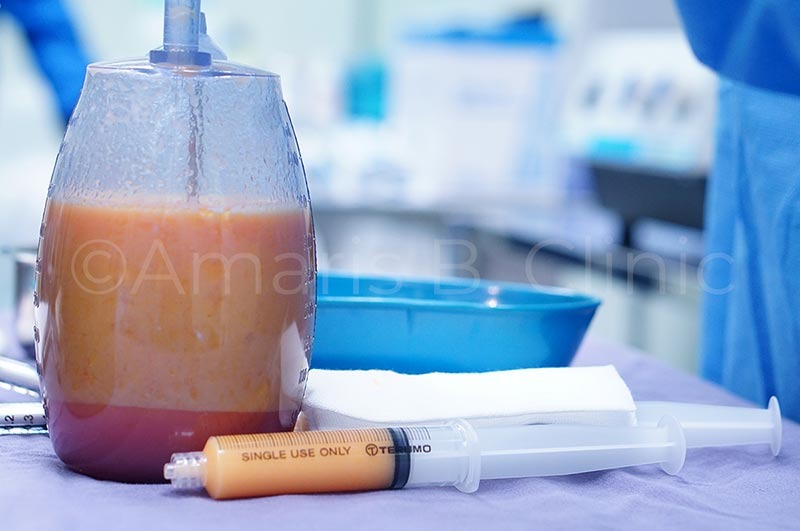
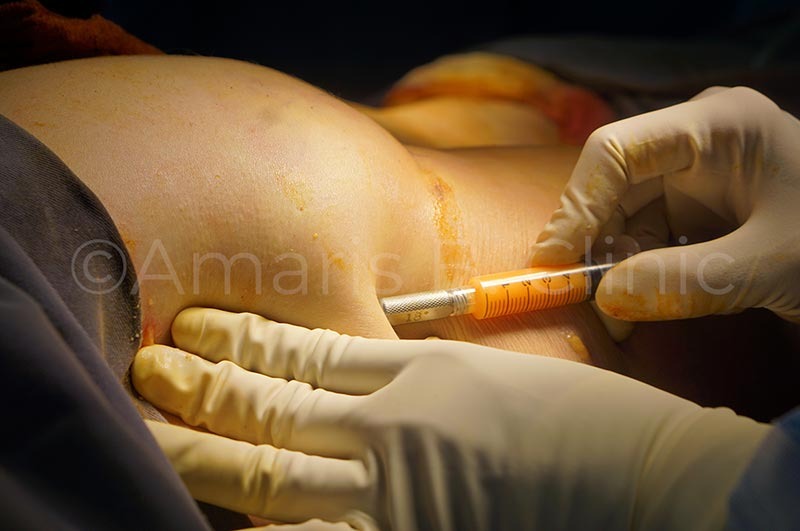
Breast fat grafting is a needle-based alternative. Fat is harvested from a donor area (commonly the abdomen or thighs) via liposuction, purified to preserve healthy fat cells, then reinjected into the breast tissue using fine cannulas.
The procedure has two stages:
- Harvesting: Excess fat is removed through liposuction from the donor site.
- Injection: The purified fat is loaded into syringes and carefully layered into the breast to build volume and shape.
Because the graft material is the patient's own tissue, fat grafting carries no risk of implant rupture, leakage, or shifting, and zero risk of immune rejection. Recovery is generally faster than standard implant surgery, and the donor site is contoured in the process, an added silhouette benefit implants can't offer.
"The ADR-C Breast Enhancement procedure utilises your own body fat, which eliminates the risks of ruptures, leaks or shifts usually associated with implants," says Dr Ivan Puah, Medical Director at Amaris B. Clinic. He notes downtime is minimal and recovery is typically faster than standard breast implant surgery.Dr Puah adds that patients can expect soft, natural-looking results, a more defined donor-area silhouette, and outcomes that, in his clinical experience, last several years.
Breast Fat Grafting vs. Breast Implants
| Breast Implants | Breast Fat Grafting | |
|---|---|---|
| Cost | SGD $12,000 – $20,000 | From SGD $4,000 |
| Best for | Larger volume increase (2+ cups) | Natural results (1–1.5 cups) |
| Longevity | 10–15 years (replacement needed) | Permanent (surviving fat) |
| Cup size change | Several cup sizes | 1–1.5 cups, depending on donor fat volume and clinical condition |
| Feel | Firmer; implant shape may be visible | Softer, more natural |
| Material | Silicone or saline (foreign material) | Your own body fat |
| Sensation | Can feel unnatural in smaller-chested patients | Natural |
| Placement | Over or under chest muscle | Injected directly into breast tissue |
| Recovery | 4–6 weeks full recovery; avoid heavy lifting | Days to routine, weeks to full resolution |
| Body contouring | None | Fat removed and redistributed |
| Key risks | Infection, rupture, capsular contracture, breast implant illness, rare BIA-ALCL | Bleeding, infection, scarring, calcification, over/under-injection |
| Look | Fuller, more prominent | Natural and fuller |
Common Side Effects After Breast Fat Grafting
- Swelling and bruising in the first few weeks
- Mild pain, usually managed with over-the-counter painkillers
- Numbness in the treated area for the first few weeks, with sensation typically returning by week three
- Fat reabsorption as the graft integrates, expect a 70–75% retention rate
Fat Grafting Complication Rates
| Complication | What It Is | Rate |
|---|---|---|
| Infection [1] | Redness, fever, increasing pain, pus drainage | 0.6% [2], usually resolved with oral antibiotics |
| Seroma / hematoma [1] | Fluid pockets under the skin | 0.1% [2] |
| Oil cysts [3] | Benign fluid-filled sacs | 6.5% [2] (reduced significantly with ultrafiltration adsorption technique) [3] |
| Calcification [2] | Fat cells with insufficient blood supply leave calcium deposits | 4.5% [2], removable via periareolar incision [4] |
| Fat necrosis [5] | Hard nodules resembling breast tumours | 1.2% [2], small areas often resolve within 6–12 months |
| Cellulitis [6] | Fever, hypotension, redness/swelling across both breasts | 10.9% [1], requires removal of unhealthy tissue to prevent septic shock [6] |
| Asymmetry [7] | Uneven breast proportion | 20% [1], reduced by choosing a surgeon experienced in breast anatomy |
Research indicates complication rates after fat-grafting breast augmentation are low, supporting it as a viable alternative to implant-based breast augmentation.
Breast Cancer & Mammogram Screening
Calcifications and lumps formed during healing can appear on a mammogram and may resemble findings associated with tumours. If flagged, your radiologist may recommend additional imaging or a biopsy to confirm a clean diagnosis. This is a normal follow-up step, not a sign that something has gone wrong, but it's worth telling your radiologist you've had fat grafting so they can interpret scans correctly.
The American Society of Plastic Surgeons has stated that fat grafting to the breast is safe and does not increase breast cancer risk.
Ideal candidates of Breast Fat Grafting
Good candidates typically have:
- Sufficient donor fat available for harvesting
- Healthy circulation, which supports fat cell survival and faster recovery
- Realistic expectations around a 1–1.5 cup size increase rather than dramatic volume change
Because the fat is transferred rather than created, ongoing weight management and a healthy lifestyle help preserve results over time.
How to Reduce Your Risk
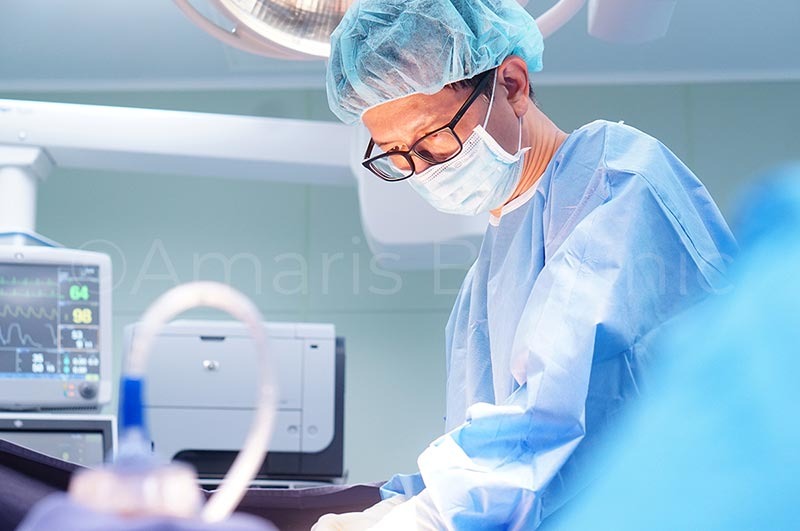
Choose an MOH-accredited liposuction doctor. In Singapore, fat grafting may only be performed by doctors certified with a liposuction license.
- Ask about technique. Liposuction doctors using ultrafiltration adsorption reduce oil cyst formation risk.
- Verify experience with breast anatomy specifically, not just liposuction generally, as this reduces asymmetry risk.
- Follow pre-op guidance on donor site preparation.
Dr Ivan Puah has performed fat grafting procedures since 2008, with over 20 years of surgical experience across Vaser liposuction, laser lipolysis, tumescent liposuction, syringe liposculpture, and gynecomastia surgery. His breast fat grafting patients range from post-breastfeeding mothers addressing sagging to women seeking a natural, moderate size increase.
FAQ
Is breast fat grafting safe?
Yes. Major complications like infection (<0.6%) and hematoma (<0.1%) are rare, and the American Society of Plastic Surgeons has found no link between fat grafting and increased breast cancer risk. It carries no rupture or rejection risk since it uses your own fat.
How much does breast fat grafting cost in Singapore?
Prices start from around SGD $4,000, compared to SGD $12,000–$20,000 for implants. Exact cost depends on the practice, treatment area, and procedure complexity, the surgeon's experience should weigh more heavily than price alone.
How long do breast fat grafting results last?
Surviving fat is permanent, unlike implants which typically need replacement after 10–15 years. Retention rate is usually 70–75% of the transferred volume.
How many cup sizes can I gain with fat grafting?
Typically 1 to 1.5 cup sizes, depending on how much donor fat is available and your individual clinical condition.
Will fat grafting affect my mammogram results?
It can. Calcifications or oil cysts from the graft may show up on imaging and require follow-up tests to rule out other causes. Inform your radiologist about your history of fat grafting.
Who is not a good candidate for breast fat grafting?
People without sufficient donor fat, or with poor circulation that could impair fat cell survival, are generally not ideal candidates. A consultation with a qualified surgeon is the best way to confirm candidacy.
Where can I get breast fat grafting in Singapore?
Only doctors with a liposuction license from the Ministry of Health Singapore may perform fat grafting in Singapore. Amaris B. Clinic's Medical Director, Dr Ivan Puah, has offered the procedure since 2008.
