Skip to content

Topics: Economics

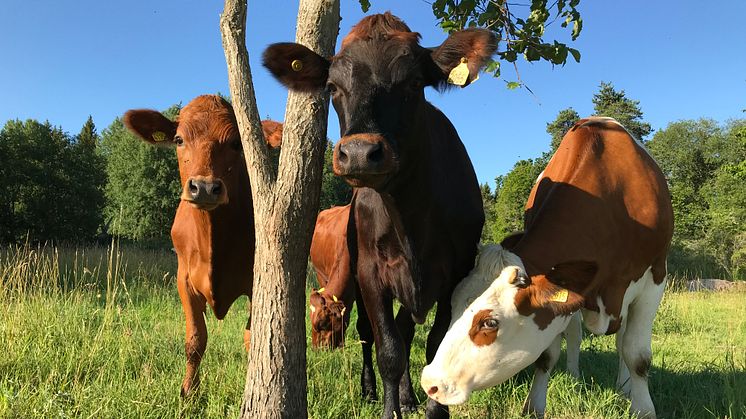
  • Cow slime can help disc herniation patients after surgery

    Researchers at Uppsala University have developed a gel inspired by cow slime for patients suffering from disc herniation. By adding the mucin gel immediately after surgery, it is possible to create a protective barrier around the discs to prevent the immune system from attacking their nucleus pulposus. This keeps the discs intact and reduces the risk of further damage.

  • Dag Hammarskjöld Lecture with Rena Lee and Jan Egeland

    On 16 September two Dag Hammarskjöld Lectures will be held in Uppsala. Rena Lee, Singapore’s Ambassador for International Law will talk about ‘From Sea to Shore: Multilateralism and the Value of International Law’. Jan Egeland, Secretary General of the Norwegian Refugee Council, will talk about ‘The Lesson from Hammarskjöld for Conflict Resolution Today’. The lectures are open to the public.

  • Charles XV’s Norwegian Landscape painted in Romsdalen

    King Charles XV (1826–1872) was known for his paintings, but elements of his artistic output have remained obscure until now. A researcher at Uppsala University has now discovered great similarities between one of the king’s most famous works, Norwegian Landscape, and that of the painting from Romsdalen by Norwegian artist Thomas Fearnley (1802–1842) .

  • Animals on fur farms can spread viruses to humans

    Animals bred in the fur animal industry can both carry and spread viruses with the potential to infect humans. In a new study conducted by researchers at Uppsala University and others, researchers have identified 36 previously unknown viruses. The study has been published in the journal Nature.

  • Promising treatment for rectal cancer confirmed in major study

    A new treatment for locally advanced rectal cancer shows favourable results in that surgery can sometimes be avoided completely. It also reduces the risk of recurrence. The method has been confirmed as effective in a comprehensive study conducted at Uppsala University and published in eClinicalMedicine.

  • Brain biomarker in blood sample predicts stroke

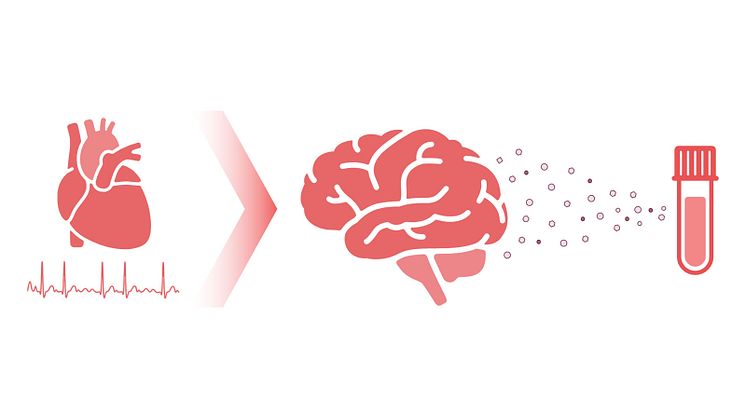
    Researchers at Uppsala University Hospital and Uppsala University have demonstrated that a simple blood test that reflects brain health can predict which people are most at risk of suffering a stroke. The discovery could contribute to more individualised treatment of patients with atrial fibrillation. The study has been published in the journal Circulation.

  • AI can speed up drug development

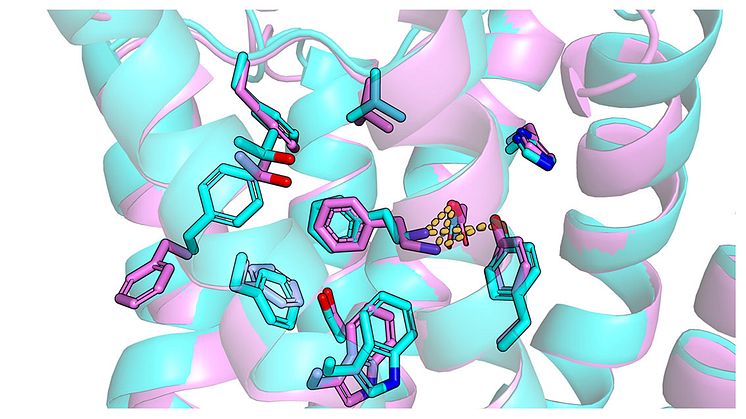
    Artificial intelligence (AI) can help identify molecules that could serve as new drugs for mental health disorders. AI can be used to predict the three-dimensional structures of important receptors and thereby speed up the development of potential drugs. This is the result of a new study from Uppsala University published in Science Advances.

  • Genetic signatures provide prognostic information in colorectal cancer

    Using a unique collection of genetic and clinical data for colorectal cancer, researchers at Uppsala University have revealed genetic new alterations and developed of a new molecular classifier of tumour variants. The finding could lead to improved possibilities for individualised therapies. This is shown in study recently published in the journal Nature.

  • Krill provide insights into how marine species can adapt to warmer waters

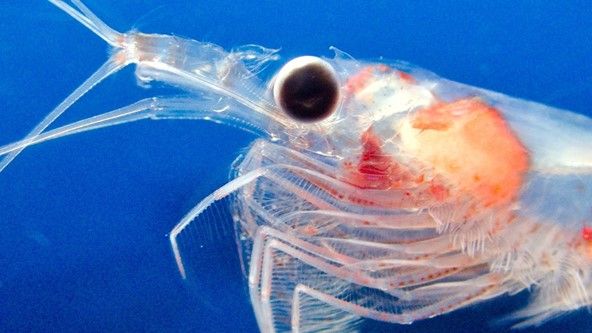
    Krill in our northern waters show how key marine species can adapt genetically to cope with climate change. This is the discovery made by researchers at Uppsala University in collaboration with an international research group. According to the researchers, their study, published in Nature Communications, provides important knowledge that can help protect marine ecosystems when the climate changes.

  • Chronic cough may be hereditary

    Chronic cough is among the most common reasons for seeking medical care, with middle-aged women the group most affected. New studies at Uppsala University also show that this condition appears to be a hereditary phenomenon. The studies have been published in ERJ Open Research and PLOS ONE.

  • Greater attention needs to be paid to malnutrition in the sick and elderly

    As many as half of all patients admitted to hospital, other healthcare facilities are malnourished. This has serious consequences for the individual in terms of poorer quality of life and mortality. Providing nutrients can alleviate these problems, but not enough attention is paid to this knowledge, writes researchers from Uppsala University and the University of Gothenburg published in the NEJM.

  • Consensus is far from the whole story

    20th century Swedish labour market policy was not solely shaped by inter-class cooperation, but also by tough conflicts. Industrial rationalisation and investments in new technology were met with protests from workers. A new doctoral thesis reveals parallels between technological changes during 1920-1950 and the transition we face today with, for example, artificial intelligence and automation.

  • Lymphoma patients at high risk of infections after diagnosis

    Every year, around 100 people are affected by mantle cell lymphoma. A study at Uppsala University shows that these patients are more vulnerable to other diseases and that the risk of infection for this type of patient should therefore be carefully evaluated. The results of the study have been published in the journal Hemasphere.

  • Potential long-term volcanic activity on Iceland's Reykjanes Peninsula

    Given the volcanic activity on Iceland over the last three years, researchers from six universities anticipate recurring, moderately sized eruptions of similar style in the coming years to decades. They therefore stress the need for preparedness in view of the risks posed to local populations and critical infrastructure. Their study was recently published in the scientific journal Terra Nova.

  • From pets to pests: how domestic rabbits survive the wilderness

    Rabbits have colonised countries worldwide, often with dire economic and ecological consequences, but their secret has before been a mystery. In a new study published in the journal Nature Ecology and Evolution, an international consortium of scientists sequenced the genomes of nearly 300 rabbits from three continents to unveil the key genetic changes that make these animals master colonisers.

  • Ancient polar sea reptile fossil is oldest ever found in Southern Hemisphere

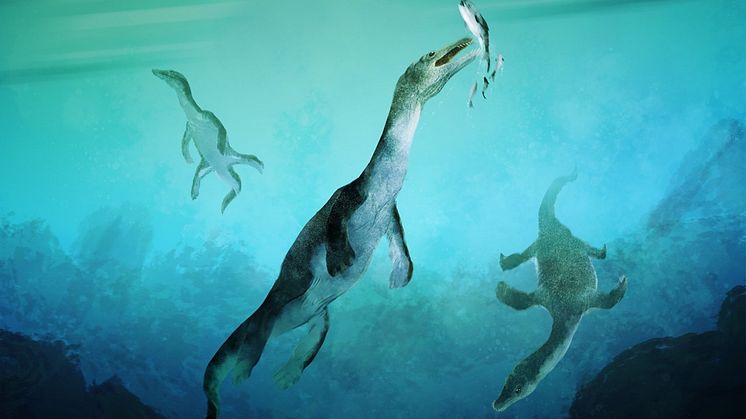
    An international team of scientists has identified the oldest fossil of a sea-going reptile from the Southern Hemisphere – a nothosaur vertebra found on New Zealand’s South Island. 246 million years ago, at the beginning of the Age of Dinosaurs, New Zealand was located on the southern polar coast of a vast super-ocean called Panthalassa.

  • Macrophages behave like mural cells to promote healing of ischemic muscle injury

    Innate immune cells including macrophages and neutrophils have unique properties that allows them to quickly accumulate in large numbers at the site of infection or injury. A new study from researchers at Uppsala University establishes that macrophage in the adult ischemic muscle induce a phenotype switch into mural cells to support restoration of functional blood flow and thereby promote healing.

  • UCDP: record number of armed conflicts in the world

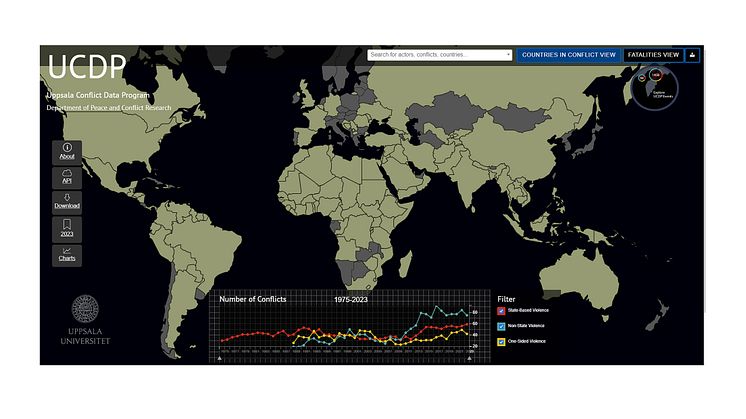
    Never before have there been so many armed conflicts across the globe. This has been shown by new statistics from the Uppsala Conflict Data Program, UCDP, at Uppsala University. In 2023, the number of conflicts involving states totalled 59, the highest number ever since the data collection’s starting point in 1946. Previous peaks were seen in 2020 and 2022, each with 56 conflicts.

Show more