The secret of the supervolcano
Researchers have now found an explanation for what triggered the largest volcanic eruption witnessed by humankind. The volcano’s secret was revealed by geochemical clues hidden inside volcanic quartz crystals.
Researchers have now found an explanation for what triggered the largest volcanic eruption witnessed by humankind. The volcano’s secret was revealed by geochemical clues hidden inside volcanic quartz crystals.
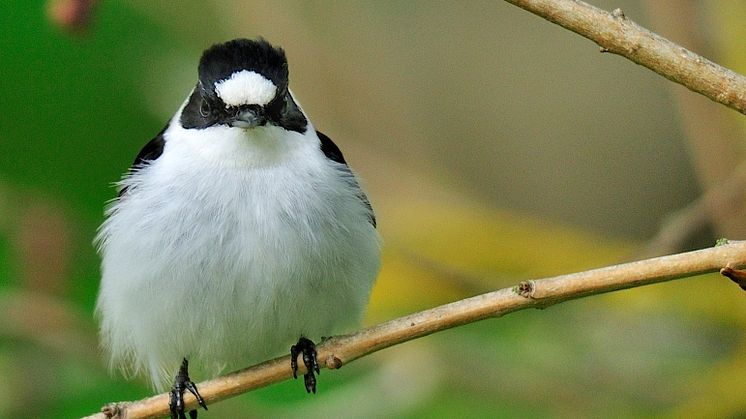
In a new study, researchers at Uppsala University have found evidence of that climate change upends selection of face characteristics in the collared flycatcher. During the study the annual fitness selection on forehead patch size switched from positive to negative, a reversal that is accounted for by rising spring temperatures at the breeding site.
In a new study published in Nature an international research group led from Uppsala University presents the discovery of a group of microbes that provide new insights as to how complex cellular life emerged. The study provides new details of how, billions of years ago, complex cell types that comprise plants, fungi, but also animals and humans, gradually evolved from simpler microbial ancestors.
A recent study from Uppsala University shows how smartphones can be used to make movies of living cells, without the need for expensive equipment. The study is published in the open access journal PLOS ONE, making it possible for laboratories around the world to do the same thing.
Antibody-based immunotherapy is a new promising method to treat cancer. Unfortunately, today’s treatments can result in adverse side effects. New findings from Uppsala University show an alternative way to administer the therapy, which has the same effect on the tumour but less impact other parts of the body.
In a new paper, published in Scientific Reports, an international team of researchers has analysed fossils and DNA from living and recently extinct species to show that conservation sensitive Australasian marsupials are much older than previously thought.
In a new study, an international team of researchers made significant progress in visualizing the process how plants split water to produce oxygen. The results are published in Nature.
Of the many ecological questions unfolded by climate change, the potential influence of temperature on the feeding preferences of organisms is currently gathering a great deal of attention in the scientific community. In a new study, published in the journal Ecology, researchers show that three species of tadpoles generally increased herbivory under simulated heat wave scenarios.
Since the 18th century, geologists have struggled to explain how big magma chambers form in the Earth’s crust. In particular, it has been difficult to explain where the surrounding rock goes when the magma intrudes. Now a team of researchers from Uppsala University and the Goethe University in Frankfurt have found the missing rocks – and they look nothing like what they expected.
Where did our jaws come from? The question is more complicated than it seems, because not all jaws are the same. In a new article, published in Science, palaeontologists from China and Sweden trace our jaws back to the extinct placoderms, armoured prehistoric fish that lived over 400 million years ago.
Remember dropping your milk teeth? In your hand was only the enamel-covered crown: the entire root of the tooth had somehow disappeared. In a paper published in Nature, a team of researchers from Uppsala University and the ESRF apply synchrotron x-ray tomography to a tiny jawbone of a 424 million year old fossil fish in order to illuminate the origin of this strange system of tooth replacement.
Geologists at Uppsala University have traced magma movement beneath Mt. Cameroon volcano, which will help monitoring for future volcanic eruptions. The results are published in Scientific Reports.
The one millimetre long roundworm Caenorhabditis elegans has been used as a model organism in scientific research, and has therefore been extensively examined. A research group at Uppsala University has now demonstrated that the worm is an even more complete model system than previously thought, which could enable more detailed research into areas such as early embryonic development.
In the animal kingdom colourful traits can be both a blessing and a curse. A new study from a group of researchers at Uppsala University has studied the conspicuous wing coloration of two species of damselflies. Their results imply that males, but not females, pay a high cost when using colour to communicate with other damselflies, both in terms of predation risk and visibility to prey.
This week in Nature, an international team of researchers shows that fossils of the 360 million-year-old tetrapod Acanthostega, one of the iconic transitional forms between fishes and land animals, are not grown-ups but all juveniles. This conclusion sheds new light on the life cycle of Acanthostega and the so-called conquest of land by tetrapods.
A research team at Uppsala University has determined the complete genetic code of 11 members of a flycatcher pedigree. Doing this, they have for the first time been able to estimate the rate of new mutations in birds. When they combined the new results with mutation rate estimates from other organisms, a clear pattern emerged: The more common a species is, the lower its mutation rate.
Cell lines are cultured cells that are commonly used in medical research. New results from Uppsala University show that such cells are not always what they are assumed to be. Using genetic analyses, the researchers showed that a commonly used cell line which was established in Uppsala almost fifty years ago does not originate from the patient it is claimed to stem from.
In a new study researchers from Sweden and Italy show what happens when magma meets limestone on its way up to the surface. Magma-limestone interaction might help explain why volcanoes like Vesuvius in Italy and Merapi in Indonesia are particularly explosive and, moreover, it helps us to understand another source of natural carbon released to the atmosphere by volcanoes.
An isolated population of honeybees in South Africa, the Cape bees, has evolved a strategy to reproduce without males. A team of researchers at Uppsala University and in South Africa has sequenced the entire genomes of a sample of Cape bees and compared them with other populations of honeybees to find out the genetic mechanisms behind their asexual reproduction.
In a new study, published in Science, researchers from Uppsala University found that larval fish exposed to microplastic particles during development displayed changed behaviors and stunted growth which lead to greatly increased mortality rates. Larval perch that had access to microplastic particles only ate plastic and ignored their natural food source of free-swimming zooplankton.