Blog post —
8 Things To Know About Botched Liposuction
Updated on 9 July 2026
Key Takeaway
- Botched liposuction can result from undercorrection (too little fat removed) or overcorrection (too much)
- Skin irregularities occur in about 20% of cases but are often avoidable.
- Smokers, pregnant women, and those with poor skin elasticity or certain medical conditions may not be suitable candidates for liposuction.
- The negative effects often include diminished self-esteem, social anxiety, and depression.
- Swelling can obscure the final results; wait at least six months for an accurate assessment
- Revision surgery can be more complex and may not be manageable by all doctors
Liposuction remains one of the most popular body contouring procedures worldwide, but when performed by an inexperienced doctor, the results can be far from what patients expect.
Uneven contours, scarring, dimpling, and psychological distress are all possible consequences of a poorly executed procedure [1].
So how do you avoid it, recognise it, and correct it?
Dr Ivan Puah, Medical Director of Amaris B. Clinic and Chairman of the Lipo Peer Review Committee Singapore, shares his insights on the realities of liposuction, and what to do when things go wrong.
What Causes Botched Liposuction?
According to Dr Puah, botched liposuction cases typically stem from two core errors: undercorrection and overcorrection.
- Undercorrection: Too little fat is removed, leaving the patient with unsatisfactory results that may require a secondary procedure.
-
Overcorrection: Too much fat is removed, causing irregularities such as bumps, depressions, and asymmetry that deviate significantly from the intended body contour.
Other contributing factors include:
- Inadequate surgical skill or training [2]
- Tissue trauma caused by poor technique [3]
- Ineffective communication between doctor and patient before or during the procedure [4]
How to Avoid a Bad Liposuction Outcome
Choosing the right doctor is the single most important factor in achieving a safe, satisfying liposuction result.
Before committing to a liposuction doctor, ask:
- How many liposuction procedures do you perform per week?
- Can I see before-and-after photos of previous patients?
- What is your approach to body contouring in my specific area of concern?
-
What happens if I'm unhappy with the results?
A skilled liposuction doctor must have an in-depth understanding of human anatomy, particularly the layered structure of adipose tissue and muscular curves, to deliver consistent, natural-looking results.
Is Skin Dimpling or Dents After Liposuction Normal?
Not exactly. While it does occur, it is a complication, not an expected outcome, and is largely preventable with a skilled, experienced liposuction doctor.
Studies suggest that skin irregularities such as dimpling and dents occur in approximately 20% of liposuction procedures.
Common causes include:
- Inappropriate surgical technique [5]
- Overly aggressive suctioning of fat removal [5]
- Not accounting for the patient's unique anatomy, fat distribution, and skin elasticity [5]
Who Is Not a Suitable Candidate for Liposuction?
Liposuction is not suitable for everyone.
You may not be a good candidate if you:
- Are pregnant or breastfeeding
- Have poor skin elasticity
- Suffer from blood-clotting disorders
- Have certain underlying medical conditions
- Are a smoker (Smoking impairs healing)
Factors such as reduced skin elasticity or difficult-to-reach fat deposits can increase the risk of poor outcomes, especially if not managed by an experienced liposuction doctor.
Always consult a doctor who will honestly assess your suitability and recommend alternatives if needed.
What Are the Signs of Botched Liposuction [6]
| Unnatural body contours | Results that look disproportionate or artificial |
| Noticeable asymmetry | One side clearly different from the other |
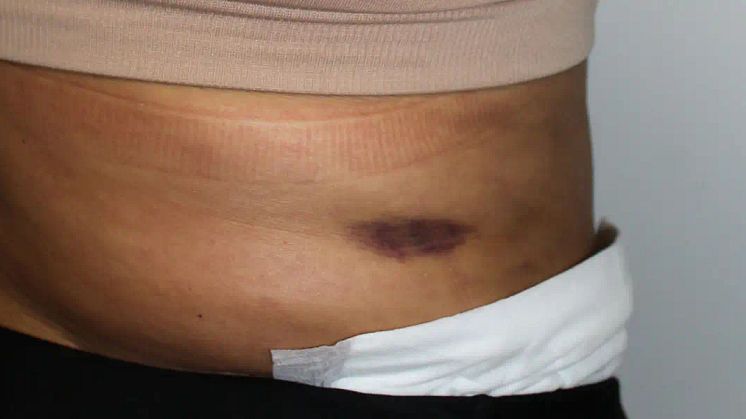
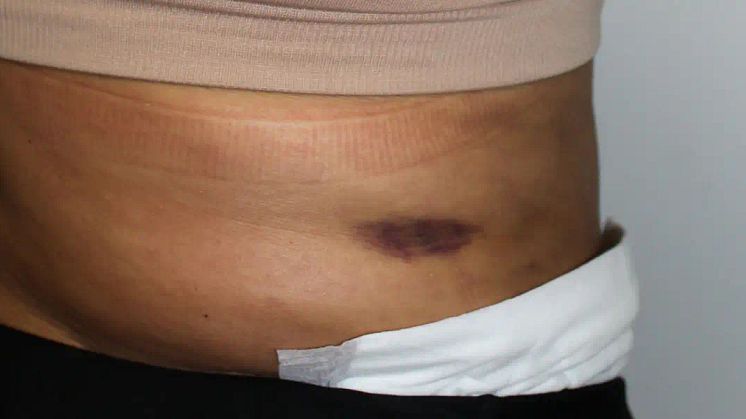
| Lumps or bumps under the skin | Looks like permanent cellulite |
| Indentations or depressions | May appear as uneven skin contour |
| Skin texture irregularities | Puckering, rippling, or an "orange peel" appearance |
| Excessive or visible scarring | Scarring can look darkened or raised like keloids |
These signs are often the result of overcorrection, poor technique, or a doctor's failure to account for individual anatomical differences.
Read related blogposts:
- Tummy Tuck vs Lipo Singapore: Which is suitable for me?
- FAQ During Lipo Consultation: MOH-Accredited Doctor
- How To Find The Right Vaser Liposuction Doctor In Singapore
-
How To Choose A Liposuction Doctor in Singapore
What Are the Psychological Effects of Botched Liposuction?
The impact of a failed liposuction procedure goes well beyond the physical.
Psychological consequences can include:
- Diminished self-esteem and body confidence [7]
- Heightened self-consciousness [7]
- Social anxiety [7]
- In severe cases, depression [7]
The emotional toll of botched liposuction is often underestimated, and is a key reason why choosing the right liposuction doctor from the outset is so critical.
When Should You Consider Liposuction Revision Surgery?
If you are unhappy with your liposuction results, the general recommendation is to wait at least six months before pursuing revision surgery.
This allows:
- Adequate time for your body to heal from the initial procedure
- Post-operative swelling to fully subside, which can otherwise obscure the true outcome
- A clearer picture of what revision, if any, is actually needed
What Does Liposuction Revision Surgery Involve?
Corrective liposuction is significantly more complex than the original procedure.
It requires a liposuction doctor with a proven track record in revision cases, not all practitioners have the skills to navigate the nuances involved.
Depending on the nature of the issue, revision may include:
- Re-liposuction: To address undercorrection or remaining fat deposits
- Fat grafting: To fill in dents, depressions, and indentations caused by overcorrection
-
Skin contouring: To improve irregularities in skin texture and surface
Liposuction & Revision Surgery at Amaris B. Clinic, Singapore
At Amaris B. Clinic, liposuction is performed by Dr Ivan Puah using the MDC-Sculpt® Lipo Technique, a proprietary method designed to remove fat thoroughly while sculpting the body and maintaining skin firmness.
As Chairman of the Lipo Peer Review Committee Singapore, Dr Puah brings both clinical rigour and an artistic eye to every procedure.
His approach prioritises:
- Thorough pre-operative assessment: Red flags include vague answers
- Anatomical precision: Each patient is unique, and so is their body shape, fat distribution, etc
- Aesthetic judgment: Natural-looking sculpting results
- Post-procedure care: Structured aftercare and follow-up to monitor recovery and patient safety
Whether you're considering liposuction for the first time or seeking corrective surgery after a previous procedure, Dr Puah offers consultations to assess your situation and discuss your options.
FAQ About Botched Liposuction
What causes uneven results after liposuction?
Inexperienced doctors and poor surgical technique are the primary risk factors.
Other causes include:
- overcorrection (removing too much fat)
- undercorrection (removing too little)
- a failure to account for the patient's unique anatomy, including skin elasticity, fat distribution, and muscular curvature.
How common is skin dimpling after liposuction?
Studies indicate dimpling and skin irregularities occur in roughly 20% of liposuction cases. It is a known complication, but largely preventable with proper technique and an experienced liposuction doctor.
How long should I wait before getting revision liposuction?
Waiting at least half a year after the initial procedure ensures that the body has healed and swelling has resolved, giving a clearer picture of what revision is needed.
Can fat grafting fix botched liposuction?
Fat grafting is the treatment that is used in revision procedures to fill depressions, smooth dents, and correct indentations that resulted from overcorrection during the original surgery.
Is liposuction safe?
Liposuction is a well-established surgery that is safe but risks increase significantly when performed by under-trained practitioners or on patients who are not ideal candidates.
What should I look for in a liposuction doctor in Singapore?
Choose a liposuction doctor with:
- Specific liposuction training
- Experience in a variety of liposuction cases
- Proven before-and-after results by going through past patient portfolio during consultation
- Consistent high patient satisfaction
Reference
[1] Mochel K, Bronte J, Kasaba M, Vempati A, Tam C, Hazany S. The Impact of Psychological Stress on Wound Healing: Implications for Neocollagenesis and Scar Treatment Efficacy. Clin Cosmet Investig Dermatol. 2025 Jun 30;18:1625-1637. doi: 10.2147/CCID.S528730. PMID: 40620896; PMCID: PMC12227520.
[2] Teven, C. M., TerKonda, S. P., Martinez-Jorge, J., Mardini, S., & Rebecca, A. M. (2021). Liposuction and Patient Safety: Appropriately Credentialing Providers. Plastic and reconstructive surgery, 147(6), 1087e-1088e.
[3] Dixit, V. V., & Wagh, M. S. (2013). Unfavourable outcomes of liposuction and their management. Indian journal of plastic surgery: official publication of the Association of Plastic Surgeons of India, 46(2), 377.
[4] Golinski, M. (2018). Adverse Events During Cosmetic Surgery: A Thematic Analysis of Closed Claims. AANA journal, 86(2).
[5] Bukamal, Z., & Mosahebi, A. (2016). Body contouring. Textbook of plastic and reconstructive surgery. UCL Press. Oxford [London], 409-430.
[6] ElHawary H, Saed Aldien A, Alam P, Janis JE. When Liposuction Goes Wrong: An Analysis of Medical Litigation. Aesthet Surg J. 2021 Sep 14;41(10):NP1337-NP1338. doi: 10.1093/asj/sjab156. PMID: 33780525; PMCID: PMC8438641.
[7] Borah G, Rankin M, Wey P. Psychological complications in 281 plastic surgery practices. Plast Reconstr Surg. 1999 Oct;104(5):1241-6. doi: 10.1097/00006534-199910000-00002. PMID: 10513902.