Blog post —
Does Fat Freeze (Cryolipolysis) Work on Gynecomastia? Here's the Evidence
Updated on 11 July 2026
No, not for most men. Gynecomastia is caused by excess glandular tissue and in most cases, with presence of fat tissues.Freezing fat alone in these patients can leave the nipple looking puffier and the chest asymmetrical. Fat freezing may only work on a minority of men whose chest enlargement is due excess fat (pseudogynecomastia/lipomastia).
Key Takeaway
- Gynecomastia = Glandular breast tissue growth from hormonal imbalance. Pseudogynecomastia (lipomastia) = Fat-only enlargement. They look similar but need different treatments.
- Fat freeze only reduces fat, so it cannot resolve true glandular gynecomastia.
- Best-case fat reduction from cryolipolysis is 20 to 25%. Results take 3 to 6 months and require 6 to 8 weeks between multiple sessions.
- A documented side effect, Paradoxical Adipose Hyperplasia (PAH), causes hardened fat growth instead of loss. Recent data shows it occurs in 1 in 138 treatments, far more often than the manufacturer-cited 1 in 4,000.
- Gynecomastia surgery (liposuction + glandular excision) is the clinically established treatment when glandular tissue is involved.
Gynecomastia vs. Pseudogynecomastia: What's the Difference?
| Gynecomastia | Pseudogynecomastia (Lipomastia) | |
|---|---|---|
| Cause | Hormonal imbalance causing glandular tissue growth, as well as presence of fat tissues | Excess fatty tissue only |
| Responds to fat freeze? | No | Depends on the individual’s response to treatment. |
| Recommended treatment | Surgical glandular removal + chest liposuction | Lifestyle changes such as diet, exercise, liposuction |
| Prevalence in male chest enlargement | ~90–95% (per Dr Puah's patient base) | ~5–10% |
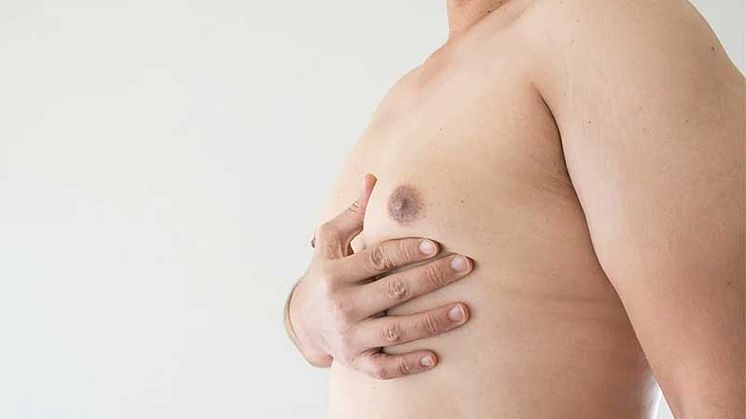
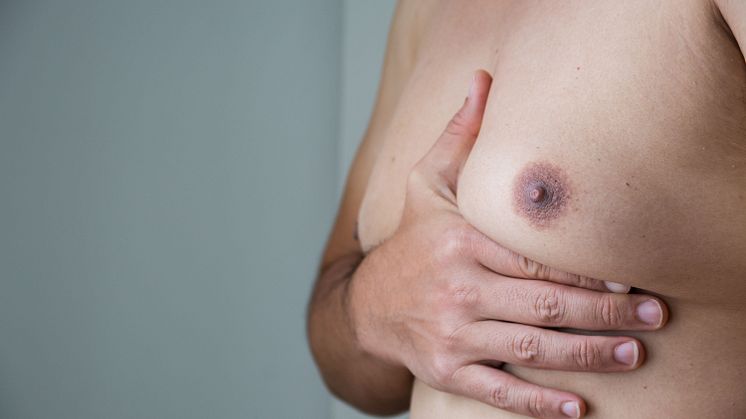
Gynecomastia is the enlargement of breast glandular tissue in males, driven by hormonal imbalance.
It's frequently confused with pseudogynecomastia because the two conditions look alike from the outside, but pseudogynecomastia involves fatty tissue only, with no glandular component.
Affected population: Gynecomastia affects an estimated 60 to 70% of men at some point in their lives, which is why fat freeze marketing so often targets this group, even though the treatment isn't built for it.
How Fat Freeze (Cryolipolysis) Actually Works
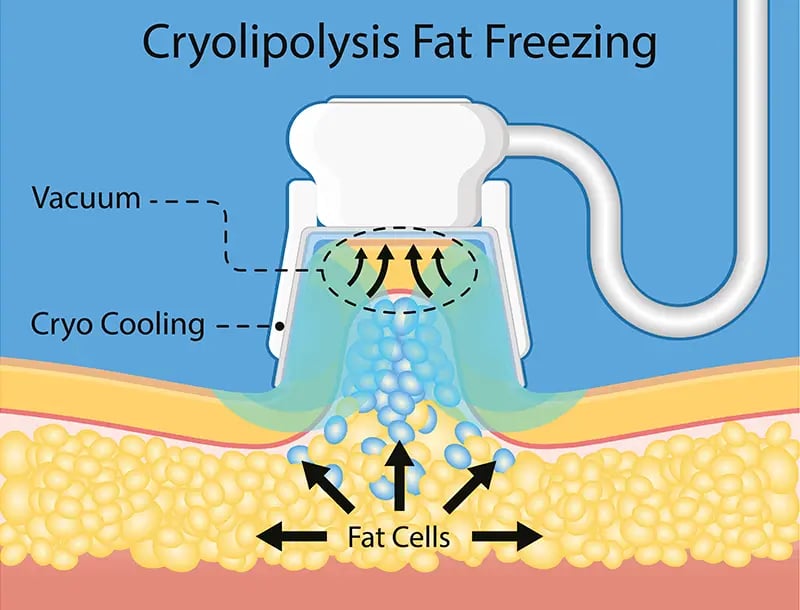
Fat freezing is a non-invasive treatment that targets subcutaneous fat beneath the skin using controlled cooling.
The process
- The treatment area is cleansed.
- A protective gel pad is applied to the skin.
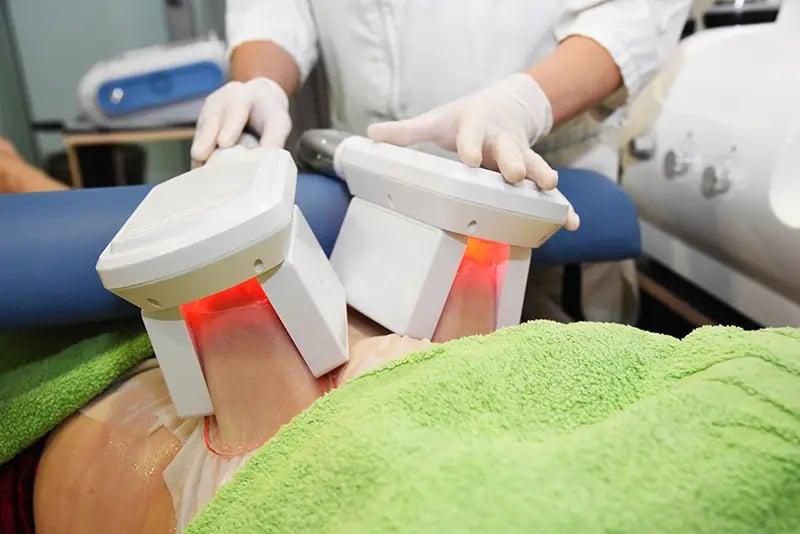
- A cooling applicator is placed on the target site and suctions the skin and underlying fat.
- The area is cooled for 30–60 minutes, lowering the temperature of fat cells.
- This triggers apoptosis (programmed cell death) in fat cells.
- Crystallised fat cells are gradually cleared by the lymphatic system.
- The fat is expelled as metabolic waste over the following weeks.
Applicator types
- Curve-shaped suction applicator for smaller, pinchable fat pockets.
- Flat, broad applicator for larger surface areas where fat can't be pinched.
Areas commonly treated
- Abdomen
- Flank
- Inner/Outer Thighs
- Under The Chin
- Upper Arms
- Back/Bra Line
- Under The Buttocks
- Knees
Treatment area size is limited by the applicator head, which is one reason results on the chest can be uneven.
Why Fat Freeze Fails on True Gynecomastia
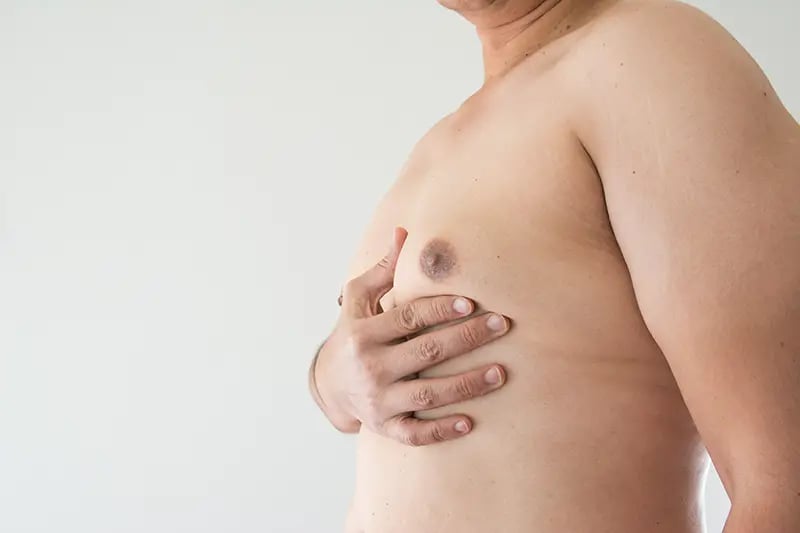
Cryolipolysis was not designed to reduce glandular tissue. Since true gynecomastia is a proliferation of glandular tissue rather than fat, it does not meaningfully respond to a fat-only treatment. Attempting it without an accurate diagnosis risks an asymmetrical, "puffy nipple" outcome rather than a flatter chest.
Clinically established treatment: Gynecomastia surgery, combining liposuction (for excess fat) with glandular tissue excision, is the standard of care when glandular tissue is present.
Limitations and Disadvantages of Fat Freezing
"In the most optimal circumstances, fat freezing may reduce only up to 20 to 25% of fat tissues. In a worst-case scenario, there may be no reduction, and some patients can end up with a side effect that causes the treated area to look like a stick of butter." — Dr Ivan Puah- Not suitable for obese individuals.
- Can cause irregularities in the skin surface.
- Often requires multiple sessions to see meaningful results.
- Sessions must be spaced 6 to 8 weeks apart to let fat cells clear.
- Visible results take 3 to 6 months, since fat cell elimination is gradual.
- Not recommended for people with sagging skin, cold sensitivity/intolerance, or severe varicose veins; also not recommended for pregnant women.
Side Effects of Fat Freezing (More Common Than Marketing Suggests)
1. Pain or Aching
Pain, stinging, or aching at the treatment site, typically lasting 3–11 days.
2. Temporary Skin Irritation
Sensitivity, swelling, bruising, or temporary discolouration. Usually resolves within a few weeks on its own.
3. Inconsistent Results
Outcomes vary by fat distribution, fat layer thickness, skin laxity, and individual biological response, there's no standardised result across patients.
4. Paradoxical Adipose Hyperplasia (PAH): the Permanent Risk
PAH is a permanent side effect where the treated area develops hardened, enlarged fat tissue instead of shrinking ("a stick of butter" effect). Its exact cause is still under study, making it hard to predict or prevent.
Recent incidence data: Studies now report PAH occurring in roughly 1 in 138 treatments, far higher than the 1 in 4,000 figure originally cited by device manufacturers.
Risk factors associated with PAH:
- Use of a large applicator
- Being male
- Hispanic ethnic background
- Treatment of the abdominal area
How to Correct PAH: Corrective Surgery
Patients who develop PAH after cryolipolysis often experience both physical discomfort and psychological effects, including lowered self-esteem, social anxiety, and depressive symptoms.
Dr Ivan Puah, an MOH-accredited liposuction doctor with over two decades of experience in liposuction, gynecomastia surgery, and corrective procedures, treats PAH along with excess fat, lumpiness, indentations, skin rippling, scarring, and asymmetry.
Fat affected by PAH is typically denser and harder to remove than normal fat. Dr Puah addresses this using his MDC-Sculpt® Lipo technique (Multi-Dimensional Contouring), designed to increase fat-removal efficacy in these harder cases.
About Dr Ivan Puah
Dr Puah is an MOH-accredited liposuction doctor and Chairman of the Lipo Peer Review Committee in Singapore, with over 20 years of experience in liposuction, gynecomastia surgery, and corrective body-contouring surgery, including his proprietary MDC-Sculpt® Lipo technique.
He is also the lead author of his gynecomastia research, title 'Surgical Management of Gynecomastia in Asian Men - Clinical Experience and Considerations for Different Patient Types.'
“Considering treatment for enlarged male chest tissue? Contact us to arrange a private consultation with Dr Ivan Puah to determine whether you have true gynecomastia, pseudogynecomastia, or a combination, and which treatment path fits your case.”FAQ
What's the difference between gynecomastia and pseudogynecomastia?
Gynecomastia is glandular tissue growth from hormonal causes; pseudogynecomastia (lipomastia) is fat-only enlargement. They may look similar aesthetically but require different treatments.
How much fat does cryolipolysis actually remove?
Best case, 20–25% of fat in the treated area. Results appear over 3–6 months, and sessions must be spaced 6–8 weeks apart.
Is Paradoxical Adipose Hyperplasia (PAH) common?
More common than device manufacturers originally stated. Recent studies cite roughly 1 in 138 treatments, versus the manufacturer's original 1 in 4,000 estimate.
Is PAH permanent?
Yes. PAH causes a hardened, enlarged area of fat that does not resolve on its own and generally requires corrective surgery.
What's the recommended treatment for true gynecomastia?
Gynecomastia surgery, liposuction combined with surgical excision of glandular tissue, is the clinically established approach, particularly when glandular tissue (not just fat) is the primary cause.
Who is at higher risk of PAH after fat freezing?
Risk factors identified include use of a large applicator, being male, Hispanic ethnic background, and treatment of the abdominal area.