Blog post —
Scarless Gynecomastia Surgery: Is It Medically Possible?
Updated on Aug 15, 2026
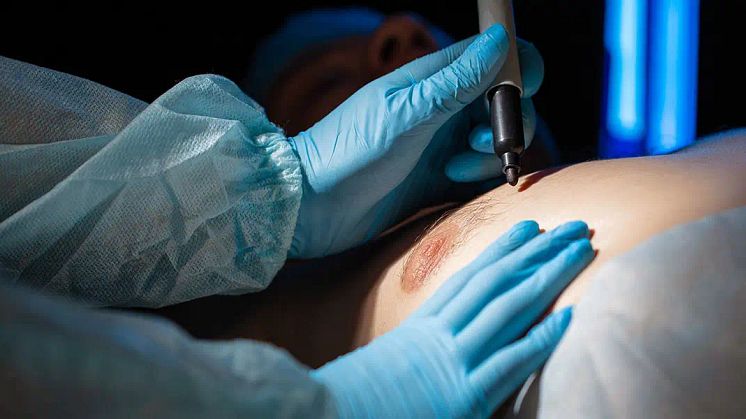
True "zero-scar" gynecomastia surgery doesn't exist. Any surgical incision leaves some mark. But minimally invasive techniques can make scars virtually invisible, especially for Grade I and Grade II gynecomastia. Results depend on gynecomastia grade, incision placement, skin laxity, genetics, and aftercare. Grade III and above typically need longer incisions, though scar visibility can still be minimised with the right surgical technique.
Key Takeaways
- "Scarless" is a marketing term, not a literal description.
- Any surgery requires incisions, but minimally invasive techniques aim to place them in low-visibility areas for virtually undetectable scars.
- Outcomes vary based on gynecomastia grades. Grade I and II cases = best chance for minimal scarring. Grade III and above = may need longer incisions due to excess skin.
- Scar formation depends on incision size, location, genetics, wound care, and lifestyle.
- Dr Ivan Puah's 360° GTD® technique offers a lower-scar option with small incisions, twilight sedation, and the MDC-Sculpt® Lipo Technique, avoiding drainage tubes that can increase scarring risk.
Patients researching treatment often ask Dr Ivan Puah, who has over 20 years of gynecomastia correction experience across Singapore and the Asia Pacific, and lead author of a study that discusses specific considerations for optimising the consultation process and gynecomastia surgery outcomes in Asian patients, the same two questions:
"What kind of scar will I get after gynecomastia surgery?"
"I saw 'scarless gynecomastia surgery' advertised online; is that actually real?"
This article breaks down what "scarless" really means, when it's achievable, and what determines your outcome.
What Does "Scarless Gynecomastia Surgery" Actually Mean?
"Scarless" is a marketing term, not a literal one. No surgery that removes tissue can be performed without some form of incision. What providers actually mean by "scarless" is:
Minimally invasive surgical techniques designed to leave no visible external scarring, or scarring so subtle it's virtually undetectable, achieved by placing incisions in hidden or low-visibility areas.
Whether that's achievable depends heavily on the anatomy being treated.
Understanding Gynecomastia Tissue Anatomy

Enlarged male breast (gynecomastia) tissue has three distinct parts:
- Head: Semicircular, located centrally
- Body: The main mass of glandular tissue
- Tail: Tapers outward toward the pecs and humerus
For reference, healthy male breast glandular tissue is typically under 2 cm wide. In gynecomastia patients, it's usually larger than 2 cm, and combined with variable amounts of chest fat, this makes every case anatomically unique, which is why scar outcomes vary so much between patients [12].
How Traditional Gynecomastia Surgery Causes Scarring
Conventional gynecomastia surgery typically involves:
1. A large linear incision under the breast to remove glandular tissue and fat
2. Drainage tube placement to manage post-surgical fluid, requiring an additional incision
This combination tends to produce a prominent, thick, linear scar under the breast. Drainage tubes also carry a higher risk of wound infection, which can worsen scarring further.
Traditional Open Subcutaneous Mastectomy often leaves disfiguring periareolar scars that negatively affect self-confidence and body image. Standard periareolar incisions are typically placed around the edge of the areola, where the change in skin colour naturally helps camouflage the scar line [2].
Is Scarless Gynecomastia Surgery Possible? It Depends on Your Grade

According to Dr Ivan Puah, the honest answer is "it depends." The outcome is shaped by the severity/grade of gynecomastia, patient age, skin laxity, and post-op wound care.
| Gynecomastia Grade | Characteristics | Scarless Result Likely? |
|---|---|---|
| Grade I | Minor glandular enlargement, no excess skin | Yes |
| Grade II | Moderate glandular enlargement, no excess skin | Often achievable |
| Grade III+ | Severe glandular enlargement, excess fat and sagging skin | Longer incisions usually needed |
Even for Grade III and above, this doesn't mean visible, unsightly scarring is inevitable. Surgeons can still minimise scar prominence through careful incision placement and specialised suturing that reduces wound tension.
What Affects Scar Formation After Gynecomastia Surgery?
Globally, an estimated 100 million patients develop scars each year from roughly 55 million elective operations performed in developed countries [3]. Research on the immunological mechanisms of scarring also shows that individuals with darker skin tones are more genetically predisposed to visible scarring than those with lighter skin [4].
Scar outcome depends on five main factors:
1. Incision size
2. Incision location
3. Genetics (including keloid predisposition)
4. Post-surgery wound care
5. Lifestyle habits during recovery

In the first few weeks after surgery, incisions are typically pink or red and slightly raised. It is a normal part of the healing process. Over the following months, scars generally fade in colour and flatten considerably, with most patients seeing the most noticeable improvement between 3 and 12 months post-op.
Scars generally fade and flatten over time with proper care. However, some patients, due to excess collagen production, develop raised, reddish keloid scars, a condition affecting an estimated 11 million people [4]. Keloid risk is largely genetic and may require steroid injections or scar revision to manage.
Dr Ivan Puah's 360° GTD® Technique: A Modernised, Lower-Scar Approach
Dr Puah's approach to gynecomastia surgery is built around minimising visible scarring at every stage. The 360° GTD® Technique was developed to improve cosmetic outcomes and reduce side effects and scarring for gynecomastia surgery patients.. It modernised the male aesthetics landscape by greatly minimising surgical invasiveness, scarring and downtime while consistently producing a high patient satisfaction rate.
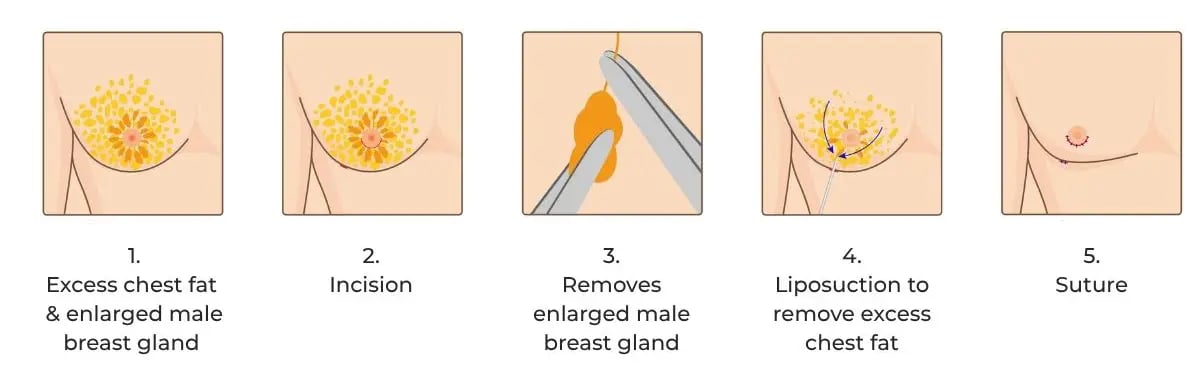
Step 1: Twilight Sedation
Performed at an MOH-approved Day Surgery Centre, with an anaesthesiology team providing twilight sedation for a smoother, more comfortable procedure.
Step 2: Customised Glandular Tissue Removal & Chest Contouring
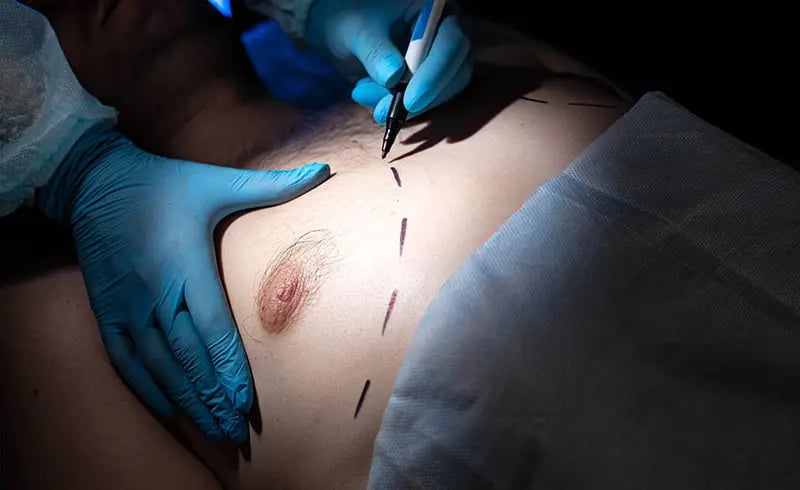
Small incisions strategically placed in low-visibility areas
Numbing solution infiltration
Glandular tissue excised using the proprietary 360° GTD® technique, designed for thorough removal while minimising scarring and haematoma risk
Chest fat contouring via the patented MDC-Sculpt® Lipo Technique, customised to individual fat distribution, muscle curvature, and skin laxity
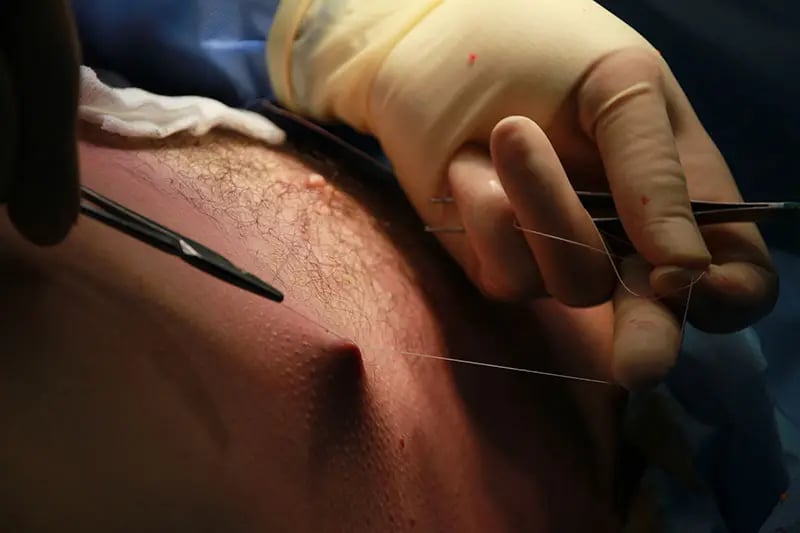
Step 3: Fine Stitching Closure
The procedure (1.5 to 2.5 hours) ends with the incisions closed with fine stitches, followed by sterile dressings and a compression garment.
Recovery
Patients are discharged the same day with a post-op care kit and aftercare advisory.
Key benefits of this technique:
- Incisions strategically placed and kept under 5mm - reducing scarring while sculpting the chest.
- Permanent, thorough glandular tissue reduction
- Reduced haematoma risk
- Skin-tightening for smoother chest contour
- No post-surgery drainage tube, lowering infection and scarring risk
- Well-concealed scars with minimal disruption to daily activity and work
How to Minimise Scarring After Gynecomastia Surgery
General Lifestyle (Remember: HEALTH)
- Hydrate
- Eat well
- Avoid alcohol
- Leave smoking behind (quit)
- Think positively
- Have plenty of rest
Sun Protection
Sun exposure can significantly affect final scar appearance. UV exposure can damage collagen and elastin fibres that keep the skin tight and darken scar tissue. Avoid going shirtless outdoors and protect from sun exposure for at least 6 months post-surgery. If unavoidable, use SPF 30+ sunscreen combined with a scar-reduction gel or cream.
Topical & Nutritional Support
- Silicone gel or self-adhesive sheets (a decades-proven method for fading scar discolouration)
- Vitamin E and Aloe Vera for scar healing support
- Fractional laser or RF microneedling may be considered for more stubborn scars.
MLD (Manual Lymphatic Drainage) Therapy

MLD massage improves blood flow, prevents lymph fluid build-up, accelerates healing, and improves skin texture,helping minimise scar visibility. Available at Amaris B. Clinic.
Additional scar care tips:
- Keep incision sites clean and handle them gently.
- Use non-scented body wash.
- Follow your doctor’s specific wound care instructions.
- Avoid picking at scabs or rubbing healing scars.
If you have questions about scarless gynecomastia surgery, contact us to arrange a consultation.
FAQ
Is scarless gynecomastia surgery really scar-free?
No. "Scarless" refers to minimally invasive techniques that make scarring virtually invisible, not the complete absence of an incision. Any surgery removing tissue requires a cut.
Which gynecomastia grades can achieve a scarless result?
Grade I and Grade II gynecomastia (minor to moderate glandular enlargement, no excess skin) have the best chance of an effectively scarless outcome. Grade III and above usually require longer incisions due to excess skin and fat.
Does gynecomastia surgery always require a drainage tube?
No. Traditional techniques often use drainage tubes, which add an extra incision and increase the risk of infection. Techniques like Dr Ivan Puah's 360° GTD® method avoid drainage tubes altogether.
How long does gynecomastia surgery take?
A typical procedure takes between 1.5 and 2.5 hours, followed by same-day discharge.
What increases the risk of visible scarring after gynecomastia surgery?
Larger incisions, incision placement, genetics (including keloid predisposition), inadequate wound care, sun exposure, and lifestyle factors like smoking and alcohol use.
Can keloid scars be treated after gynecomastia surgery?
Yes. Patients prone to keloid scarring may be treated with steroid injections or scar revision procedures, though individual healing varies.
How can I reduce scarring after gynecomastia surgery?
Follow post-op wound care instructions, avoid sun exposure to the scar for 6+ months, use SPF 30+ and scar-reduction gel, consider silicone sheets or Vitamin E, and avoid smoking and alcohol during recovery. MLD massage therapy may also help.
Silicone gel or sheets are widely recommended for reducing scar visibility. Most significant scar fading happens within the first year.
