Blog post —
Gynecomastia Causes: Health Conditions, Medications & Lifestyle Factors That Cause Enlarged Male Breasts
Updated on Aug 19, 2026
Gynecomastia is caused by a hormonal imbalance between androgen (testosterone) and estrogen, resulting in enlarged glandular breast tissue in men. Common causes include hormonal disorders (hyperprolactinemia, hyperthyroidism), certain medications (statins, some antibiotics), obesity, alcohol and cannabis use, and anabolic steroid abuse. Exercise and weight loss cannot reduce true gynecomastia, surgery is the only effective permanent treatment.
Key Takeaways
- Gynecomastia is a condition characterised by the overgrowth of breast tissue due to hormonal imbalances between testosterone and estrogen.
- It usually cannot be resolved with exercise or weight loss, and surgery is the only effective permanent treatment.
- Infant and adolescent cases often resolve on their own, while adult cases typically do not.
- Various health conditions can trigger gynecomastia, including hyperprolactinemia, renal disease, and certain hormonal disorders, making it a potential indicator of broader health issues.
- Medications like statins and lifestyle factors such as obesity, alcohol use, smoking, and anabolic steroid abuse significantly contribute to the condition, although soy has no scientific link to it.
- Surgical correction, or chest masculinization surgery, is recommended for persistent cases after a year, with Dr Ivan Puah.
Gynecomastia’s Root Cause: Testosterone Deficiency & Hormonal Imbalance
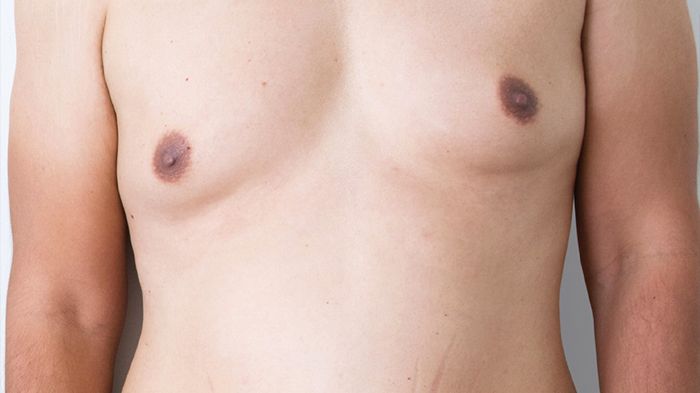
Gynecomastia is enlargement of male breast tissue caused by an overgrowth of glandular tissue and fat, not fat alone. It causes soreness, pain, and discomfort, and can signal an underlying health condition.
Exercising or losing weight will not reduce or remove enlarged male breasts. Surgical correction is currently the only effective treatment for established gynecomastia [1].
Gynecomastia stems from an imbalance between androgen and estrogen. It affects males at any age, infants, adolescents, and older men, though the pattern differs by life stage [2]:
| Age Group | Typical Pattern |
|---|---|
| Infants | Common; usually resolves on its own before age 1 |
| Adolescents (puberty) | Hormonal imbalance is common; most cases resolve within 1–2 years |
| Adults | Incidence increases with age; once present, it typically does not self-resolve |
Underlying Health Conditions That Cause Gynecomastia
Systemic Disorders
Hyperprolactinemia
Elevated blood prolactin, often medication-induced, suppresses the hormone that regulates sex gland function. Male breast tissue also carries prolactin receptors, which may directly contribute to gynecomastia [15]. Drug-induced hyperprolactinemia, particularly from antipsychotics, is a significant contributor to pubertal gynecomastia [14].
Renal Disease
Chronic renal failure is commonly linked to hyperprolactinemia and can lower testosterone, contributing to breast tissue enlargement [16].
Kennedy Syndrome
A genetic motor neuron disease affecting roughly 1 in 40,000 men, typically causing testosterone resistance and related muscular symptoms between ages 40–50 [17].
Androgen Insensitivity Syndrome
A rare condition where a genetically male individual is resistant to male hormones. Gynecomastia develops at puberty and does not resolve spontaneously [18].
Graves' Disease (Hyperthyroidism)
An autoimmune thyroid disorder and the most common cause of hyperthyroidism. Enlarged male breasts occur in an estimated 40% of men with hyperthyroidism [19].
Testicular Germ Cell Tumours
These growths can stimulate testosterone production while increasing conversion of androgens into estrogens, sometimes arising outside the testicles (abdomen, brain, chest) [20].
Liver Disease
Gynecomastia is frequently seen in patients with liver cirrhosis, as both the disease and its medications disrupt hormone balance [21, 22].
Andropause (Male Menopause)
Age-related testosterone decline that can cause low libido, erectile dysfunction, fatigue, and gynecomastia. An estimated 2.4 million American men aged 40–69 have lower testosterone levels linked to this condition [13]. Andropause affects 10–20% of men after age 50 and 50% of men after age 70. Typical presentations include erectile dysfunction, diminished sexual activity and libido, weakened muscle strength, gynecomastia, and a reduction in testicular volume.
Other Causes of Testosterone Deficiency [23]
| Cause | Description |
|---|---|
| Orchitis | Inflammation of one or both testicles |
| Testicular tumours | Most common in men aged 20–40; can be malignant |
| Chemotherapy | Cancer-cell-killing drugs that affect hormone levels |
| Radiotherapy | High-energy radiation treatment for cancer |
| Pituitary gland tumours (benign) | Abnormal growths at the base of the brain |
| Opioid treatment or abuse | Can lower testosterone levels |
| Kallmann syndrome | Genetic disorder delaying/preventing puberty, with impaired sense of smell |
| Klinefelter syndrome | Extra X chromosome; affects about 1 in 550 males |
Medications That Can Cause Gynecomastia
Certain drugs carry estrogenic properties [3], alter testosterone metabolism, or boost estrogen production. Medications associated with elevated gynecomastia risk include:
- Statins (cholesterol-lowering drugs)
- Amoxicillin (antibiotic for bacterial infections)
- Proton pump inhibitors (used for gastrointestinal conditions) [24]
- Spironolactone (blockade of androgen receptors, decrease testosterone production, increase estrogens by enhancing peripheral conversion of testosterone to estradiol)
- Cimetidine
- Ketoconazole
- Estrogens, hCG, anti-androgens, GnRH analogues, and 5-α reductase inhibitors
Drug-induced gynecomastia is common and may account for 20% to 25% of cases.
A 2018 case report analysis by Skeldon et al. found an association between statin use and increased gynecomastia risk [25].
Lifestyle Factors That Trigger Hormonal Imbalance
Herbal Products, Lavender & Tea Tree Oil
Topical use of certain herbal supplements [4], and lavender or tea tree oils [5] found in shampoos, lotions, and soaps, has been linked to gynecomastia in some cases.
Soy
Despite containing phytoestrogens, current evidence does not support a link between soy intake and gynecomastia [6].
Obesity
Excess weight lowers testosterone and disrupts the muscle-to-fat and estrogen-to-androgen balance. Androgen converts to estrogen in subcutaneous fat, and excess fat can worsen the visible appearance of enlarged breasts. Obesity and diet, particularly high sugar intake and unhealthy fats, may worsen hormonal imbalances [7].
Alcohol & Smoking
Alcohol plays a more clearly established role in gynecomastia. Mechanisms include increased aromatase activity (converting androgens to estrogens), impaired liver function leading to reduced estrogen clearance, and induction of hormonal imbalance.
Gynecomastia is reported in 67% of men with prior alcohol use and 43% with a smoking history [8]. Heavy smoking (36.5+ pack-years) accelerates age-related testosterone decline [9], while alcohol impairs the liver's ability to clear excess estrogen, both lower testosterone and disrupt hormone balance [10].
Anabolic Steroid Abuse
Used for muscle-building and performance enhancement by an estimated 1–5% of men [11]. Anabolic-androgenic steroid (AAS) use is a major cause of gynecomastia. AAS contains aromatase, an enzyme converting androgens to estrogens, a risk that applies even to legal steroid products [12]. The real prevalence of AAS-associated gynecomastia has been estimated at 39.19%.
Cannabis Use
Cannabis abuse is linked to hyperprolactinemia and reduced serum testosterone, both contributing to gynecomastia [13]. Cannabis use in any form is illegal in Singapore.
Gynecomastia Surgery: The Only Permanent Solution
Surgical correction, also called chest masculinisation surgery, remodels chest contour in one or both sides and relieves associated pain and discomfort. It is suitable for patients whose condition has not resolved on its own within a year, and can also correct protruding or prominent areolas.
Contact us to schedule a consultation with Dr Ivan Puah, an experienced MOH-accredited liposuction doctor with more than 20 years of male chest sculpting and lead author of a study called Surgical Management of Gynecomastia in Asian Men - Clinical Experience and Considerations for Different Patient Types, to discuss your condition and treatment options.
FAQ
Can exercise or weight loss get rid of gynecomastia?
No. True gynecomastia involves glandular tissue growth, not just fat, so diet and exercise cannot resolve it. Surgical correction is the only effective permanent treatment.
Does gynecomastia in teenagers need treatment?
Usually not immediately. Adolescent gynecomastia is commonly linked to puberty-related hormonal shifts and typically resolves on its own within 1–2 years.
Which medications are most linked to gynecomastia?
Statins, amoxicillin, and proton pump inhibitors are among the medications most commonly associated with increased gynecomastia risk.
Can alcohol or smoking cause gynecomastia?
Yes. Alcohol impairs the liver's ability to clear excess estrogen, and heavy smoking accelerates testosterone decline, both can contribute to hormonal imbalance and breast tissue growth.
Is gynecomastia from anabolic steroids reversible without surgery?
Once glandular tissue has developed, it typically does not resolve on its own even after stopping steroid use; surgical removal is generally required for permanent correction.
Does soy cause man boobs?
No. Although soy contains phytoestrogens, there is no scientific evidence proving that soy consumption causes gynecomastia.
When should I see a doctor about enlarged male breasts?
If the condition has not resolved within a year, or is causing pain, discomfort, or protruding/prominent areolas, it's advisable to consult a specialist such as Dr Ivan Puah to discuss treatment options, including chest masculinisation (gynecomastia) surgery.
Reference
- Prasetyono TOH, Andromeda I, Budhipramono AG. Approach to gynecomastia and pseudogynecomastia surgical techniques and its outcome: a systematic review. J Plast Reconstr Aesthet Surg. 2022 May;75(5):1704-1728. doi: 10.1016/j.bjps.2022.02.008. Epub 2022 Feb 20. PMID: 35304857.
- Kanakis, G.A., Nordkap, L., Bang, A.K., Calogero, A.E., Bártfai, G., Corona, G., Forti, G., Toppari, J., Goulis, D.G. and Jørgensen, N., 2019. EAA clinical practice guidelines—gynecomastia evaluation and management. Andrology, 7(6), pp.778-793.
- DiRaimondo, C. V., Roach, A. C., & Meador, C. K. (1980). Gynecomastia from exposure to vaginal estrogen cream. The New England journal of medicine, 302(19), 1089-1090.
- Toorians AW, Bovee TF, De Rooy J, Stolker LA, Hoogenboom RL. Gynaecomastia linked to the intake of a herbal supplement fortified with diethylstilbestrol. Food Addit Contam Part A Chem Anal Control Expo Risk Assess. 2010 Jul;27(7):917-25. doi: 10.1080/19440041003660869. PMID: 20432093.
- Henley, D. V., Lipson, N., Korach, K. S., & Bloch, C. A. (2007). Prepubertal gynecomastia linked to lavender and tea tree oils. New England Journal of Medicine, 356(5), 479-485.
- 6. Giampietro, P. G., Bruno, G., Furcolo, G., Casati, A., Brunetti, E., Spadoni, G. L., & Galli, E. (2004). Soy protein formulas in children: no hormonal effects in long-term feeding. Journal of Pediatric Endocrinology and Metabolism, 17(2), 191-196.
- Mathur R & Braunstein GD 1997 Gynecomastia: pathomechanisms and treatment strategies. Hormone Research 48 95-102.
- O'Hanlon, D. M., Kent, P., Kerin, M. J., & Given, H. F. (1995). Unilateral breast masses in men over 40: a diagnostic dilemma. The American journal of surgery, 170(1), 24-26.
- Svartberg J, Jorde R. Endogenous testosterone levels and smoking in men. The fifth Tromsø study. Int J Androl. 2007 Jun;30(3):137-43. doi: 10.1111/j.1365-2605.2006.00720.x. Epub 2006 Nov 27. PMID: 17163954.
- Rachdaoui N, Sarkar DK. Effects of alcohol on the endocrine system. Endocrinol Metab Clin North Am. 2013 Sep;42(3):593-615. doi: 10.1016/j.ecl.2013.05.008. PMID: 24011889; PMCID: PMC3767933.
- Anawalt BD. Diagnosis and Management of Anabolic Androgenic Steroid Use. J Clin Endocrinol Metab. 2019 Jul 01;104(7):2490-2500.
- de Ronde W, de Jong FH. Aromatase inhibitors in men: effects and therapeutic options. Reprod Biol Endocrinol. 2011 June 21;9:93. doi: 10.1186/1477-7827-9-93. PMID: 21693046; PMCID: PMC3143915.
- Duca Y, Aversa A, Condorelli RA, Calogero AE, La Vignera S. Substance Abuse and Male Hypogonadism. J Clin Med. 2019 May 22;8(5):732. doi: 10.3390/jcm8050732. PMID: 31121993; PMCID: PMC6571549.
- Eckman, A., & Dobs, A. (2008). Drug-induced gynecomastia. Expert opinion on drug safety, 7(6), 691-702.
- Ferreira M, Mesquita M, Quaresma M, André S. Prolactin receptor expression in gynaecomastia and male breast carcinoma. Histopathology. 2008 Jul;53(1):56-61. doi: 10.1111/j.1365-2559.2008.03059.x. PMID: 18613925.
- Swerdloff, R. S., & Ng, J. C. (2023). Gynecomastia: etiology, diagnosis, and treatment. Endotext [Internet].
- Finsterer, J. (2010). Perspectives of Kennedy's disease. Journal of the Neurological Sciences, 298(1-2), 1-10.
- Hellmann, P., Christiansen, P., Johannsen, T. H., Main, K. M., Duno, M., & Juul, A. (2012). Male patients with partial androgen insensitivity syndrome: a longitudinal follow-up of growth, reproductive hormones and the development of gynaecomastia. Archives of disease in childhood, 97(5), 403-409.
- Mohammadnia N, Simsek S, Stam F. Gynecomastia as a presenting symptom of Graves' disease in a 49-year-old man. Endocrinol Diabetes Metab Case Rep. 2021 Apr 1;2021:20-0181. doi: 10.1530/EDM-20-0181. Epub ahead of print. PMID: 33880994; PMCID: PMC8115411.
- Daniels, I. R., & Layer, G. T. (2003). Testicular tumours presenting as gynaecomastia. European Journal of Surgical Oncology (EJSO), 29(5), 437-439.
- Rupp, J., Cantarow, A., Rakoff, A. E., & Paschkis, K. E. (1951). Hormone excretion in liver disease and in gynecomastia. The Journal of Clinical Endocrinology, 11(7), 688-699.
- Cavanaugh J, Niewoehner CB & Nuttall FQ. (1990) Gynecomastia and cirrhosis of the liver. Arch Intern Med 150, 563–565.
- Mieritz, Mikkel G., Peter Christiansen, Martin Blomberg Jensen, Ulla N. Joensen, Loa Nordkap, Inge A. Olesen, A. Kirstine Bang, Anders Juul, and Niels Jørgensen. "Gynaecomastia in 786 adult men: clinical and biochemical findings." European journal of endocrinology 176, no. 5 (2017): 555-566.
- He B, Carleton B, Etminan M. Risk of Gynecomastia with Users of Proton Pump Inhibitors. Pharmacotherapy. 2019 May;39(5):614-618. doi: 10.1002/phar.2245. Epub 2019 Apr 1. PMID: 30865318.
- Skeldon SC, Carleton B, Brophy JM, Sodhi M, Etminan M. Statin medications and the risk of gynecomastia. Clin Endocrinol (Oxf). 2018 Oct;89(4):470-473. doi: 10.1111/cen.13794. Epub 2018 Jul 15. PMID: 29923212.