
News —
Female Pattern Hair Loss: Causes, Impact and Treatment Options in Singapore
Updated on Oct 20, 2026
Female pattern hair loss is a condition in which women experience thinning hair on the crown and front of the scalp, while the frontal hairline typically stays intact [1]. It is usually less severe than balding in men [2]. Causes include hormonal change, genetics, stress and other medical conditions. Non-surgical options such as Follicle Renewal Hair Therapy, which combines RF microneedling and exosome therapy, aim to stimulate dormant follicles.
Key Takeaways
- It’s common and thins the crown and front of the scalp. Female pattern hair loss typically leaves the frontal hairline intact and is generally less severe than male balding.
- In Singapore, 44.4% of women aged 15 to 64 ranked hair loss as their top hair concern, ahead of damage or dryness,
- Hair loss has long been linked to hormones, but other conditions also contribute, including chronic telogen effluvium, persistent chemotherapy-induced alopecia, alopecia areata incognita, frontal fibrosing alopecia, and stress.
- Life stages and age matter. Hair loss is most likely during long periods of hormonal change such as postpartum or menopause, though it can occur at any age after puberty.
- The emotional toll can be significant. Even though the condition isn’t medically serious, it can cause distress, low self-image and chronic stress, sometimes out of proportion to the actual hair loss. For some, the impact is comparable to that faced by people with life-threatening illnesses..
- Follicle Renewal Hair Therapy is a non-surgical option. It combines RF microneedling, which prepares the scalp and stimulates collagen, with exosome application. Benefits are follicle activation, scalp support and structural reinforcement.
What is female pattern hair loss?
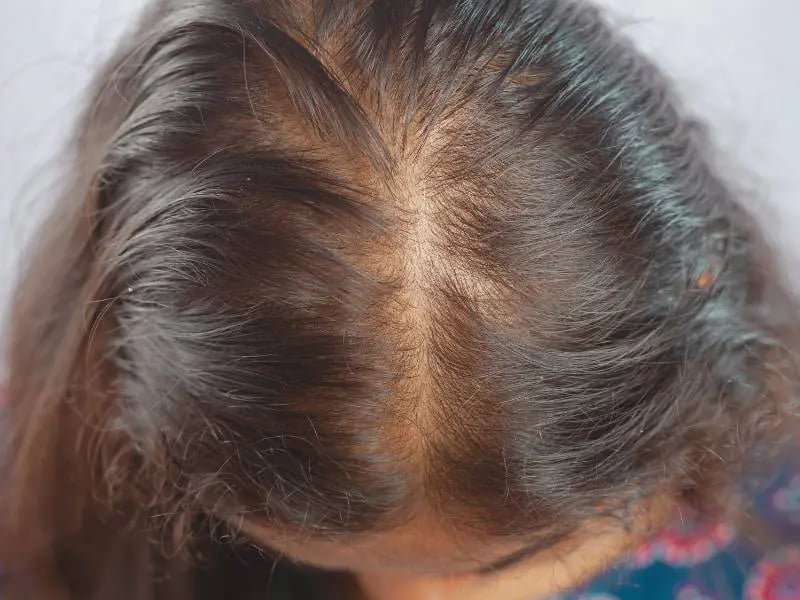
Female pattern hair loss is thinning of the hair on the crown and front of the scalp. The frontal hairline typically remains intact [1]. The thinning is generally not as severe as balding in men [2].
How common is female hair loss in Singapore and worldwide?
| Region | Statistic |
|---|---|
| Singapore | 44.4% of women aged 15 to 64 ranked hair loss as their top hair concern, ahead of hair damage or dryness [3] |
| USA | Over 21 million women are affected [4] |
| USA (by age) | About 12% are around 30 years old, while 30% to 40% are between 60 and 69 [5] |
What causes female pattern hair loss?
Hair loss has long been thought to be driven by hormones [6]. Studies indicate other causes and conditions also need to be considered:
| Cause | Description |
|---|---|
| Chronic telogen effluvium | Excessive shedding for more than six months, affecting the whole scalp [7] |
| Persistent chemotherapy-induced alopecia | Hair that does not fully regrow more than six months after chemotherapy ends [7] |
| Alopecia areata incognita | A rare type of sudden, even hair loss across the scalp, without the bald patches of classic alopecia areata [7] |
| Frontal fibrosing alopecia | A receding hairline and loss of eyebrows, especially in women after menopause [7] |
| Psycho-emotional stress | Acute or chronic stress [15] |
Is genetics involved? Multiple theories suggest pattern hair loss is influenced by several genes working together, linking polycystic ovary syndrome (PCOS) to early male pattern baldness. This suggests some women with both conditions may experience hair loss similar to men [8].
At what age does female hair loss start?
The most common time is a long period of hormonal change, such as postpartum or menopause [9]. Female pattern hair loss generally begins after puberty but can occur at any age [10].
Key figures from one study [13]:
- 6% of women under 50 have female pattern hair loss
- 38% of women aged 70 experience it
- Average hair density at age 35 is 293 hairs per cm²
- Average hair density at age 70 falls to 211 hairs per cm²
Low hair density is the main factor in how hair loss is perceived. Other factors, such as hair diameter, also play a part. Lower density is not necessarily caused by smaller follicles, as changes can happen within a single hair growth cycle [13].
How does female hair loss affect mental health?
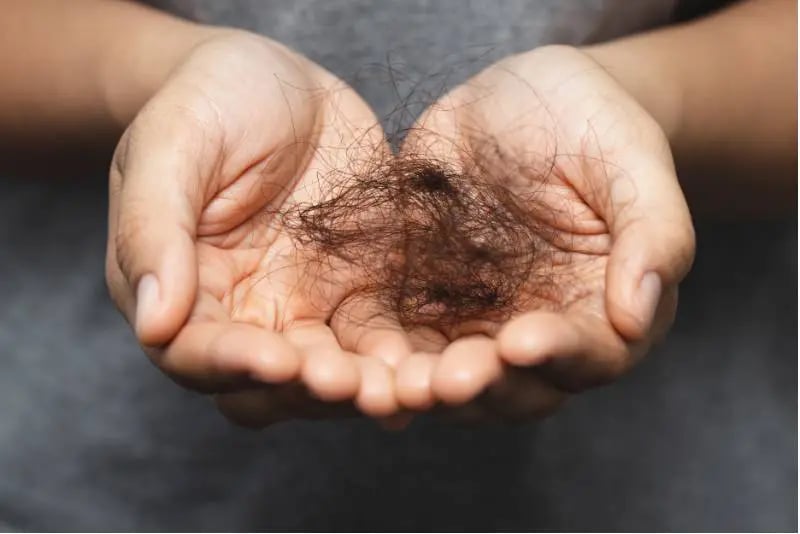
Although the condition is not serious medically, it can cause significant emotional distress and low self-image [12]. This can lower quality of life, sometimes out of proportion to the actual amount of hair lost [13], and may contribute to chronic stress. For some people, the impact can be as challenging as that faced by people with life-threatening illnesses [14, 15].
Patient-reported negative effects [16]:
| Cause | Description |
|---|---|
| Shame, embarrassment, humiliation | Dissatisfaction with body image |
| Sadness, depression, worry | Feeling older |
| Anger, frustration, disgust | Loss of self-confidence |
| Fear, helplessness | Reduced social acceptance |
| Powerlessness | Self-consciousness, social stress |
If hair loss is affecting your mood, speak to your doctor.
What is Follicle Renewal Hair Therapy?
Follicle Renewal Hair Therapy at Amaris B. Clinic combines RF microneedling and exosome therapy to treat thinning hair at its source, without surgery.
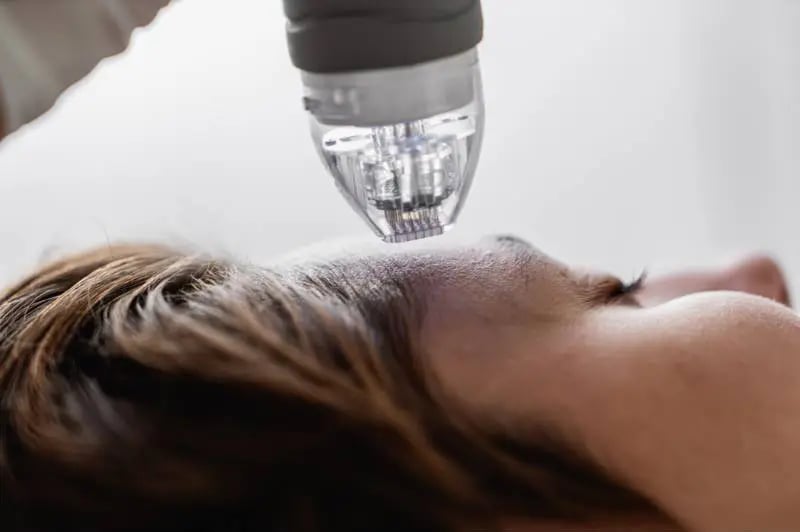
Step 1: RF microneedling (prepare and stimulate). Microneedles make tiny punctures in the scalp, which helps improve blood flow and prepares the area. Radiofrequency energy then heats the deeper skin layers and promotes collagen production. This aims to reactivate dormant follicles, strengthen existing hair and encourage new growth.
Step 2: Exosome application (cellular regeneration). Specially prepared exosomes are applied after microneedling. They enter through the tiny openings to stimulate key cells that contribute to hair growth, prolong the growth phase of hair and help reduce scalp inflammation.
Intended benefits:
- Follicle activation: Stimulates dormant follicles to promote new growth
- Scalp support: Reduces inflammation and enhances nutrient delivery
- Structural reinforcement: Renews collagen for stronger follicles
Who should see a doctor about hair loss?
Consider a consultation if you notice:
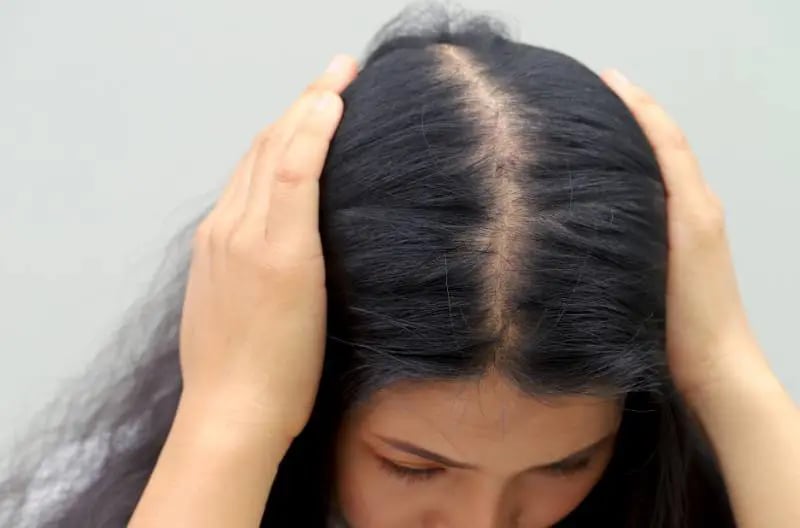
- Thinning at the crown or top of the scalp
- Shedding that continues for more than six months
- Hair that has not regrown after chemotherapy
- A receding hairline or loss of eyebrows
- Hair changes after pregnancy or menopause
- Distress about your hair that affects daily life
An assessment helps identify the cause before any treatment is chosen.
Book a private consultation with Dr Ivan Puah to find the cause of your hair thinning and discuss options.
FAQ
What is female pattern hair loss?
Thinning of hair on the crown and front of the scalp in women, with the frontal hairline typically intact [1].
How common is hair loss among women in Singapore?
44.4% of women aged 15 to 64 ranked hair loss as their top hair concern [3].
What causes hair thinning in women?
Hormonal changes, genetics, stress and conditions such as chronic telogen effluvium and frontal fibrosing alopecia [6, 7, 15].
When does female pattern hair loss usually start?
Often during postpartum or menopause [9], but it can occur at any age after puberty [10].
Is female pattern hair loss as severe as male baldness?
Thinning is generally not as severe [2].
Is PCOS linked to hair loss?
Some theories link PCOS to early male pattern baldness, suggesting some women may have male-like hair loss [8].
Can hair loss affect mental health?
Yes. It can cause emotional distress, low self-image and stress [12,14,15].
Does Follicle Renewal Hair Therapy need surgery?
No. It uses RF microneedling and exosome application, which are non-surgical.
Reference
[1] M. P. Birch, S. C. Lalla, A. G. Messenger, Female pattern hair loss, Clinical and Experimental Dermatology, Volume 27, Issue 5, 1 July 2002, Pages 383–388, https://doi.org/10.1046/j.1365-2230.2002.01085.x
[2] Bhat, Yasmeen Jabeen; Saqib, Najam-U-; Latif, Insha; Hassan, Iffat. Female Pattern Hair Loss—An Update. Indian Dermatology Online Journal 11(4):p 493-501, Jul–Aug 2020. | DOI: 10.4103/idoj.IDOJ_334_19
[3] https://www.statista.com/statistics/1099370/singapore-leading-hair-concerns-among-women/
[4] Leavitt, M. (2008). Understanding and management of female pattern alopecia. Facial Plastic Surgery, 24(04), 414-427.
[5] Norwood OT. Incidence of female androgenetic alopecia (female pattern alopecia). Dermatol Surg. 2001;27(1):53–4. [PubMed] [Google Scholar] [11] Futterweit W, Dunaif A, Yeh HC, Kingsley P. The prevalence of hyperandrogenism in 109 consecutive female patients with diffuse alopecia. J Am Acad Dermatol. 1988;19(5 Pt 1):831–6. doi: 10.1016/s0190-9622(88)70241-8. [DOI] [PubMed] [Google Scholar]
[6] Olsen, E. A. (2001). Female pattern hair loss. Journal of the American Academy of Dermatology, 45(3), S70-S80.
[7] Herskovitz I, Tosti A. Female pattern hair loss. Int J Endocrinol Metab. 2013 Oct 21;11(4):e9860. doi: 10.5812/ijem.9860. PMID: 24719635; PMCID: PMC3968982.
[8] Olsen, E. A. (2001). Female pattern hair loss. Journal of the American Academy of Dermatology, 45(3), S70-S80.
[9] Rinaldi F, Trink A, Mondadori G, Giuliani G, Pinto D. The Menopausal Transition: Is the Hair Follicle "Going through Menopause"? Biomedicines. 2023 Nov 14;11(11):3041. doi: 10.3390/biomedicines11113041. PMID: 38002043; PMCID: PMC10669803.
[10] Herskovitz I, Tosti A. Female pattern hair loss. Int J Endocrinol Metab. 2013 Oct 21;11(4):e9860. doi: 10.5812/ijem.9860. PMID: 24719635; PMCID: PMC3968982.
[11] Birch MP, Messenger JF, Messenger AG. Hair density, hair diameter and the prevalence of female pattern hair loss. Br J Dermatol. 2001 Feb;144(2):297-304. doi: 10.1046/j.1365-2133.2001.04018.x. PMID: 11251562.
[12] Hadshiew, I. M., Foitzik, K., Arck, P. C., & Paus, R. (2004). Burden of hair loss: stress and the underestimated psychosocial impact of telogen effluvium and androgenetic alopecia. Journal of investigative dermatology, 123(3), 455-457.
[13] M. P. Birch, S. C. Lalla, A. G. Messenger, Female pattern hair loss, Clinical and Experimental Dermatology, Volume 27, Issue 5, 1 July 2002, Pages 383–388, https://doi.org/10.1046/j.1365-2230.2002.01085.x
[14] E.B. de Koning, J. Passchier, F.W. Dekker Psychological problems with hair loss in general practice and the treatment policies of general practitioners Psychol Rep, 67 (1990), pp. 775-778
[15] T.F. Cash, The psychology of hair loss and its implications for patient care Clin Dermatol, 19 (2001), pp. 161-166
[16] Hadshiew, I. M., Foitzik, K., Arck, P. C., & Paus, R. (2004). Burden of hair loss: stress and the underestimated psychosocial impact of telogen effluvium and androgenetic alopecia. Journal of investigative dermatology, 123(3), 455-457.
