Skip to content

Categories: trademark

  • Corporate trainers to get paid when their curricula is shared beyond the workshop

    Let's say you're a corporate trainer. At the end of your workshop, you send your deck to your students, only to discover they copy your materials. Worst of all you discover your client shared your slides with everybody in the company across their intranet, or has even created an online course drawing on your curriculum for the corporate LMS platform.

    Corporate trainers to get paid when their curricula is shared beyond the workshop
  • What licensing parameters are available?

    When using the PitchMark® platform, you have the autonomy to define the specific terms under which a client can use your work. These criteria are captured directly on the PitchMark® certificate, creating an official and indelible record of the agreement.

    What licensing parameters are available?
  • What happens if the client refuses to pay for the idea?

    Under normal circumstances, the person you are pitching to is under no obligation to buy or use your certificate. But if a client refuses to pay the licensing fee but still uses your idea, the PitchMark® certificate serves as a critical layer of defence by providing indelible documentary evidence of your ownership and the terms offered.

    What happens if the client refuses to pay for the idea?
  • What if my prospect reacts negatively to my PitchMark® certificate?

    If a prospect objects to your inclusion of a PitchMark® certificate, it typically leads to one of two outcomes: it either initiates a necessary conversation about Intellectual Property (IP) rights, or serves as a warning sign about the client's intentions.

  • What is the PitchMark® PitchFeed for?

    The public pitch feed, located on the homepage of the PitchMark® website, acts as a public record of pitching activity designed to create transparency and deter idea theft. While it makes the transaction visible to the community, it is structured to protect the actual content of the idea.

    What is the PitchMark® PitchFeed for?
  • Why PitchMark® when I can sign an NDA or rely on the law?

    PitchMarking differs from traditional copyright and Non-Disclosure Agreements by focusing on active deterrence and formalized evidence rather than just legal recourse after a theft has occurred. While traditional laws such as copyright, trademarks, and patents exist, they often fail to fully protect ideas, especially in the early informal stages of a pitch.

    Why PitchMark® when I can sign an NDA or rely on the law?
  • How much should we charge for our ideas?

    Creators have the autonomy to set their own prices for their licenses, as PitchMark® does not dictate specific fees. Creators should negotiate this with their prospects. However, here are some ideas for how innovators can determine the right price.

    How much should we charge for our ideas?
  • How do I get paid for ideas through PitchMark®?

    Six things to know: How creators can monetise their pitches by selling them the rights to an idea even if they are not hired for the full production. This feature transforms the traditional "all or nothing" pitch into a more flexible commercial transaction.

  • What is the purpose of the PitchMark® certificate?

    Five ways a PitchMark® certificate serves as a multifaceted deterrent against idea theft by formalising the pitching process and signalling to recipients that a creator is prepared to defend their IP rights. Rather than relying on new legal layers, it focuses on prevention and transparency.

    What is the purpose of the PitchMark® certificate?
  • From Innovation to Impact: Why IP Protection is Key to Sustainable Production

    In the race to build a more sustainable world, ideas are everything. From biodegradable packaging to energy-efficient engines, it is innovation that transforms good intentions into tangible change. But innovation is not a spontaneous or risk-free process. It takes investment, commitment, and time – all of which hinge on an essential guarantee that innovators’ ideas will be protected.
    This is wh

  • Authors sue this AI company for copyright infringement

    Three Authors filed a copyright infringement lawsuit against Amazon-backed artificial intelligence alleging that it committed "large-scale theft" in training its popular chatbot Claude.
    The lawsuit was filed by writers Andrea Bartz, Charles Graeber and Kirk Wallace Johnson in a federal court in California claiming that they were not paid "a cent" for copying their work.
    They allege that Clau

  • Fashion retailer H&M sues Chinese rival Shein in Hong Kong for copyright infringement

    Chinese fast fashion retailer Shein is now facing yet another action for copyright infringement, this time filed in Hong Kong by Swedish retail giant H&M.
    H&M accused Shein and Zoetop Business Co, the Hong Kong-based entity previously owned by Shein, of infringing its copyright-protected designs, including swimwear and sweaters.
    According to Bloomberg, the lawsuit included details an

  • Twitter may sue Meta over its challenger app Threads

    Twitter has threatened Meta with legal action following the successful launch of Meta's new Twitter rival, Threads.
    In a letter dated July 5th, Twitter attorney Alex Spiro accused Meta CEO Mark Zuckerberg of "systematic, willful, and unlawful misappropriation of Twitter's trade secrets and other intellectual property" in the course of creating Threads.
    Spiro claimed that Meta hired dozens of

  • Nigerian court orders Coca-Cola to pay compensation for copyright infringement

    Coca-Cola Nigeria Plc and it’s local bottler, the Nigeria Bottling Company (NBC), have been ordered by a Federal High Court sitting in Lagos, Nigeria, to pay three million Naira (approximately USD 3,875) for copyright infringement of a person’s literary work, despite NBC’s argument that the works in question were not protected by copyright.
    The plaintiff, Onilemarun, claimed in the lawsuit t

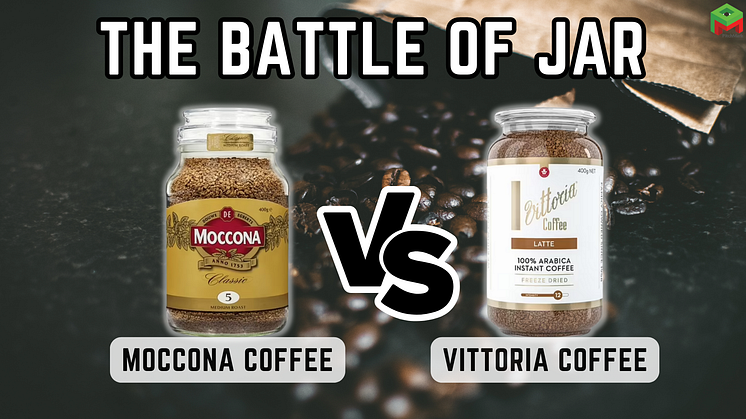
  • American-Dutch coffee conglomerate Moccona maker sues Australia’s Vittoria over glass jar

    The American-Dutch coffee conglomerate behind Moccona, Jacobs Douwe Egberts (JDE) and Koninkliijke Douwe Egberts BV (KDE), has accused Australia's Vittoria Coffee of copying Moccona's "iconic" shape of instant coffee in a glass jar.
    The company sued Vittoria in Federal Court on the grounds that the latter was selling coffee in a glass jar that consumers might confuse for a Moccona product, whic

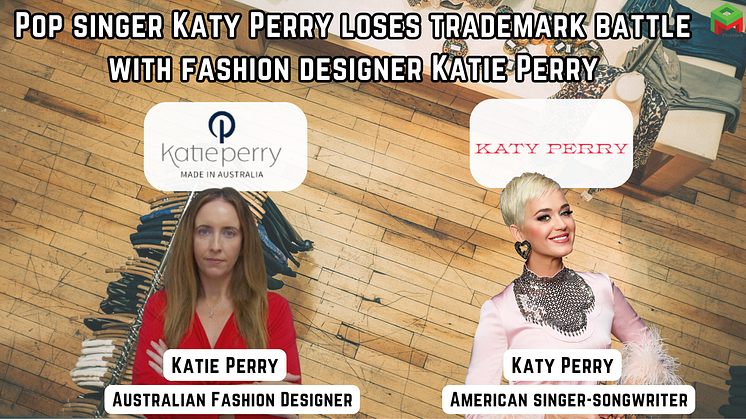
  • Katy Perry loses trademark battle with fashion designer Katie Perry

    Pop singer Katy Perry has lost a 15-year trademark dispute with an Australian fashion designer Katie Perry.
    Katie Taylor, who sells clothing under her birth name Katie Perry, filed a lawsuit against the pop diva, alleging that her merchandise violated a trademark she held.
    The Australian designer launched her clothing business in late 2006 and registered “Katie Perry” as a trademark in Austr

  • South Korean gaming company NCSOFT accuses Kakao Games of plagiarism

    The creators of the mobile role-playing game ArcheAge War are being sued by South Korean video game developer NCSOFT for allegedly violating the copyright in its mobile game Lineage 2M.
    The company filed the lawsuit in the Seoul Central District Court against the game's publisher Kakao Games and developer XL Games for copyright infringement and unfair competition, claiming that ArcheAge War “im

Show more