Meet the AOECS Board of Directors
AOECS is pleased to introduce its Board of Directors following the General Assembly held in Amsterdam on 10 October 2026.

AOECS is pleased to introduce its Board of Directors following the General Assembly held in Amsterdam on 10 October 2026.
Around 130 delegates from across the world gathered in Amsterdam for the 38th AOECS Annual Conference to explore the future of coeliac health by 2030. Discussions focused on earlier diagnosis, more consistent care, emerging treatments and research that reflects patients’ priorities, with international cooperation central to turning progress into better everyday lives.

AOECS has joined United European Gastroenterology’s (UEG) new Patient Representatives Advisory Board, bringing the perspectives of people living with coeliac disease into a broader European dialogue on digestive health. The initiative aims to strengthen cooperation between patient organisations and medical professionals, ensuring that patients’ experiences and needs are better understood.

Abigail Zalba, General Coordinator of Coeliac Youth of Europe, will represent young people with coeliac disease at the first-ever EPF Youth Congress 2026 in Brussels, advocating for their rights and a stronger voice in European health policy. AOECS welcomes this opportunity for its youth network to engage in European patient advocacy.

Swedish researcher Elin Hård af Segerstad received the first AOECS Young Researcher Award, presented at its 38th Annual Conference in Amsterdam. Selected from six entries, she researches how to make life with coeliac disease easier. The award combines scientific assessment with patient perspectives to encourage research that makes a difference.

The 38th AOECS Annual Conference opens on 9 October, 2026 in Amsterdam, bringing together patient organisations, researchers and industry representatives to strengthen international cooperation, share scientific advances and shape the future of coeliac care.

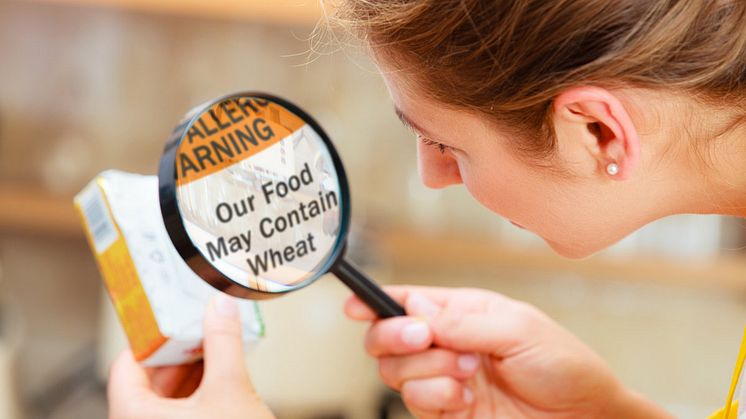
The Association of European Coeliac Societies (AOECS) welcomes the new Codex Guidelines on Precautionary Allergen Labelling (PAL), a landmark step towards more consistent, science-based gluten risk communication. The Guidelines strengthen consumer confidence, improve international harmonisation and recognise, for the first time, the needs of people living with coeliac disease.
As the EU revises its Youth Strategy, how can we ensure that no person is left behind? Young people with coeliac disease and other chronic health conditions face barriers that affect their education, mobility and social participation. That's why AOECS is calling for health, inclusion and equal opportunities to be at the heart of the next EU Youth Strategy. Read our position paper to learn more.

AOECS is looking for a highly organised and proactive Administrative Officer to support our growing international association. This flexible freelance role (approximately 16 hours per week) offers the opportunity to work with a dedicated team and contribute to improving the lives of people affected by coeliac disease across Europe and beyond.

Following the first-ever European Parliament debate dedicated to safe gluten-free catering, AOECS has published a new report outlining practical next steps to improve safety, inclusion and mobility for people living with coeliac disease across Europe. The report identifies three priority areas for future action and calls for stronger collaboration across the hospitality sector and policymakers.

AOECS has launched the Young Researcher Award in Coeliac Disease Research to recognise and encourage outstanding early-career scientists. The international award aims to raise the profile of promising researchers, foster collaboration and inspire the next generation of experts working to improve the lives of people with coeliac disease. Open for applications now until 15 August 2026.

AOECS Chair Floris van Overveld reports from CCFL49 in Ottawa, where new guidelines for Precautionary Allergen Labelling (PAL) were adopted. After years of advocacy, cereals containing gluten are now included in the framework, while gluten-free claims and PAL remain clearly separated. It marks an important step towards clearer labelling and safer food choices for coeliac patients worldwide.

Could coeliac disease affect more than we realise? One of the most thought-provoking submissions to the AOECS Scientific Book 2025 explored how coeliac disease impacts not only physical health, but also confidence, stability, freedom and overall wellbeing. The findings suggest that the real-life burden of living gluten-free may often be underestimated.

Some of the proteins most strongly linked to coeliac disease were removed from the wheat — and the bread actually became better. That was one of the remarkable findings presented in the AOECS Scientific Book 2025, where researchers explored how wheat could potentially become less harmful for people with coeliac disease while still producing high-quality bread. Share your own research with us.

AOECS convened the first-ever discussion at the European Parliament on gluten-free safety in the catering sector. Policymakers, industry representatives and patient organisations came together to address food accessibility, awareness and safer dining for people with coeliac disease across Europe. A clear message emerged: gluten-free food is not a lifestyle choice, it is a medical necessity.

The European Parliament’s Committee on Petitions (PETI) has voted to keep Petition No. 1468/2024 on coeliac disease open, calling for continued EU action and greater harmonisation across Member States. AOECS Secretary General Veronica Rubio addressed the Committee on behalf of coeliac patients across Europe, highlighting inequalities in diagnosis, healthcare support and access to gluten-free food.

Your research and projects could help shape the future of coeliac care. AOECS invites submissions for its 5th Call for Scientific Papers, with selected work presented at the 2026 Annual Conference and published in the Scientific Book. Deadline: 30 June 2026.

🟢 AOECS has opened the Huda Emergency Initiative for Gaza. People with coeliac disease depend on a strict gluten-free diet to survive. In humanitarian crises, access to safe food can disappear overnight. Through the fund, AOECS is supporting emergency deliveries of gluten-free food to people with coeliac disease affected by the crisis. Learn more on our website. #together4coeliacs #celiac2celiac

🥐 At a gluten-free breakfast in Brussels, AOECS and our partners brought together MEPs, policymakers and industry representatives to call for stronger EU action on coeliac disease. AOECS presented its Manifesto, urging better integration of coeliac patients’ needs into Europe’s food and health strategies. The event was co-organised with @Specialised Nutrition Europe (SNE) and @FoodDrinkEurope.

AOECS calls for greater transparency in EU food contact materials legislation. Evidence from studies within our network shows measurable gluten migration from certain cereal-based bio-materials. Allergen considerations must be included in the ongoing regulatory revision.
