Blog post —
Hormonal Imbalance in Men & Its Common Causes, Types, Symptoms In Singapore
Updated on: July 2, 2026
Key Takeaway
- Hormonal imbalance isn't a "women's health" issue; it affects men just as often, though it's rarely discussed.
- Male hormonal imbalance happens when hormone levels, most often testosterone, fall outside a healthy range.
- In Singapore, roughly 1 in 4 men experience low testosterone and its symptoms, yet most stay silent because of stigma.
- Five most common warning signs are low libido, erectile dysfunction, unexplained muscle loss and weight gain, mood changes, and gynecomastia (male breast enlargement).
- Social stigma around men's health keeps many from recognising symptoms or seeking help, even when the condition is easily identified and treatable.

What Is a Hormone?
Hormones are the body's chemical messengers that the human body produces; over 50 of them regulate [1]:
- growth
- metabolism [2]
- sexual function
- reproduction
- mood
- sleep
- digestion
- tissue repair
As hormones coordinate so many systems at once, even a small imbalance can ripple across a man's physical and mental health [3].

What Is Male Hormonal Imbalance?
A hormonal imbalance occurs when the body produces too much or too little of a given hormone.
Some imbalances are short-lived and self-correcting; others are chronic and require medical treatment to prevent long-term complications.
Left unaddressed, hormonal imbalance in men can progressively affect energy, body composition, sexual health, and emotional well-being.
What Causes Hormonal Imbalance in Men?
The leading cause is age-related testosterone decline.
- After age 20: Testosterone production naturally slows
- By age 40: 50% of peak hormone levels is retained
- By age 80: Only around 5% remains
Lifestyle factors (poor diet, chronic stress, poor sleep, sedentary habits) and underlying medical conditions (diabetes, thyroid disorders, pituitary tumours) are the other major drivers.
Lifestyle and environmental factors [3]
- Insulin resistance and obesity (Caused by excess sugar and refined carbs)
- Trans fats from processed and baked foods
- Chronic stress and elevated cortisol
- Sleep deprivation and irregular sleep schedules, such as night-shift work
- Exposure to fluoridated water/toothpaste and environmental aggressors
- Smoking
- Nutrient deficiencies in zinc, magnesium, antioxidants
- Sedentary lifestyle and lack of exercise
- Cadmium toxicity and air pollution exposure
- Liver dysfunction, including from medications that impair liver function
Underlying medical conditions
- Type 1 and Type 2 diabetes
- Hyperthyroidism and hypothyroidism
- Pituitary or other endocrine tumours, and cancer treatment
- Cushing's syndrome or Addison's disease (abnormal cortisol levels)
- Iodine deficiency
- Endocrine gland injury
- Hereditary pancreatitis
While ageing itself can't be stopped, addressing the modifiable lifestyle factors can help keep hormone levels more stable.
4 Types of Male Hormonal Imbalance [4 ,5]
| Andropause | Often called "male menopause,” the most common form, linked to age-related testosterone decline. |
| Adrenal fatigue | Caused by prolonged stress; primary symptom is persistent tiredness |
| Hyperthyroidism | An overactive thyroid gland |
| Hypothyroidism | An underactive thyroid gland |
5 Common Symptoms of Male Hormonal Imbalance
The five most common symptoms are low libido, erectile dysfunction, muscle loss with fat gain, mood changes, and gynecomastia.
Symptoms can occur at any age. Unfortunately, they may also overlap with other health conditions.
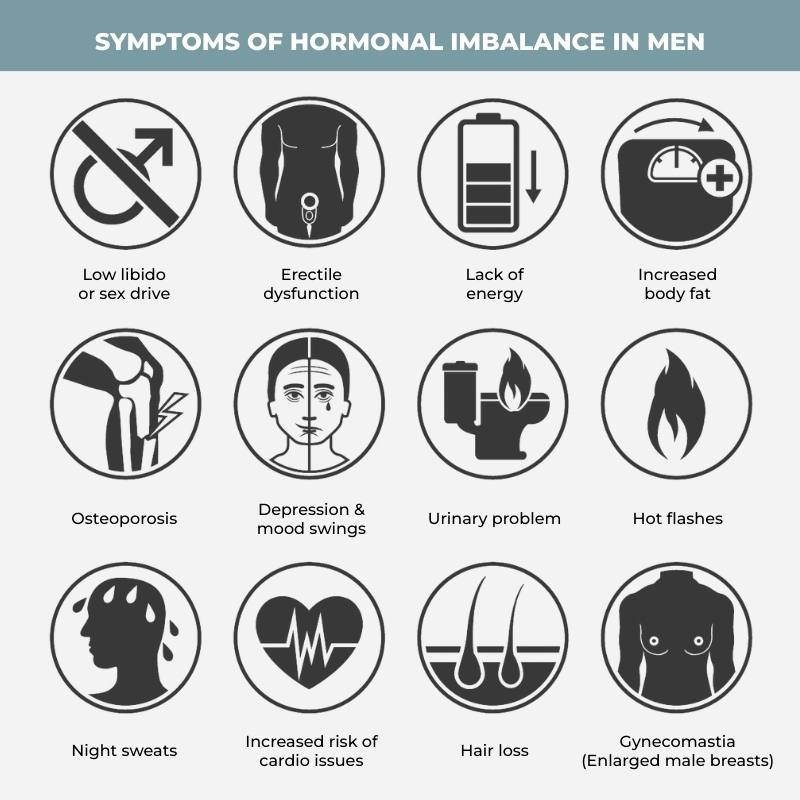
1. Low Libido
A drop in sex drive is one of the earliest signs of hormonal imbalance [6].
In men, it's most often linked to declining testosterone, though elevated estrogen can also suppress sexual desire and performance.
2. Erectile Dysfunction
Low testosterone is often associated with erectile dysfunction [7]. However, it's not the only factor.
Stress, depression, heart disease, and insomnia commonly contribute to low male hormonal imbalance.
3. Muscle Loss and Fat Gain
Testosterone helps preserve muscle mass. So when male hormonal levels fall, muscle breaks down more easily [8].
Since muscle tissue burns more calories than fat, this loss lowers overall calorie burn. Without a corresponding change in diet, it leads to gradual weight gain.
4. Mood Changes
Low testosterone is linked to:
- mood swings
- depression
- anxiety
- reduced motivation
Left unmanaged, these emotional symptoms can compound into more serious mental health concerns [9].
5. Gynecomastia (Male Breast Enlargement)
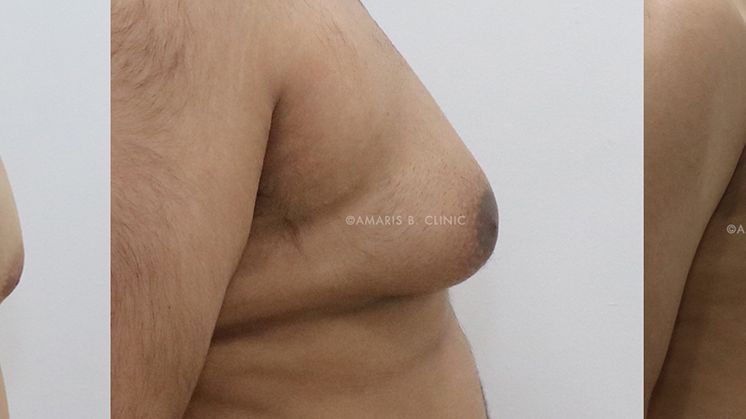
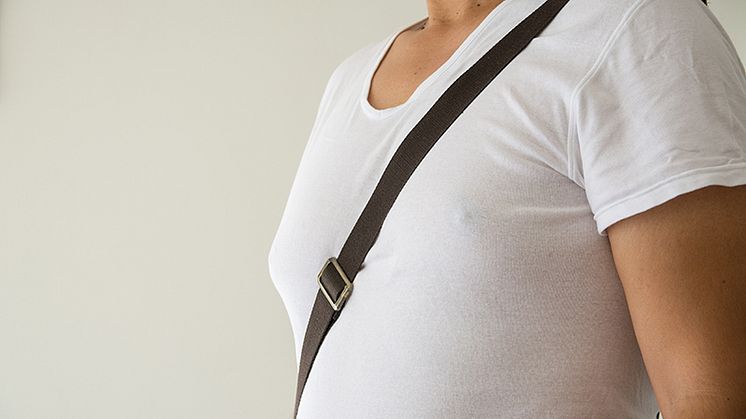
Gynecomastia is the enlargement of breast tissue in men and is usually a physical indicator of male hormonal imbalance[10].
Although gynecomastia is an actual medical condition, stigma often prevents men from seeking treatment until it becomes painful or more severe.
It can impact both physical comfort and mental well-being, but with proper diagnosis and treatment, it can be treated effectively.
Gynecomastia surgery is not a one-size-fits-all procedure, especially not at Amaris B. Clinic. Every gynecomastia consultation, treatment planning and surgery performed by Dr Ivan Puah is customised to meet the aesthetic goals and your unique anatomy, such as your skin quality and gynecomastia grade.
In his research paper titled "Surgical Management of Gynecomastia in Asian Men – Clinical Experience and Considerations for Different Patient Types," Dr Puah reveals the importance of adapting surgical techniques to manage scarring and hyperpigmentation, which are less obvious in Caucasian skin tones [11].
How Do You Know If You Have a Hormonal Imbalance?
See a doctor for a physical examination.
Bring a list of current medications and supplements, and be prepared to discuss your symptoms honestly.
The doctor will use your answers to decide whether further hormone testing is needed.
Common questions a doctor may ask include:
- How often do you experience symptoms?
- Does anything relieve your symptoms?
- Have you recently gained or lost weight?
- Are you under more stress than usual?
- Do you have difficulty getting or maintaining an erection?
Based on your answers, your doctor may order blood tests to check hormone levels and recommend a treatment plan tailored to the underlying cause.
Ready to check your hormone levels? Book a consultation today.

FAQ on male hormonal imbalance
Is hormonal imbalance common in men in Singapore?
Over 25% of men in Singapore experience low testosterone and its symptoms. However, many remain undiagnosed due to the stigma surrounding men's health dialogues.
What is the most common cause of male hormonal imbalance in Singapore?
The leading cause of male hormonal imbalance in Singapore is age-related. Levels typically begin to decline after age 20, with men retaining about half of their peak levels by age 40.
Can hormonal imbalance in men be treated?
Yes. Treatment depends on the underlying cause and may include lifestyle changes, addressing nutrient deficiencies, managing underlying medical conditions, or hormone therapy. A doctor can determine the right approach after diagnosis.
What is andropause?
Andropause, sometimes called "male menopause," is the most common type of male hormonal imbalance and is primarily driven by age-related testosterone decline.
When should a man see a doctor about hormone symptoms?
Any man experiencing persistent low libido, erectile dysfunction, unexplained muscle loss, mood changes, or breast enlargement should book a physical examination to rule out or confirm a hormonal imbalance.
[1] Hayes, H. (2024, July 17). What Is a Hormone?. National Institute of General Medical Sciences. https://biobeat.nigms.nih.gov/2024/07/what-is-a-hormone/
[2] Hamid, A. A., Issa, M. B., & Nizar, N. N. A. (2018). Hormones. In Preparation and processing of religious and cultural foods (pp. 253-277). Woodhead Publishing.
[3] Treasure, N. O., Johnkennedy, N., Chinyere, O., Amarachi, I. P., & Chioma, N. (2022). The Perspective of Hormonal Imbalance in Humans: A Review. Acta Scientific Clinical Case Reports Volume, 3(11).
[4] Monteagudo, P. T., Falcão, A. A., Verreschi, I. T. N., & Zanella, M. T. (2015). The imbalance of sex-hormones related to depressive symptoms in obese men. The Aging Male, 19(1), 20–26. https://doi.org/10.3109/13685538.2015.1084500
[5] Pyo, Y., & Kwon, K. H. (2024). Estrogen receptors, hormonal imbalance, gynecomastia, hyperestrogenemia, and male breast cancer: a literature review. Journal of Men's Health, 20(9), 1-9.
[6] Dick, B., Koller, C., Herzog, B., Greenberg, J., & Hellstrom, W. J. (2020). The role of hormones in male sexual function. Current Sexual Health Reports, 12(3), 101-112.
[7] Morales, A., & Heaton, J. P. (2001). Horomonal erectile dysfunction: evaluation and management. Urologic Clinics of North America, 28(2), 279-288.
[8] Turner, N. (2010). The hormone diet: A 3-step program to help you lose weight, gain strength, and live younger longer. Rodale.
[9] Sehgal, M., Page, E., & Galeana, V. Hormonal Imbalance And Mental Health.
[10] Pyo, Y., & Kwon, K. H. (2024). Estrogen receptors, hormonal imbalance, gynecomastia, hyperestrogenemia, and male breast cancer: a literature review. Journal of Men's Health, 20(9), 1-9.
[11] Puah IBK. Surgical Management of Gynecomastia in Asian Men - Clinical Experience and Considerations for Different Patient Types. World J Plast Surg. 2025;14(3):101-107. doi: 10.61882/wjps.14.3.101. PMID: 41607568; PMCID: PMC12843043.