Blog post —
The “ideal” female body type has changed through the years
Updated on Sep 23, 2026
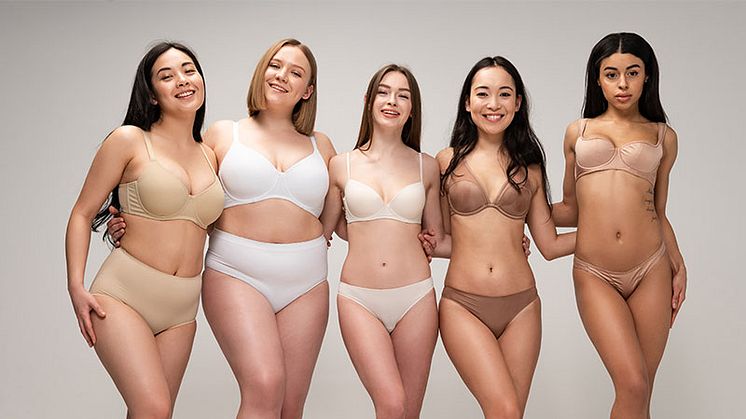
There is no single "ideal" female body type, it shifts by decade and by culture. Fuller curves defined the 1950s (think Marilyn Monroe); an ultra-slim frame took over in the 1960s-70s (Twiggy); an athletic build followed in the 1980s-90s; and the hourglass shape became the standard by the 2010s. Culturally, Spain and Colombia favour fuller, curvier figures, while China, Korea, and Singapore tend to favour slim, toned proportions. According to Dr Ivan Puah, there is no universal ideal, preferences differ by ethnicity, culture, and the individual.
Key Takeaways
- Breast fat grafting uses the patient’s own fat, eliminating risks associated with implants like rupture or rejection, with major complications occurring in under 1% of cases.
- Typically enhances breast size by 1 to 1.5 cup sizes, ideal for those seeking subtle enhancement. Candidates need sufficient donor fat and healthy circulation.
- About 70- 75% of the injected fat survives long-term due to natural reabsorption, unlike implants, which require replacement every 10–15 years.
- Fat grafting can lead to calcifications and oil cysts, so patients should inform their radiologist about previous procedures.
- In Singapore, only MOH-accredited doctors with liposuction accreditation can perform this procedure. Doctor’s experience is crucial to minimise risks like asymmetry.

If you've ever wished for an actress's waistline or a model's legs, it's worth remembering: the "ideal" female body has never stayed the same for long. Beauty standards shift with fashion, media, and culture, and what's considered aspirational in Singapore today looked completely different fifty years ago, and looks different again in Bogotá or Madrid right now.
How has the ideal female body type changed since the 1950s?
Western beauty standards have swung between curves and slimness roughly every decade:
| Decade | Ideal body type | Icon |
|---|---|---|
| 1950s | Fuller bust and hips, hourglass curves | Marilyn Monroe |
| 1960s | Ultra-slim, minimal curves | Twiggy |
| 1970s | Slim, flat stomach | Farrah Fawcett |
| 1980s-90s | Tall, athletic, then thin and waif-like | Supermodel era |
| 2000s | Toned and chiselled | Jessican Alba |
| 2010s | Hourglass with fuller hips and a small waist | Kardashian influence |
Corsets disappeared a century ago, but the underlying pressure to match a media-defined shape hasn't. What's changed is that no single standard dominates anymore; by the 2010s, diversity and body inclusivity had become mainstream talking points, and the "ideal" fractured into many culturally specific versions rather than one global template.

Does the ideal female body type differ by country?
Yes, significantly. Beauty ideals are downstream of culture, food traditions, and media, not a single global standard.
Spain: Fuller, curvier figures
Spanish culture centres many social occasions around food, and this shows up in body ideals: a fuller figure is generally the aspirational standard, reflecting a more relaxed, non-restrictive relationship with eating.
Colombia: Naturally curvaceous
Colombian beauty standards similarly favour a curvaceous figure, often associated with confidence and a positive body image rather than restriction.
United States: Contradictory signals
The U.S. sends mixed messages, a food culture associated with higher average body weight, alongside media that continues to push thigh gaps and calorie counting. The result is an "ideal" that's arguably less attainable than anywhere else.
China, Korea & Singapore: Slim, small-framed proportions
East Asian standards, including in Singapore, tend to favour a tiny waist, slim limbs, and a small face, a look that Dr Ivan Puah notes is often quite far from most women's natural proportions.

What is the ideal female body shape in Singapore today?
According to Dr Ivan Puah, an MOH-accredited liposuction doctor and Chairman of the Lipo Peer Review Committee who has practised body contouring and fat grafting in Singapore since 2004, there isn't a single answer:
"Due to cultural, ethnic, and personal preferences, there will always be differences in the perception of ideal or preferred female body shapes amongst people from different backgrounds. For example, people of African American or Hispanic ethnicity mostly prefer curvy bodies with prominent hips. At the same time, East Asians, including those in Singapore, generally prefer slim and toned body shapes."What Dr Puah is seeing more of in his own practice, however, is a shift away from chasing any single trend. More patients are asking for natural-looking, effortless results rather than a dramatic, one-size-fits-all silhouette. His benchmark for a successful outcome: a result so natural that no one suspects it's the product of a cosmetic procedure.
Achieve a figure that's uniquely yours
Amaris B. Clinic has provided liposuction and fat grafting for patients of different needs, body types, and nationalities since 2004. Every treatment plan is customised, not built around a trending "ideal", and Dr Ivan Puah will advise on the most suitable approach based on your goals and clinical profile.
Book a consultation with Dr Ivan Puah now.

FAQ
Is there really one "ideal" body type for everyone?
No. Preferences vary by ethnicity, culture, and personal taste, there's no universal standard, and cosmetic goals should be personalized rather than chased from trends.
Why do beauty standards keep changing?
Standards are shaped by media, fashion, and cultural shifts of the moment, from Old Hollywood glamour to supermodel athleticism to social-media-driven curves, rather than by any fixed biological or health standard.
What does "natural-looking" body contouring mean?
It refers to results tailored to a person's existing proportions rather than a generic template, so changes look proportionate and undetectable rather than obviously altered.
