Blog post —
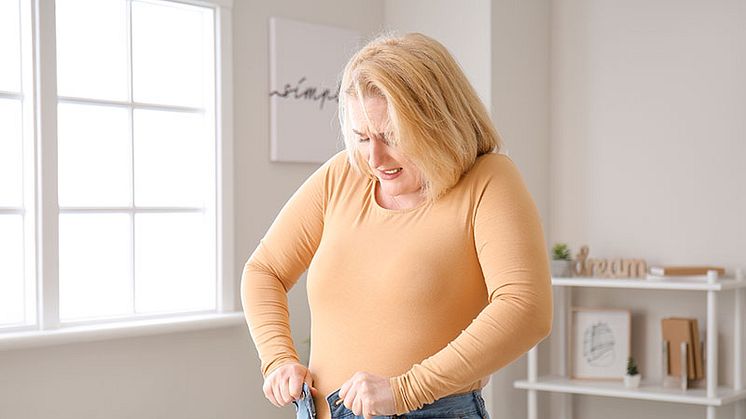
Stubborn Belly Fat | Causes, Different Types Of Belly in Women, Treatments
Updated on: 4 June 2026
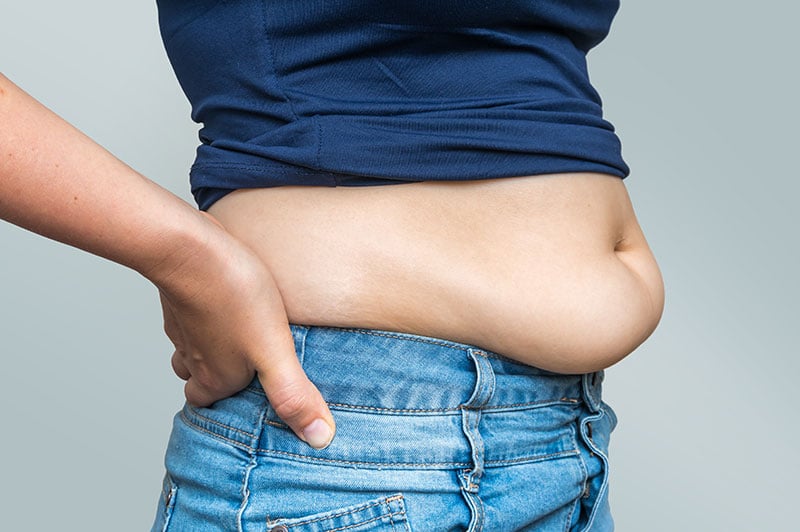
Common causes of belly fat
The causes of excess belly fat are more common than one would assume.
These include:
Poor diet
What we consume affects our well-being - mentally and physically.
Poor dietary habits, such as regular indulgence in sugary foods and drinks, can also lead to a host of issues, such as:
- Weight gain
- The slowing down of metabolism
- Reduced capability in fat burning
Many of our favourite indulgences (when it comes to food) contain trans fats.
This is because we often skip reading the labels and ingredients.
Trans fat can cause inflammation, which can lead to obesity [1].
It is recommended to switch to healthier choices, such as whole-grain foods, monounsaturated fats, and polyunsaturated fats.
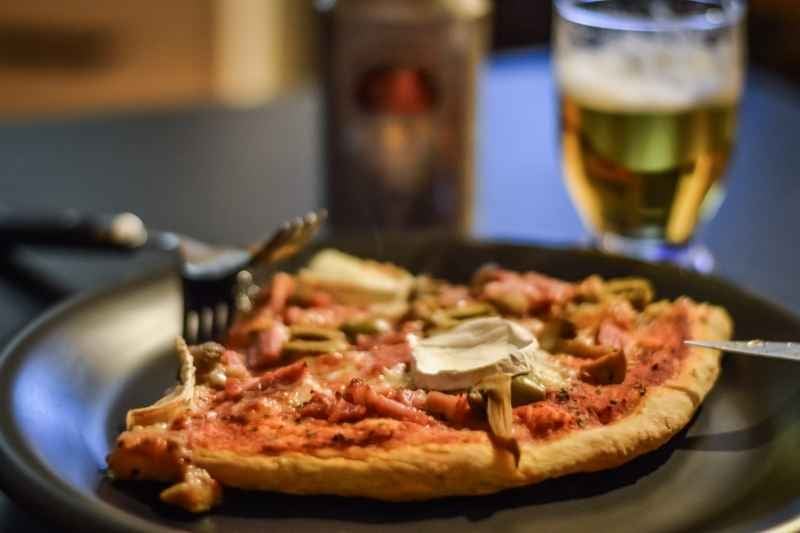
2. Too much alcohol
Excessive consumption of alcohol is the main cause of issues such as liver disease and inflammation [2].
It was also indicated in a 2015 report that there is a possible link between alcohol consumption and obesity, especially among men, where weight gain and excess fat tend to accumulate around the belly region [3].
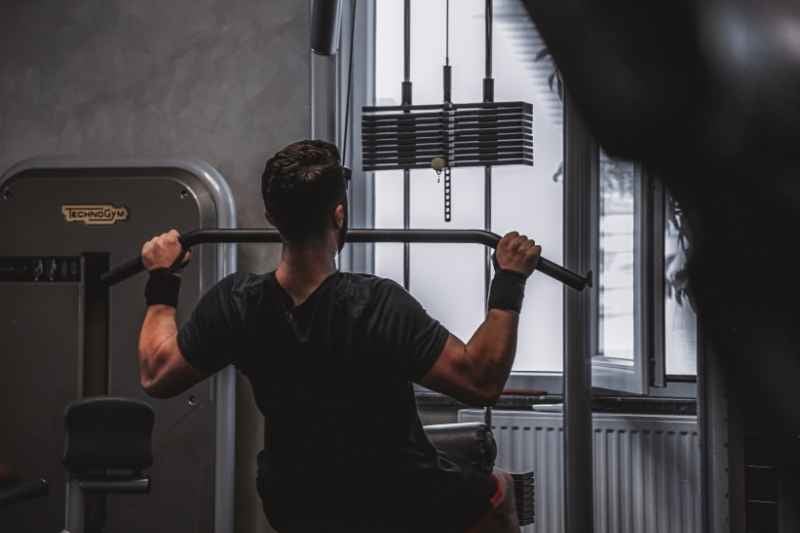
3. Lack of exercise
A sedentary lifestyle is never good.
Fat needs to be burned, but if the output is nearly zero compared to the input, excess fat is not the only potential problem.
4. Genetics
Genetics play a huge part in who, what and how we are.
Genes influence factors such as metabolism and risks of developing conditions such as obesity.
A person’s family medical history is also a good indicator of potential issues that may arise in themselves.
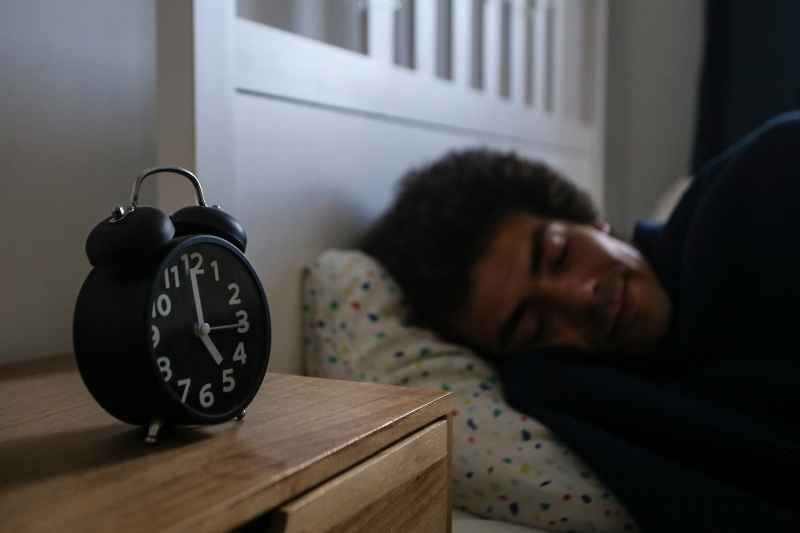
5. Poor sleep
Sleep is something that most people don’t think too much about.
But it is during sleep that the body goes into repair mode, among others.
Sleep duration has also been shown to influence food intake, with shorter sleep linked to higher consumption [4].
The quality of sleep is also important, as it can affect a person’s mood and, in turn, lead to erratic eating habits, which may result in excess fat accumulation [5].
6. Smoking
It cannot be reiterated that smoking is bad for one’s health and well-being.
Although it may not be a direct cause of excess fat, a journal study revealed that people who smoke tend to have more belly and visceral fat than those who don’t [6].
According to Dr Ivan Puah, Medical Director at Amaris B. Clinic, "higher stress levels, in general, can lead to excess fat around the abdominal organs – sometimes known as a 'stress belly'." He adds that this is often the hardest type of belly fat to lose.
Research shows that stress can also lead to decreased fat oxidation, thereby reducing the amount of fat burned for energy.
This means you don't necessarily have to eat more or burn less energy to gain weight [7].
4 Different Types Of Belly Fat
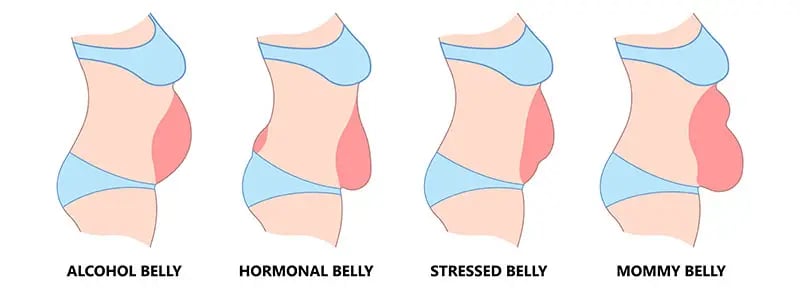
Stress belly
If you're stressed, you will have higher cortisol levels, the stress hormone that signals the body to store fat [8].
If your body stores more in the abdomen, this area is usually the hardest to eliminate.
Stress can reduce fat oxidation, the process by which fat is burned as energy [9].
So you might find that you're not eating much, but the fat still isn't going away!
Mummy belly
It's normal not to go straight back to the body you had before after pregnancy, but it can be annoying, especially when you can't fit into your clothes!
A 'mummy tummy' describes a tummy that is flabby with two areas of fat on either side of your belly button.
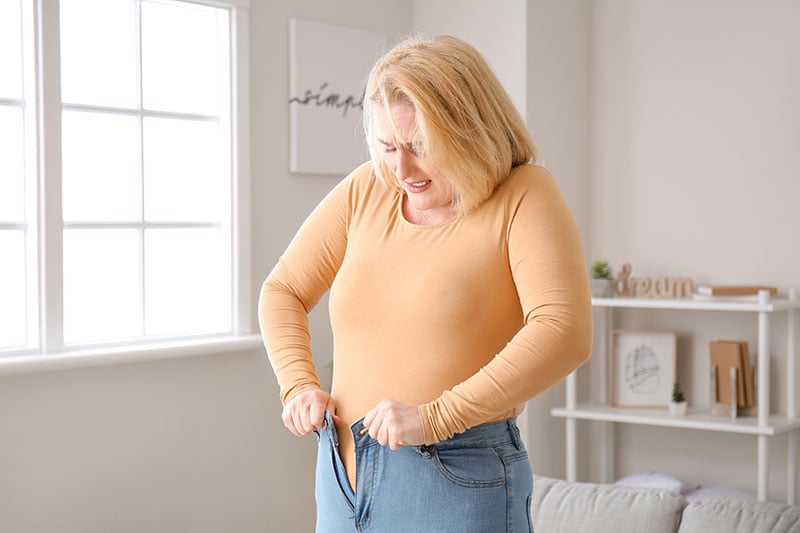
Alcohol belly
Too much booze, especially beer, can impair the body's ability to break food down properly or the liver's ability to burn fat [10].
Some ingredients in alcoholic beverages and processed foods can disrupt the balance between good and bad bacteria, leading to bloating and increased fat production [11].
Hormonal belly
Hormone levels can affect your fat-burning efficiency [12].
Higher oestrogen levels cause us to store fat throughout the body, while lower oestrogen levels shift fat storage from the hips and thighs to the abdomen.
Higher testosterone increases fat around the waist and thighs [13].
In men, low testosterone slows the metabolism and increases belly fat.
What is stubborn fat, and what makes it so stubborn?
When we talk about stubborn fat, we refer to areas that are difficult to lose through diet and regular exercise.
Apparently, stubborn fat is more resistant to fat burning because it acts as an energy storage.
Our body holds on to this energy, both psychologically and physiologically, for preservation.
Dr Puah talks us through the different types of belly fat.
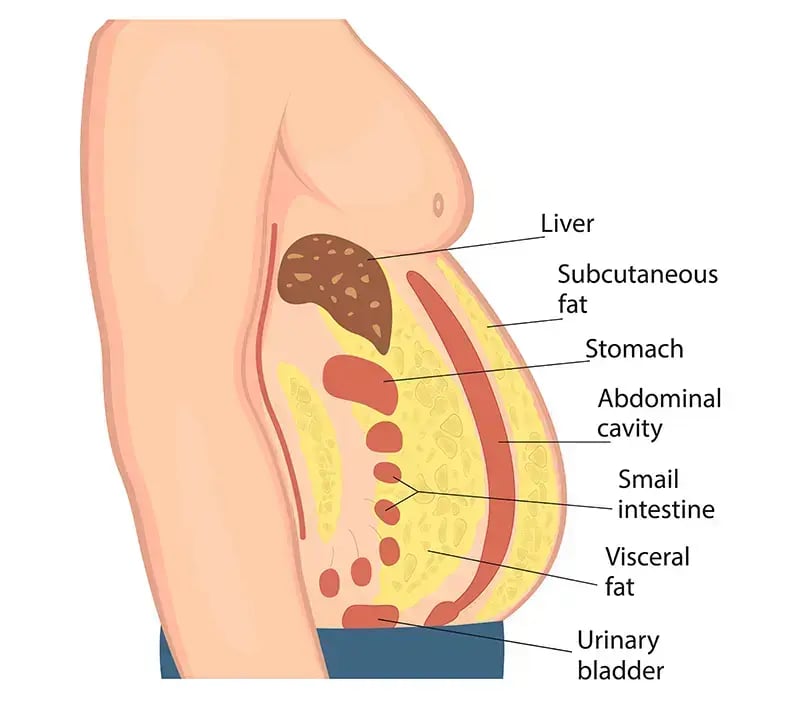
Visceral belly fat
Visceral fat is fat stored inside the belly, wrapped around the organs and beneath the firm abdominal wall.
It holds fatty acids, inflammatory proteins, and other substances that are absorbed by the liver.
High liver fat can cause insulin resistance and non-alcoholic fatty liver disease.
Subcutaneous belly fat
While subcutaneous belly fat doesn’t seem to be a risk factor, visceral fat does.
Overall, high belly and body fat are, so it’s still important to keep overall belly fat low.
Subcutaneous fat is the squishy stuff just below the skin and makes up about 90% of our overall body fat.
We only start burning this type of fat after visceral fat is used for energy.
It’s harder to lose and usually collects around the stomach, thighs, hips and bottom.
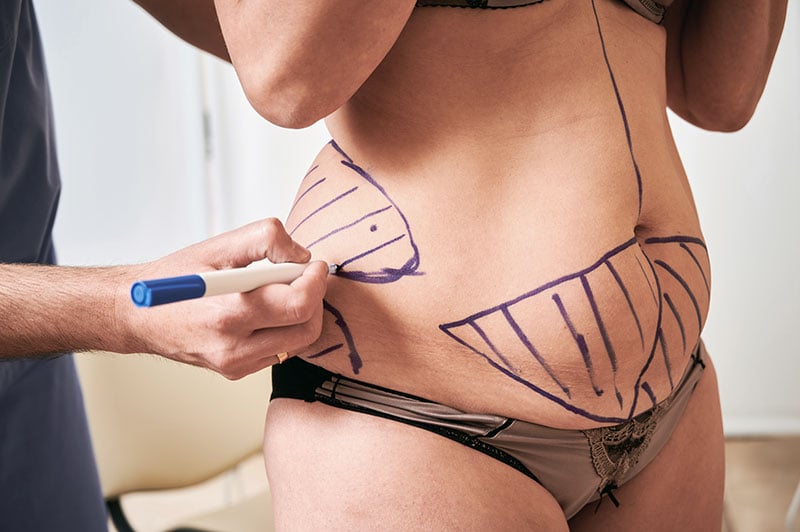
Different types of liposuction for belly fat removal
Laserlipolysis (Laser Liposuction)
Laserlipolysis (Laser Liposuction) is a minimally invasive laser-assisted liposuction that breaks down fat cells into liquefied fat, which is then removed by suction.
In addition to melting fat, laser energy also stimulates collagen production through tissue coagulation.
Vaser Liposuction
Vaser liposuction uses high-frequency ultrasonic vibrations to loosen, break down, and melt fat cells, which are then removed with a liposuction cannula.
This technique leaves the surrounding connective tissues relatively undisturbed.
Modern Liposuction with MDC-Sculpt® Lipo Technique
Dr Puah describes liposuction as 70% art and 30% science. His experience in body shaping has enabled him to develop the MDC-Sculpt® Lipo Technique successfully.
MDC stands for Multi-Dimensional Contouring, and its proprietary approach has three objectives: fat removal, targeted body sculpting, and skin tightening, with sculptured, natural-looking results.
Plus, it’s gentler and has a faster recovery time with less bruising, discomfort and scarring.
Liposuction’s proven health and medical benefits
- Reduction in triglycerides (a type of fat found in your blood) by 25% [14, 15, 16]
- Reduction in the total count of leucocytes (white blood cells) [14, 15, 16]
- Liposuction leads to fat loss without causing any change in lean mass [14, 15, 16]
- A systematic 2017 review showed that liposuction improved metabolic balance and cardiovascular risk factors [14, 15, 16]
- Reduces vascular inflammation in obese patients, reducing their cardiovascular risk [14, 15, 16]
If you’re unhappy with the shape of your tummy or any part of your body, schedule a private consultation.
Reference
[1] Oteng, A. B., & Kersten, S. (2020). Mechanisms of action of trans fatty acids. Advances in Nutrition, 11(3), 697-708.
[2] Dukić, M., Radonjić, T., Jovanović, I., Zdravković, M., Todorović, Z., Kraišnik, N., ... & Branković, M. (2023). Alcohol, inflammation, and microbiota in alcoholic liver disease. International Journal of Molecular Sciences, 24(4), 3735.
[3] Traversy G, Chaput JP. Alcohol Consumption and Obesity: An Update. Curr Obes Rep. 2015 Mar;4(1):122-30. doi: 10.1007/s13679-014-0129-4. PMID: 25741455; PMCID: PMC4338356.
[4] Dashti, H. S., Scheer, F. A., Jacques, P. F., Lamon-Fava, S., & Ordovás, J. M. (2015). Short sleep duration and dietary intake: epidemiologic evidence, mechanisms, and health implications. Advances in nutrition, 6(6), 648-659.
[5] Darku, E. D., & Diyaolu, C. O. (2025). The role of stress, sleep, and mental health in obesity and weight gain. Int. Res. J. Mod. Educ. Technol. Soc, 6, 3216-3235.
[6] Dobson R. Smoking may increase abdominal obesity. BMJ. 2005 Sep 17;331(7517):596. PMCID: PMC1215591.
[7] Kiecolt-Glaser JK, Habash DL, Fagundes CP, Andridge R, Peng J, Malarkey WB, Belury MA. Daily stressors, past depression, and metabolic responses to high-fat meals: a novel path to obesity. Biol Psychiatry. 2015 Apr 1;77(7):653-60. doi: 10.1016/j.biopsych.2014.05.018. Epub 2014 Jul 14. PMID: 25034950; PMCID: PMC4289126.
[8] Venuto, T. (2011). Cortisol, Stress And Body Fat. Straight answers to top, 20.
[9] Masschelin, P. M., Cox, A. R., Chernis, N., & Hartig, S. M. (2020). The impact of oxidative stress on adipose tissue energy balance. Frontiers in physiology, 10, 1638.
[10] Anvith, P. S., & Pragna, P. (2015). Fatty liver disease in-depth analysis. Am J Pharm Res, 5(11).
[11] Miclotte, L., & Van de Wiele, T. (2020). Food processing, gut microbiota and the globesity problem. Critical reviews in food science and nutrition, 60(11), 1769-1782.
[12] El-Zayat, S. R., Sibaii, H., & El-Shamy, K. A. (2019). Physiological process of fat loss. Bulletin of the National Research Centre, 43(1), 208.
[13] De Maddalena, C., Vodo, S., Petroni, A., & Aloisi, A. M. (2012). Impact of testosterone on body fat composition. Journal of cellular physiology, 227(12), 3744-3748.
[14] Benatti, F. B., Lira, F. S., Oyama, L. M., do Nascimento, C. M., & Lancha, A. H., Jr (2011). Strategies For Reducing Body Fat Mass: Effects Of Liposuction And Exercise On Cardiovascular Risk Factors And Adiposity. Diabetes, Metabolic Syndrome And Obesity : Targets And Therapy, 4, 141–154. doi:10.2147/DMSO.S12143
[15] Sailon, A. M., Wasserburg, J. R., Kling, R. R., Pasick, C. M., & Taub, P. J. (2017). Influence Of Large-volume Liposuction On Metabolic And Cardiovascular Health: A Systematic Review. Annals Of Plastic Surgery, 79(6), 623-630.
[16] Garrow, J. S., & Summerbell, C. D. (1995). Meta-analysis: Effect Of Exercise, With Or Without Dieting, On The Body Composition Of Overweight Subjects. European Journal Of Clinical Nutrition, 49(1), 1-10.
