
News —
Medical Conditions Accessory Breast Tissue Can Mimic
Updated on Oct 17, 2026
Accessory breast tissue (polymastia) is extra breast tissue, most often in the armpit, that can look like a lipoma, cyst, abscess or enlarged lymph node It is a congenital condition, usually benign, and it can swell, become painful or change like normal breast tissue. Because it resembles other lumps, it is often misdiagnosed. A proper examination, imaging and sometimes a needle biopsy are needed to confirm it.
Key takeaways
- Accessory breast tissue (polymastia) is a congenital condition that can occur in the armpit, sometimes with nipple or glandular tissue.
- It behaves like normal breast tissue and can undergo changes, including inflammation
- Misdiagnosis is common, as it can resemble other conditions like lipoma or swollen lymph nodes. Proper diagnosis requires tests such as ultrasound or histopathology.
- While an armpit lump often isn’t serious, it’s important to consult a healthcare professional for an accurate diagnosis.
What Is Accessory Breast Tissue?
An accessory breast is excess breast tissue that can develop in various areas of the body, most commonly the axillary (armpit) region [1, 2, 3]. It may be mistaken for armpit fat, but it is a recognised congenital condition that can enlarge and cause pain and swelling.
Accessory breasts can appear:
- With or without a nipple
- With or without an areola
- With or without glandular tissue
- In any combination of the above
Medically termed polymastia, it can undergo the same physiological and pathological changes as normal breast tissue, including inflammation, fibrocystic changes and, rarely and in severe cases, cancer [1][2][3]. That overlap is why misdiagnosis is common.
Which Conditions Can Accessory Breast Tissue Mimic?
| Condition it resembles | Why it's confused |
|---|---|
| Lipoma (fatty tumour) | Soft, subcutaneous swelling [1, 3] |
| Lymphadenopathy (swollen lymph nodes) | Small, movable armpit nodule [2] |
| Breast cancer | Lumps or unusual growths in the tissue |
| Sebaceous cyst or abscess | Armpit swelling resembling skin lesions |
Lipoma: When a Giant Lipoma Was Mistaken for an Accessory Breast
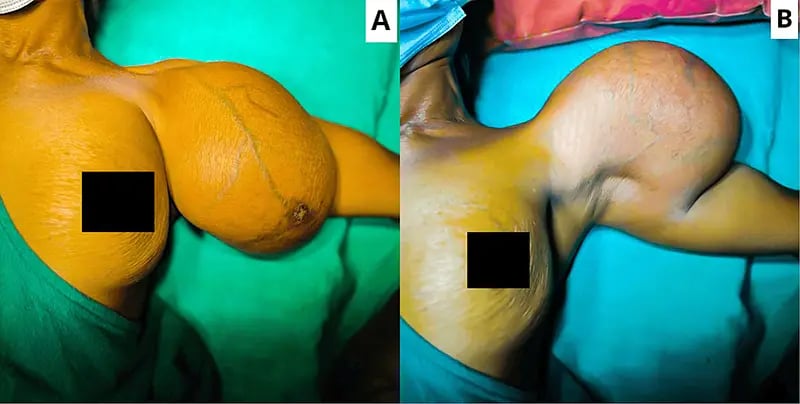
The confusion works in both directions. A Cureus case report described a 40-year-old Asian woman with an eight-year history of a growing swelling on her left upper arm [1].
- The swelling measured 20 × 15 cm, with prominent veins and a central scab resembling a nipple-areola complex.
- The skin beneath it and the axilla were normal.
- Fine-needle aspiration suggested a lipomatous lesion, not an accessory breast [1].
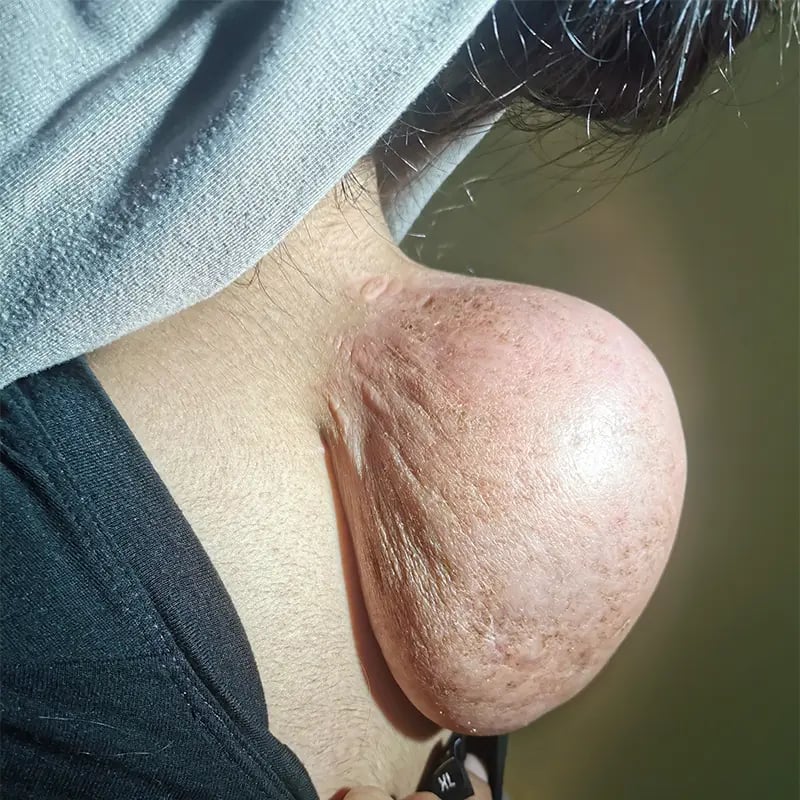
A second report in BMJ Case Reports involved a 32-year-old woman with a large right-sided accessory breast who was initially diagnosed with a pedunculated lipoma. Histopathology showed accessory breast tissue with lactational changes [3].
Lymphadenopathy: Swollen Lymph Nodes
The Journal of Clinical and Diagnostic Research described a 37-year-old woman with a painless right armpit swelling for six weeks that had not changed in size [2].
- Her doctor suspected swollen lymph nodes.
- Examination found a soft, movable, firm 2 × 1.5 cm nodule separate from the breast, with normal overlying skin.
- Fine-needle aspiration diagnosed a fibroadenoma in ectopic (accessory) breast tissue [2].
Breast Cancer, Cysts and Abscesses
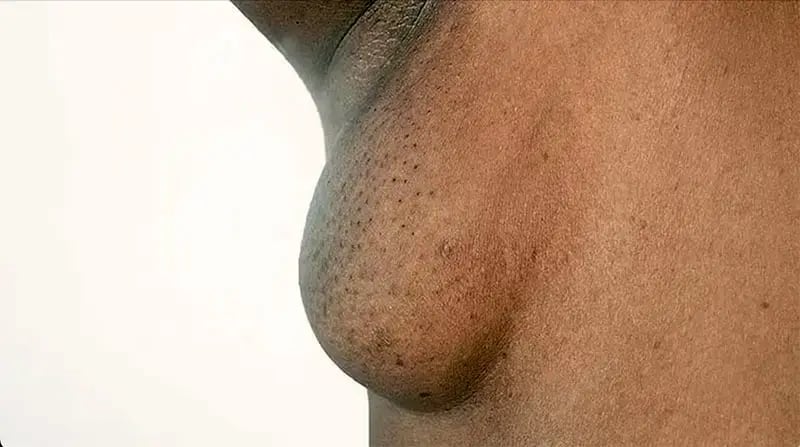
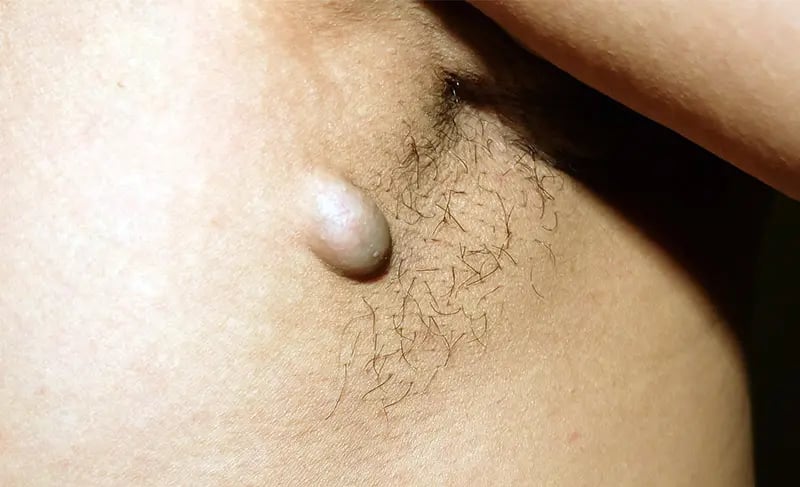
Accessory breast tissue can be misread as breast cancer because it may form lumps or unusual growths. It can also resemble skin cysts or abscesses, such as a sebaceous cyst in the armpit.
How Common Is Accessory Breast Tissue?
One source describes accessory breasts as an extremely rare condition affecting 0.4% to 6% of females, from about 0.6% in Caucasians to 5% in Japanese females [1]. Clinically, however, accessory breast tissue is not as uncommon as that suggests. Dr Ivan Puah has treated many patients in Singapore with accessory breast removal surgery, including a 40-year-old homemaker who had it since puberty.
Even so, the most common differential diagnosis for an armpit lump is still fatty deposits.
How Is an Armpit Lump Diagnosed?
Anyone who notices a lump, whether in usual breast tissue or accessory breast tissue, should consult a healthcare professional. Diagnosis typically uses:
- Clinical examination to assess size, mobility, skin changes and the presence of a nipple or areola
- Imaging such as ultrasound or mammography to identify breast abnormalities
Found an Armpit Lump?
Book an assessment so the lump can be properly examined and diagnosed. Consult a qualified healthcare professional rather than self-diagnosing.
FAQ
Is an armpit lump always cancer?
No. An armpit lump may be accessory breast tissue, which is usually benign, or fatty deposits, a cyst or a lymph node. Get it checked rather than assuming.
Can accessory breast tissue hurt or swell?
Yes. It can enlarge and cause pain and swelling, and it can undergo lactational or inflammatory changes like normal breast tissue [3].
Can accessory breast tissue become cancerous?
It can in severe and rare cases, as it can undergo the same pathological changes as normal breast tissue.
How do doctors tell a lipoma from accessory breast tissue?
From history of symptoms, clinical signs and radiological investigations.
